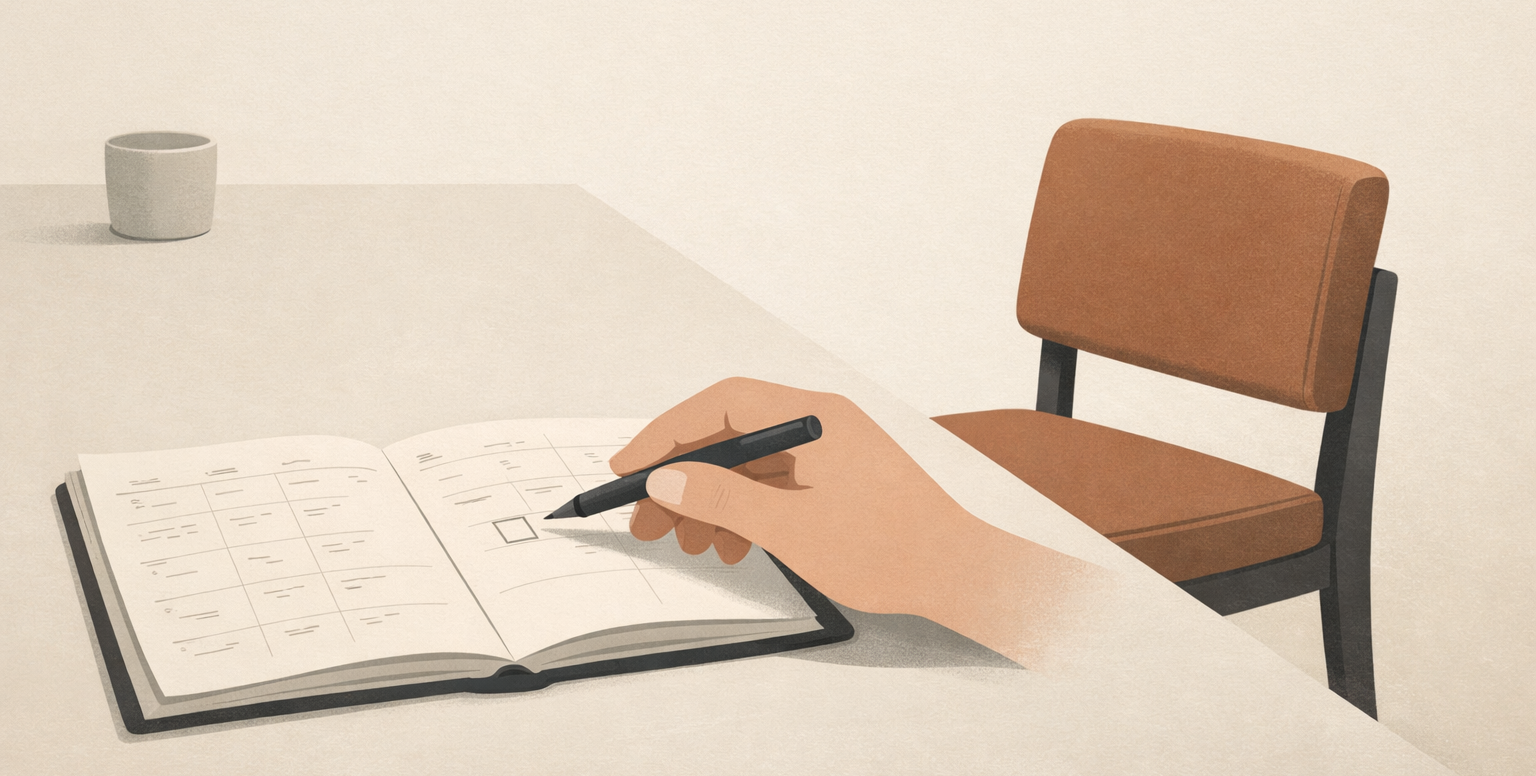
Most of us do not have a scheduling problem. We have a difficulty saying no problem, and the annoying part is that it rarely looks like a problem while it is happening.
It usually looks like good character. Helpful. Flexible. Easygoing. Reasonable. The kind of person who can make it work, squeeze it in, move something around, and somehow absorb one more request without making the room uncomfortable.
That sounds generous until the calendar starts telling the truth. Then the same person who said yes to everything begins wondering why life feels so heavy. Not dramatic heavy. Quiet heavy. The kind of heavy that shows up when you look at the week ahead and realize almost none of it was chosen with care.
That is how overcommitment gets built. Not all at once. Not through one obvious mistake. It usually forms through small agreements that felt too minor to challenge in the moment. One yes here. One favor there. One meeting accepted because declining would require a sentence you did not feel like defending.
Saying Yes Can Become Automatic
Many people are not saying yes because they want to. They are saying yes because no feels heavier. No feels personal. No feels memorable. No feels like something that might need supporting evidence, character witnesses, and a closing argument.
So instead of declining, people negotiate with themselves. They say yes with conditions, yes with delays, yes with internal complaints attached, yes with a quiet hope that someone else cancels first. That last one deserves its own small award. Nothing says emotional maturity like agreeing to something and then praying for weather.
Eventually, those decisions accumulate. People start describing themselves as overwhelmed, but the overwhelm did not arrive mysteriously. It was built through access that became automatic. That distinction matters because burnout is not always too much responsibility. Sometimes it is too many agreements that never received review.
The difficult thing is that agreements feel generous. Saying yes can feel kind, cooperative, and socially smooth. Still, generosity and availability are not identical. Sometimes what looks like kindness is really discomfort trying to stay liked.
That realization changes how the calendar feels. Suddenly the issue is not only how much you are doing. The issue is how many things got permission before your actual priorities did.
Boundaries Feel Dramatic Until You Need Them
Saying no feels dramatic when you are used to explaining yourself. A basic boundary can start sounding like a public statement. You are not just declining dinner, a task, or a favor. Somehow, you feel like you are submitting a full report on your values, your stress level, your intentions, and whether you are still a good person.
That is how people start believing ordinary decisions require documentation. “I cannot tonight because…” “I need time because…” “I already committed because…” The sentence keeps going because the boundary does not feel allowed to stand on its own.
Meanwhile, yes rarely needs explanation. Nobody asks for a paragraph when access is granted. Nobody demands a reflective essay when you agree. That teaches something quietly dangerous. It teaches that access is normal and boundaries require approval.
Once that lesson settles in, people stop asking what they want. Instead, they ask what sounds acceptable. They choose the answer least likely to create tension, then call the outcome responsibility. Very efficient. Also very expensive.
That is often where clarity starts sounding strangely aggressive. Not because anything became harsh. Usually because expectations lost automatic renewal.
Overcommitment Starts Earlier Than We Think
People imagine overcommitment begins once the schedule becomes impossible. But usually it starts much earlier, at the first yes that should have been a pause. It starts at the meeting nobody wanted, the obligation nobody reviewed, the invitation accepted automatically, and the favor agreed to before the actual cost was counted.
Difficulty saying no is rarely a lack of care. More often, it is a lack of practice. No is a skill, and like every skill, it feels awkward when it has been underused. Some people have been saying yes so long that a simple no feels like a personality change.
You do not owe everyone access. You do not need a reason that survives committee review. You do not need to perform exhaustion before allowing yourself limits. There is a whole category of people who will not accept “I cannot” until you look visibly depleted, which is a terrible way to run a life.
Ironically, the people who respect you most rarely need the explanation anyway. They adjust. They accept the limit. They do not require a dramatic proof of suffering before believing you. Everyone else may need more information than they are entitled to receive.
That is usually where permission quietly becomes more important than time. Not permission from others. Permission from yourself.
Permission To Decline
People talk about boundaries like they are walls. Usually they are filters. Boundaries do not exist to reject people. They exist to protect intention, capacity, and the parts of your life that cannot survive constant access.
The strange thing is that most people already know what deserves less access. They know which requests create resentment. They know which commitments are running on old versions of themselves. They know which yeses are really fear, guilt, habit, or politeness trying to avoid a small uncomfortable moment.
The difficult part is granting themselves permission to act accordingly. Because saying no changes stories. People notice. Someone may say you changed. Someone may say you disappeared. Someone may say you used to be different. Maybe. Or maybe agreement stopped being automatic.
That is the part people do not always want to name. Some relationships were built around your availability more than your presence. Some expectations survived because you kept renewing them without checking whether they still fit. Once you stop doing that, the arrangement has to reveal what it was depending on.
Clear no’s create honest yeses. If everything receives agreement, agreement loses meaning. If everybody receives access, access stops feeling valuable. The goal is not to become unavailable. The goal is to become intentional.
So the next time your calendar fills up and your patience disappears, check the pattern. Not only how much you are doing. Ask how often you are declining. Ask how many decisions are being made because they are right, and how many are being made because they are easier to explain.
The Groundwork
The practical work is not complicated. It is uncomfortable. That is different.
Pause before automatic agreement. Notice where explanations are replacing decisions. Practice one clean no this week. Stop requiring exhaustion before granting yourself limits.
Because boundaries do not damage relationships. Confusion does. Resentment does. Agreements made without honesty do. A clean no may create a moment of discomfort, but a false yes can create weeks of quiet resentment.
The Groundwork
- Pause before automatic agreement.
- Notice where explanations are replacing decisions.
- Practice one clean no this week.
- Stop requiring exhaustion before granting yourself limits.
Most of us are not overcommitted because we care too much. We are overcommitted because we learned to confuse access with kindness.
And yes.
That’s still us.
But funnier.
Further Groundwork
Receipts
For readers who enjoy evidence after observation.