
Some pauses carry wisdom. Others carry avoidance.
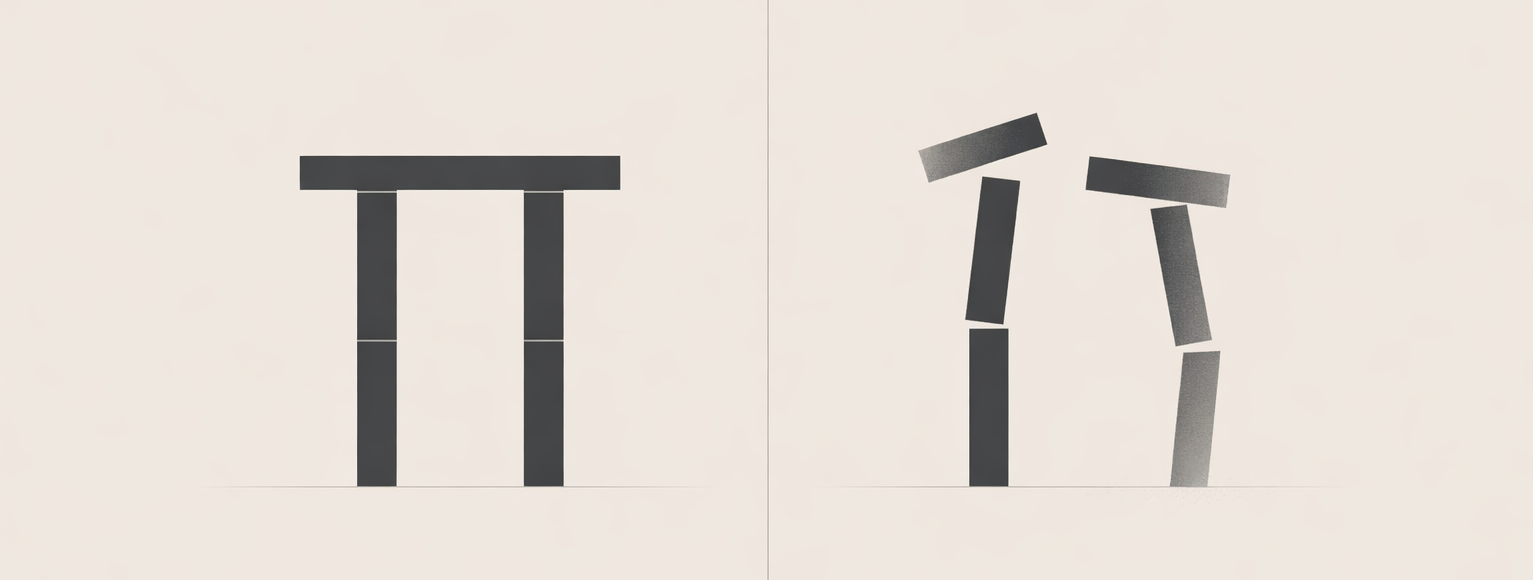
Stillness vs inaction is a difference that matters because the two can look almost identical from the outside. Both may involve waiting. Both may appear quiet. Yet stillness is a purposeful pause that remains oriented toward discernment and action, while inaction leaves a necessary decision unresolved.
The difference is not simply whether you are moving.
The difference is what the pause is doing.
Is it helping you see more clearly?
Or is it helping you avoid the moment when you will have to choose?
A wise pause has an exit.
Avoidance keeps moving the exit farther away.
Stillness vs Inaction: What Is the Real Difference?
Stillness begins with attention.
You slow down because something deserves to be understood before it is acted on.
Perhaps emotion is running high. Maybe the available information is incomplete. Maybe the timing matters. Or perhaps you know that your first reaction is too close to the wound to be trusted yet.
In those moments, waiting can be disciplined.
The mind remains engaged. You are observing, asking questions, gathering information, or allowing emotional intensity to settle.
Inaction feels different.
The decision remains in front of you, but the pause is no longer producing anything useful.
No new information is being gathered.
No clearer question is emerging.
No next step is becoming more visible.
Instead, the decision is simply being postponed.
That is the practical difference between stillness vs inaction. Stillness serves discernment. Inaction leaves responsibility waiting.
Stillness Is Patience With Purpose
A good pause has direction even when it does not yet have movement.
Athletes understand this.
A skilled player does not rush every motion. Instead, they read the field. They watch positioning. They wait for an opening.
From the stands, that moment may look like hesitation.
It is not.
The player is still moving toward the play. The pause is part of the play.
Stillness works the same way in ordinary life.
You may wait before answering a difficult message because you want to respond rather than retaliate.
You may delay a financial commitment because an important number is still missing.
You may sit with a relationship decision because emotion is too loud to distinguish fear from truth.
In each case, the pause has a job.
That is stillness.
When Waiting Becomes Avoidance
Avoidance often borrows the language of wisdom.
I am just waiting for the right time.
I need to think about it a little longer.
I am trying to be patient.
Sometimes those statements are true.
Other times, they protect us from saying the less comfortable sentence:
I know what I need to do, but I do not want to pay the cost of doing it.
That cost may be disappointment.
It may be conflict.
It may be admitting that something is over.
It may be risking failure.
Or it may simply be the discomfort of choosing without perfect certainty.
Avoidance grows when the desire to escape that discomfort becomes stronger than the responsibility to decide.
Therefore, waiting itself is not the problem.
The question is whether waiting still serves the decision.
“The plans of the diligent lead surely to abundance, but everyone who is hasty comes only to poverty.”
Scripture warns against haste, but wisdom does not require endless delay either.
Diligence has movement inside it.
It considers. It prepares. Then it acts.
Spiritually grounded patience is not a way of disappearing from responsibility. It is a way of refusing to let urgency become your master.
How to Know Whether You Are Being Still or Avoiding Action
The most useful test is not how long you have been waiting.
It is whether the pause is still producing something.
Ask yourself these five questions.
The Stillness or Avoidance Check
-
Am I learning anything new?
A useful pause should produce information, perspective, or understanding. -
Is my question becoming clearer?
Stillness usually sharpens the decision. Avoidance often keeps it vague. -
Do I know what information is still missing?
If you cannot name what you are waiting to learn, more waiting may not help. -
What am I afraid will happen if I choose?
This question often reveals whether fear has quietly taken control of the pause. -
What is the next responsible step?
If the next step is already clear, the season for stillness may be ending.
Notice what these questions do.
They do not force speed.
Instead, they test whether waiting still has a function.
That distinction is central to understanding stillness vs inaction.
Signs the Pause Is Still Serving You
A healthy pause usually leaves evidence.
Your thinking becomes clearer.
You can name what you are waiting for.
You are actively gathering information or observing a pattern.
Emotional intensity is settling.
Your next step is becoming more defined.
Even when the answer has not arrived, you are moving closer to it.
That is important.
Stillness may be physically quiet, but internally it is not dead space.
Something is being clarified.
Signs Stillness Has Become Inaction
Inaction leaves a different trail.
You keep revisiting the same thought without learning anything new.
You seek more opinions even though you already have enough information.
You move the deadline every time it gets close.
You call fear “timing.”
You call discomfort “discernment.”
You keep waiting for certainty that the situation cannot realistically provide.
Most importantly, you know the responsible next step and continue refusing to take it.
At that point, the pause may no longer be protecting clarity.
It may be protecting you from courage.
Stillness vs Procrastination: The Question of Fear
Procrastination is not always laziness.
Sometimes it is fear with an intelligent explanation.
A thoughtful person can build an impressive case for waiting.
There is always another angle to consider. Another conversation to have. Another possibility to research.
That can continue indefinitely.
Eventually, one question becomes unavoidable:
What new information am I reasonably expecting more time to produce?
If you have a real answer, continue the pause.
If you do not, more thinking may simply be extending the distance between knowing and doing.
The distinction is not comfortable.
But clarity often is not.
How to Know When It Is Time to Move
Movement becomes appropriate when the next responsible step is clearer than the reason for continuing to wait.
Notice the standard.
It is not complete certainty.
Complete certainty is often unavailable.
You may still feel nervous.
You may still wish you had one more guarantee.
You may still dislike the cost.
None of that automatically means you should remain still.
Courage often begins before comfort arrives.
Once you understand what you reasonably can, the discipline changes.
First, you had to resist rushing.
Now you may have to resist hiding.
Both require self-governance.
Stillness, Faith, and the Courage to Move
Faith can deepen stillness, but faith should not be used to disguise avoidance.
There are seasons when waiting is faithful.
There are also seasons when the prayer has already changed from “Show me” to “Give me courage.”
That distinction is deeply human.
Sometimes we keep asking for direction because obedience feels more costly than uncertainty.
Yet spiritual discernment is not only about hearing.
Eventually, it is also about responding.
Stillness helps us listen without panic.
Courage helps us move without demanding guarantees.
The two belong together.
The Groundwork
A Wise Pause Has an Exit
Stillness is useful while it is helping you see, understand, prepare, or discern.
Once the responsible next step becomes clear, continuing to wait may no longer be wisdom.
Do not rush because pressure demands movement. But do not hide inside reflection when the work has become action. A wise pause has an exit. Avoidance keeps moving the exit farther away.
Further Groundwork
Stillness Is Strategy: Why Silence Builds Clarity and Control
The governing principle behind protecting decision space when pressure arrives.
How Stillness Improves Decision Making
How a deliberate pause can improve the quality of the decision before action begins.
Why Reflection Improves Judgment
How examining past experience can strengthen judgment in future decisions.
Structure Builds Freedom
How clear structure reduces drift and makes intentional movement easier.
Receipts
For broader context on mindfulness, attention, and cognitive control, see American Psychological Association — What Are the Benefits of Mindfulness? .
Frequently Asked Questions About Stillness vs Inaction
What is the difference between stillness and inaction?
Stillness is a purposeful pause that remains oriented toward discernment and action. Inaction leaves a necessary decision unresolved without producing clearer understanding or a responsible next step.
How do I know if I am being still or avoiding action?
Ask whether the pause is producing useful information, clearer questions, better perspective, or a next step. If you are repeating the same uncertainty without learning anything new, the pause may have become avoidance.
When should stillness end?
Stillness should end when additional waiting is no longer producing meaningful clarity and the next responsible action has become clear enough to take.
Is waiting always a form of inaction?
No. Waiting can be disciplined when it is used to gather information, allow emotion to settle, observe patterns, or respect timing. It becomes inaction when it no longer serves understanding or responsible movement.
Can stillness become procrastination?
Yes. A reflective pause can become procrastination when you continue delaying after the available information is sufficient and the real barrier is fear, discomfort, or unwillingness to choose.

About the Builder · Stillness & Soul
N. Grace James builds inside Groundwork Daily’s Stillness & Soul territory, exploring discernment, emotional discipline, reflection, faith, and the quiet work required to know when to wait and when to move.
Her work returns to a practical question: when pressure arrives, what helps us remain responsible for the choice instead of surrendering authorship to urgency, fear, emotion, or avoidance?