

The connection between the internet and cultural homogenization becomes clear when you remember how unmistakably local culture once felt. You could walk into a New York City school hallway and make a reasonable guess about where somebody lived before they opened their mouth.
Brooklyn had a walk. The Bronx had a cadence. Queens moved with its own quiet confidence. Nobody printed a manual for any of it. Neighborhoods built their own slang, fits, jokes, music, and unspoken rules. You either grew up fluent in those codes or quickly got clocked as an outsider.
Travel confirmed those differences on a larger scale. You could fly to Los Angeles or London, hear songs that had not reached New York radio, find clothes nobody back home had discovered, and pick up phrases that felt like contraband.
Distance was doing a job. It protected difference.
That job is nearly obsolete. The relationship between the internet and cultural homogenization is no longer an abstract theory. It is what happens when local scenes connect to the same global platforms, encounter the same incentives, and absorb the same cultural material at nearly the same time.
Human beings may produce more cultural material than ever, yet more places increasingly look, sound, speak, and dress alike.
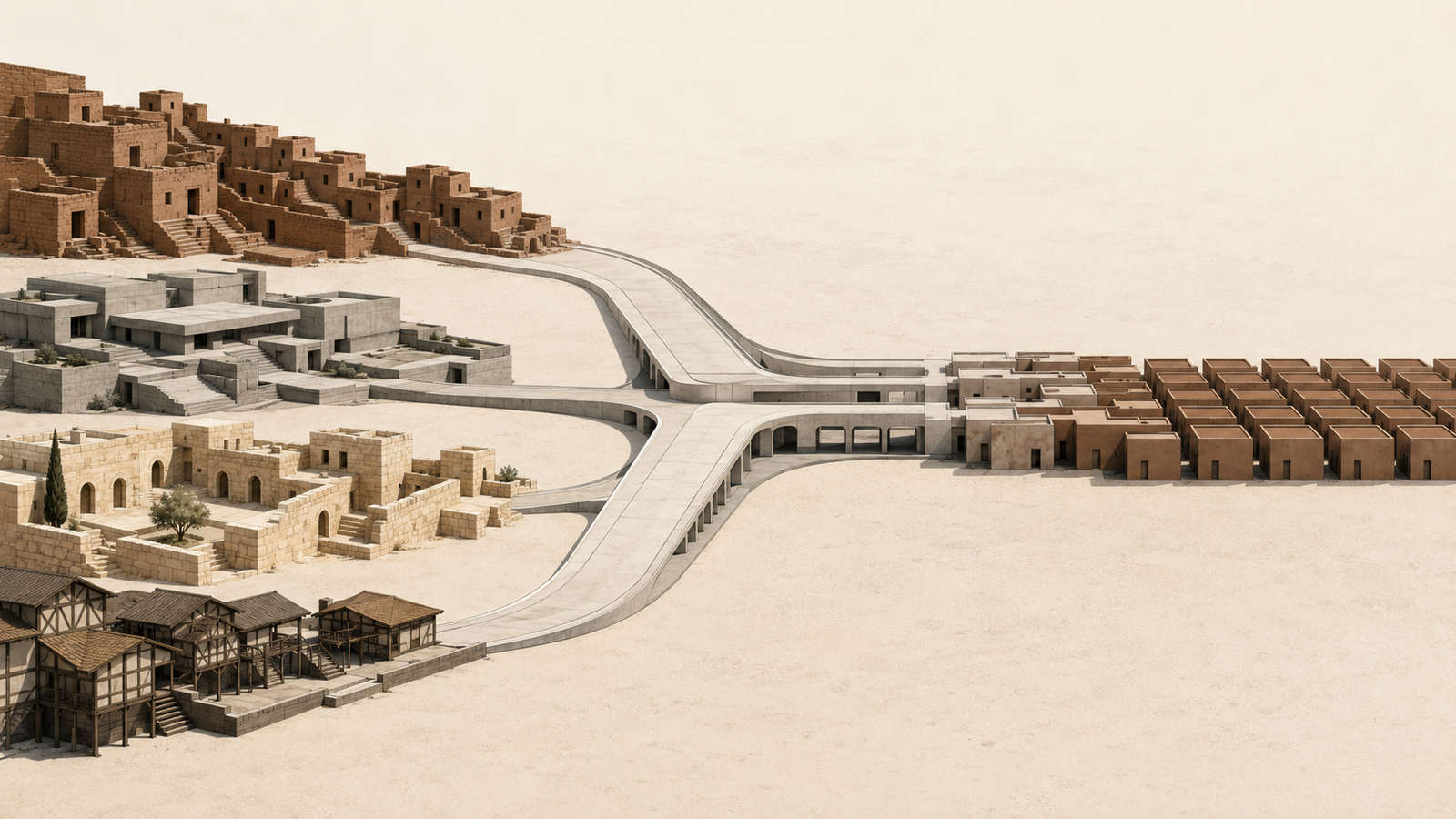
How the Internet and Cultural Homogenization Changed Cultural Privacy
Let us get one thing clear before anybody declares that the internet murdered culture.
It did not.
Young people still invent slang. Musicians continue developing sounds nobody has named. Neighborhoods still produce distinctive ways of speaking, dressing, gathering, and moving through the world. Cultural creation never stopped.
What changed is what happens immediately after something gets created.
A phrase can appear online at breakfast and reach a stranger in Manchester by dinner. A dance can leave a bedroom in Atlanta and land in a commercial before its creator has given it a name.
Culture once received a little privacy before it had to perform for the world. Now it barely gets a warning.
That distinction matters. The internet did not eliminate creativity. It weakened the time and privacy that once allowed a community to define its creations before outsiders copied, categorized, and commercialized them.
Why Distance Once Protected Local Culture
Local culture never needed formal permission. It needed boundaries.
Those boundaries did not require laws or velvet ropes. Geography, local record shops, barbershops, church basements, independent radio stations, neighborhood stores, and familiar gathering places provided enough separation for something distinctive to grow.
These spaces allowed communities to build references that outsiders did not immediately understand. Slang matured through repetition among people who lived it. Fashion adapted to the weather, the block, the budget, and the competition. Music absorbed the architecture of local clubs and the technology people could actually access.
That was not always exclusion for its own sake. Often, it was incubation.
A culture had time to become fluent in itself before the outside world arrived with questions, cameras, and commercial expectations.
The internet did not politely knock on that door. It took the door off its hinges.
How Streaming Changed Local Music Scenes
Music provides some of the clearest evidence of cultural compression.
A sound once needed years to travel. It moved through mixtapes, migration, touring artists, independent record stores, visiting relatives, magazines, radio programmers, and DJs who guarded their crates like state secrets.
By the time a musical movement crossed an ocean, it rarely arrived unchanged. The receiving city filtered that sound through its own history, equipment, language, dance floor, and social conditions. What emerged became an adaptation rather than a replica.
That delay was productive. It gave a local scene time to build an identity around its music. Other communities also gained room to transform what they encountered instead of reproducing the same cultural moment.
Today, a record can drop in Lagos, Kingston, Seoul, London, Johannesburg, or Atlanta and reach playlists worldwide within hours. According to the IFPI Global Music Report 2026, streaming generated nearly 70 percent of global recorded music revenue in 2025.
That reach is extraordinary. An artist working in a small studio can find listeners who were inaccessible under the old distribution system.
However, reach without a runway changes the cultural development cycle. A sound can become discovered, clipped, categorized, copied, marketed, and exhausted before the people who created it have finished deciding what it means.
This is where the internet and cultural homogenization reinforce each other. Worldwide access arrives before local identity has fully matured.
Why Cultural Distribution Moves Faster Than Ownership
Once culture moves at digital speed, an economic problem follows.
Distribution now travels faster than ownership can keep pace.
Someone introduces a phrase, movement, visual language, or sound on Monday. By Friday, larger accounts reproduce it for their audiences. Within weeks, brands and established artists may use polished versions for people who have no idea where the original work began.
The culture makes the trip, but the credit often does not. Attention spreads while ownership remains unresolved. Revenue usually lands far from the place where the idea began.
The link between the internet and cultural homogenization therefore concerns more than aesthetics. It also determines who captures the economic value created when something local becomes globally recognizable.
This is not an argument that cultures should remain separate. Communities have always influenced one another, and exchange is one of the ways culture grows.
The structural problem emerges when platforms circulate culture faster than communities can build archives, trademarks, businesses, distribution systems, legal protections, and narrative authority around what they created.
Originators create the value. Platforms identify what can scale. Larger players frequently capture the market.
How Algorithms Flatten Local Culture
Any serious discussion of the internet and cultural homogenization must examine platform incentives. Platforms are not neutral windows into culture. They are sorting systems with business models.
Algorithms influence what receives a second look and what disappears beneath the feed. They reward material that large audiences can recognize, imitate, and redistribute quickly.
Local specificity creates friction within a system built for scale. A local reference may require context. An unfamiliar sound might need time. A neighborhood joke may remain illegible to outsiders.
The feed rarely rewards that kind of patience. It favors the version that requires the least explanation.
UNESCO has warned that algorithm-driven distribution can produce a homogenization of access to cultural expression. The concern is not that every person receives an identical post. A deeper problem arises when a narrow group of platforms determines which cultural expressions become visible, repeatable, and profitable.
The feed does not need to erase every local difference.
It only needs to make imitation more rewarding than distinction.
Why Global Platforms Create a Shared Cultural Lexicon
A teenager in Brooklyn may now share more digital references with a teenager in Seoul or Lagos than with the seventy-year-old living on the same block.
They recognize the same memes, audio clips, visual formats, phrases, celebrities, and short-lived inside jokes. Global platforms have created a shared cultural vocabulary at a scale earlier media systems could not match.
That development is not automatically harmful. Digital access has connected isolated people with communities they might never have found. It has also introduced audiences to artists, traditions, and ideas that once remained trapped behind geographic and industrial gatekeepers.
Still, connection is not the same as cultural depth.
A person can recognize the surface of a dozen cultures without understanding the conditions that produced any of them. Slang becomes vocabulary with its history removed. Music becomes a mood without geography. Clothing becomes an aesthetic without community. Ritual becomes content.
The debate over the internet and cultural homogenization ultimately concerns this loss of context. Culture becomes easier to access and easier to separate from the people who made it meaningful.
A 2026 study published in the Journal of Computer-Mediated Communication compared 200 popular YouTube reviews across five languages. Researchers found that creators relied on similar evaluation styles across countries, suggesting that platform incentives help shape how people present themselves.
The researchers did not reduce this convergence to Western culture simply taking over. Instead, the platform’s operating logic appeared across every language they examined.
When the format becomes similar everywhere, cultural material becomes easier to circulate and easier to detach from its source.
How the Internet Changed Cultural Discovery Through Travel
Travel once carried a stronger promise of discovery.
You could enter a store in another city and find something unavailable at home. A local station might introduce a song your market had never played. Clothing, speech, food, and public behavior could unmistakably belong to one place.
Now the algorithm often arrives before your flight does.
The same brands occupy commercial districts across several continents. Similar songs follow travelers through airports, hotels, restaurants, and social feeds. Clothing trends appear in distant cities during the same season, as though everyone received the same group message.
Travel still matters. Physical places carry histories, relationships, institutions, foodways, and social rhythms that no feed can fully reproduce.
Yet the differences between destinations may feel less visible upon arrival because travelers have already consumed the highlight reel. People increasingly visit places they have seen online, wearing clothing sold there and using language residents already recognize from the same platforms.
Cultural Exchange Is Not the Problem. Extraction Is.
The answer is not to return to a time when nobody knew what was happening three states away. Nostalgia is not a strategy, and older cultural systems had their own gatekeepers.
Geographic and industrial barriers prevented many talented people from reaching audiences simply because they lived outside established cultural centers. Digital distribution dismantled some of those barriers. That remains a meaningful gain.
Faster cultural influence can also produce new art, language, music, and identity. Cultural exchange is not the villain.
Extraction begins when a small group of commercial platforms mediates that exchange without organizing it around origin, memory, ownership, attribution, or community benefit. Their systems prioritize attention because attention drives revenue.
That distinction influences what survives, who receives recognition, and who builds durable wealth from cultural creation.
How Communities Can Protect Local Culture
Communities cannot protect local culture by demanding that everyone log off. That is nostalgia wearing a policy costume.
A practical response must rebuild the conditions that allow local distinction to develop, mature, and retain value after it reaches a wider audience.
Protect spaces where culture can develop
Communities need clubs, studios, independent stores, local publications, performance venues, neighborhood gatherings, and private creative networks. These spaces give ideas room to develop before they must perform for the entire internet.
Build institutions around cultural creators
Creators need ownership structures, rights education, independent distribution, management capacity, legal support, and capital. Cultural production without institutional support leaves originators vulnerable once a trend escapes their control.
Document origins before trends erase them
Local journalists, historians, artists, and cultural institutions should record who created a movement, where it emerged, and what conditions gave it meaning. Memory supports attribution, and attribution strengthens ownership.
Reward cultural specificity
Creators should not have to remove every local reference to become legible to audiences three time zones away. Publishers, funders, institutions, and audiences can support work that remains rooted even when it requires curiosity from outsiders.
Teach people to interpret the feed
Exposure does not equal understanding. Cultural literacy helps people identify origins, recognize the communities behind a trend, and distinguish meaningful participation from extraction.
The Real Talk About Internet and Cultural Homogenization
The internet did not stop people from making culture. It changed the environment in which culture must survive.
Digital platforms stripped away much of the time, distance, and privacy that once allowed communities to define themselves before the outside world arrived. Those same platforms also gave billions of people access to music, art, and ideas they might never have discovered otherwise.
Both realities can exist at once. That tension defines the relationship between the internet and cultural homogenization.
We are not living in a world without culture. We are living in a world where culture travels faster than context, imitation moves faster than understanding, and visibility moves faster than ownership.
Local distinction cannot survive through nostalgia alone. It requires institutions, archives, ownership systems, and protected creative spaces strong enough to preserve the connection between what communities create and who they are.
The world does not need less cultural exchange. It needs more communities powerful enough to participate in that exchange without disappearing inside it.
Continue Building
Explore how platforms shape perception, imitation, and cultural value.
→ Framework: The Culture Isn’t Broken. The Incentives Are
→ Attention: What Gets Attention Gets Imitated
→ Perception: How Perception Is Engineered
Build beyond the feed.
Groundwork Daily examines the systems beneath culture, power, ownership, and everyday life.
Receipts
→ UNESCO: Cultural Diversity and Algorithmic Homogenization
→ IFPI Global Music Report 2026
→ Journal of Computer-Mediated Communication: Global Creator Culture
About Rochelle “Ro” Hayes

Rochelle “Ro” Hayes is the Groundwork Daily builder behind Real Talk Blueprint, a series examining culture, relationships, accountability, communication, and the behavior people often explain away before they examine it.
Ro works primarily within Culture, Media & Leadership, tracing how attention incentives, public performance, and social expectations shape what people normalize and reproduce.
