
Last updated: August 2026
Learning how to build a community archive begins long before the first photograph is scanned or the first oral history is recorded. It begins by deciding how a community will preserve ownership, protect context, assign responsibility, and ensure that today’s work remains useful decades from now.
Many preservation projects start with urgency. An elder is aging. A neighborhood landmark is closing. Family photographs are deteriorating. Community organizations realize that important records exist only inside personal closets, filing cabinets, aging hard drives, or social media accounts.
That urgency often inspires remarkable volunteer effort. Unfortunately, urgency alone rarely produces durable institutions.
Many community archives successfully collect material. Far fewer successfully preserve the governance systems that allow future generations to understand, trust, and continue using that material.
Without governance, an archive slowly becomes a collection of disconnected files. The photographs remain. The recordings still exist. Yet the names disappear, permissions become uncertain, metadata is lost, and institutional memory leaves alongside the people who originally organized the work.
That is why community archives matter. They preserve more than objects. They preserve relationships, context, and the evidence communities need to tell their own stories with accuracy and continuity.
This guide explains how to build a community archive that can remain trusted long after its founders have stepped away.
Table of Contents
- Why Some Community Archives Last
- 1. Begin With a Clear Institutional Mandate
- 2. Build Governance Before Growth
- 3. Control Intake Before Collections Expand
- 4. Preserve Context Alongside Content
- 5. Build Preservation Systems Communities Can Maintain
- 6. Govern Public Access Carefully
- 7. Fund Operations Instead of Projects
- 8. Plan for Leadership Succession
- A First-Year Implementation Roadmap
- The Community Archive Durability Test
Why Some Community Archives Last While Others Disappear
Communities often assume preservation is primarily a technical problem. Consequently, discussions frequently focus on scanners, cloud storage, digitization, databases, websites, or artificial intelligence.
Those tools certainly matter. However, they rarely determine whether an archive survives.
Most archives fail because governance breaks before technology does.
When responsibilities remain undocumented, leadership changes become disruptive. Likewise, when ownership is unclear, legal uncertainty prevents future use. Furthermore, when metadata disappears, future generations inherit files without understanding what they represent.
Eventually, the archive becomes difficult to trust even though much of the material still exists.
Communities therefore preserve far more than photographs, recordings, newspapers, meeting minutes, or artifacts.
They preserve institutional memory.
Institutional memory allows communities to answer questions that individual memory cannot reliably answer over time.
- Who created this?
- When was it created?
- Why was it preserved?
- Who owns it?
- How may it be used?
- How does it relate to everything else?
Every unanswered question weakens future stewardship.
Conversely, every documented answer strengthens institutional continuity.
Groundwork Principle
Collections preserve information. Institutions preserve meaning. Lasting archives require both.
1. Begin With a Clear Institutional Mandate
The strongest community archives begin with a surprisingly simple question.
What exactly exists to be preserved?
Without a written answer, every future decision becomes more difficult.
A clear institutional mandate establishes boundaries before collections begin expanding. As a result, volunteers understand what belongs in the archive, donors understand what the organization accepts, and future leaders inherit consistent decision-making rather than personal opinions.
Every archive should clearly define:
- the community it serves;
- the historical period it documents;
- the geographic area it covers;
- the types of materials accepted;
- materials intentionally excluded;
- its long-term public purpose.
These decisions reduce future conflict because they transform subjective judgment into repeatable governance.
For example, an archive documenting neighborhood civil rights organizations should not gradually become a general storage facility for unrelated memorabilia. Likewise, an archive preserving local music history should establish whether it accepts only original material or also preserves digital reproductions.
Every additional collection increases long-term maintenance obligations. Therefore, thoughtful boundaries strengthen sustainability.
This is one practical expression of culture as infrastructure. Institutions remain durable because they define responsibilities before they expand capacity.
2. Build Governance Before Growth
Communities frequently describe archives as community-owned. However, ownership without governance creates uncertainty.
Someone must approve acquisitions.
Someone must authorize access.
Someone must manage legal agreements.
Someone must oversee preservation budgets.
Someone must resolve disagreements when priorities conflict.
If those responsibilities exist only inside one person’s memory, the archive remains fragile regardless of how many records it contains.
Instead, durable institutions document authority.
A basic governance structure does not need to be large. Nevertheless, it should identify who carries responsibility for stewardship, collections, finance, technology, community engagement, and strategic oversight.
Every Governance Policy Should Define
- legal ownership;
- institutional host organization;
- collection stewardship responsibilities;
- approval authority;
- financial oversight;
- conflict resolution procedures;
- emergency succession authority.
Clearly documented governance protects communities from dependence on individual personalities.
When responsibilities survive leadership transitions, institutional trust compounds over time instead of restarting with every new generation.
Structural Insight
People preserve archives. Governance preserves the people who preserve archives.
3. Control Intake Before Collections Expand
Many organizations believe collection growth automatically strengthens an archive.
In reality, unmanaged growth often creates institutional risk.
Every donated photograph, recording, newspaper clipping, organizational record, or artifact introduces new responsibilities. Therefore, every acquisition should enter through a documented intake process rather than informal acceptance.
At minimum, every accession should record:
- source or donor;
- date received;
- description of materials;
- condition assessment;
- ownership status;
- copyright information;
- usage restrictions;
- storage location;
- unique accession number.
The Society of American Archivists recommends using deeds of gift and related documentation to clarify ownership, rights, responsibilities, and future use.
That distinction matters because possessing material does not automatically grant permission to publish, reproduce, modify, or license it.
Likewise, digital copies do not automatically transfer intellectual property.
Communities protect themselves by documenting these questions before preservation work begins.
Otherwise, uncertainty compounds alongside the collection.
4. Preserve Context Alongside Content
Learning how to build a community archive requires preserving more than physical or digital objects. Communities must also preserve the information that explains why those objects matter.
That information is called context.
Without context, collections gradually lose meaning. A photograph becomes an unidentified face. An oral history becomes an anonymous voice. Likewise, a meeting agenda becomes little more than an old document whose importance nobody can explain.
Consequently, metadata should never be treated as administrative paperwork. Instead, it should be viewed as permanent institutional infrastructure.
Every collection record should answer as many of the following questions as possible:
- Who created this material?
- When was it created?
- Where was it created?
- Why was it created?
- Who appears in it?
- How is it connected to other records?
- Who donated it?
- What restrictions apply?
- Has anything been changed since acquisition?
Although metadata often receives little public attention, it determines whether future researchers can actually use the archive.
Communities frequently underestimate how quickly institutional memory disappears. Volunteers relocate. Board members retire. Founders pass away. Family members inherit boxes of records without understanding what they contain.
Metadata bridges that gap.
Instead of relying upon personal memory, future generations inherit documented relationships that remain understandable decades later.
Groundwork Principle
Archives preserve evidence. Metadata preserves understanding.
Create a Collection Control Spine
Every durable archive should establish one central system that connects every important record.
Whether that system begins as a spreadsheet, database, or collection management platform matters less than consistency.
The control spine should connect five essential records:
- Accession Record — how the material entered the archive.
- Location Record — where physical and digital copies are stored.
- Description Record — who created the material and what it documents.
- Rights Record — ownership, copyright, permissions, and restrictions.
- Activity Record — conservation work, movement, exhibitions, reproductions, and changes over time.
When those five records remain connected, collections become easier to manage, easier to understand, and significantly easier to preserve.
5. Build Preservation Systems Communities Can Maintain
Technology changes continuously. Therefore, preservation strategies should prioritize repeatability instead of complexity.
Many archives fail because they build technical systems that only one person understands.
Initially, sophisticated software appears impressive. Eventually, however, unsupported complexity becomes another preservation risk.
The strongest preservation systems are not necessarily the most advanced.
Instead, they are the systems ordinary staff, volunteers, and future leaders can consistently operate.
The Digital Preservation Coalition’s Community Archives Toolkit recommends approaching preservation as a gradual institutional capability rather than a one-time technical project.
That philosophy aligns closely with long-term community stewardship.
Minimum Preservation Standards
Every community archive should establish the following baseline controls:
- an inventory of every digital asset;
- master preservation files separated from public access copies;
- multiple backups stored in separate locations;
- documented file naming standards;
- preferred preservation file formats;
- scheduled integrity checks;
- documented restoration procedures;
- administrator account recovery documentation;
- vendor exit plans.
Each safeguard reduces institutional risk.
Together they create resilience.
The National Digital Stewardship Alliance Levels of Digital Preservation provides an excellent maturity framework that allows organizations to strengthen preservation practices gradually rather than attempting unrealistic perfection.
Backups Are Not Preservation
Many organizations assume their archive is protected because another copy exists.
Unfortunately, backups often fail precisely when organizations finally need them.
A backup that has never been restored remains an assumption rather than verified protection.
Accordingly, every archive should schedule periodic restoration tests.
Testing confirms that files remain readable, storage media remain functional, permissions remain intact, and institutional knowledge has not quietly disappeared.
Structural Insight
Redundancy is not waste. It is how institutions survive predictable failure.
6. Govern Public Access Carefully
Preservation without access limits public value.
However, unrestricted access can undermine community trust.
Consequently, successful archives design thoughtful access policies instead of assuming every record belongs online.
Different materials require different levels of protection.
For example, some collections may be publicly accessible immediately. Others may require reading-room access, researcher approval, temporary restrictions, or culturally appropriate protocols.
The important principle is consistency.
Access decisions should follow documented policies rather than changing according to individual preference.
Every Access Policy Should Explain
- who approves requests;
- which collections remain public;
- which collections remain restricted;
- how researchers request access;
- how corrections are submitted;
- how takedown requests are evaluated;
- how sensitive community material is protected.
The Society of American Archivists’ Code of Ethics recognizes that responsible access requires balancing openness with privacy, legal obligations, contractual agreements, and community stewardship.
Therefore, transparency should never require abandoning responsibility.
Discovery Matters as Much as Availability
An archive can exist online while remaining practically invisible.
Consequently, communities should invest in discovery as carefully as preservation.
Finding aids, searchable catalogs, descriptive collection guides, and consistent metadata allow researchers to understand what exists before requesting individual materials.
Furthermore, descriptive language should remain understandable to both specialists and community members.
Communities should recognize themselves inside their own archives.
Finally, archives should establish documented procedures for correcting errors, updating descriptions, and incorporating new community knowledge over time.
In this way, access becomes an ongoing governance practice instead of a one-time publication decision.
Groundwork Principle
Public access creates trust only when communities also trust the institution providing that access.
7. Fund Operations Instead of Projects
Many communities successfully raise money to launch an archive. They purchase scanners, organize collection days, digitize photographs, and celebrate the public unveiling of a new website.
Those achievements deserve recognition. Nevertheless, they represent the beginning of stewardship rather than its completion.
The greatest long-term threat to many community archives is not insufficient enthusiasm. Instead, it is the absence of sustainable operational funding.
Every preserved photograph requires storage.
Every digital file requires monitoring.
Every collection requires description.
Every website requires maintenance.
Every volunteer eventually needs training.
Those responsibilities continue long after launch events end.
Consequently, communities should build financial plans around recurring stewardship instead of one-time projects.
Separate Startup Costs From Operating Costs
Healthy archives distinguish between building an institution and maintaining one.
Startup expenses may include digitization equipment, website development, shelving, software implementation, and initial cataloging.
Operating expenses continue every year.
Typical recurring costs include:
- digital storage;
- cybersecurity;
- collection conservation;
- insurance;
- metadata management;
- software subscriptions;
- professional consultation;
- staff development;
- community programming;
- technology replacement.
Ignoring those recurring obligations creates invisible institutional debt.
Eventually, preservation slows because maintenance can no longer keep pace with growth.
Diversify Funding Sources
No archive should depend entirely upon a single grant, donor, sponsor, or founding organization.
Funding concentration creates institutional vulnerability.
Instead, durable archives often combine multiple revenue sources, including:
- individual donations;
- community memberships;
- foundation grants;
- government support;
- institutional partnerships;
- research services;
- licensing revenue;
- educational programming;
- earned income where appropriate.
The objective is not maximum revenue.
The objective is operational resilience.
When one funding source changes, the archive should remain capable of fulfilling its core preservation responsibilities.
Structural Insight
Archives rarely disappear because communities stop caring. More often, they disappear because maintenance was never funded.
8. Plan for Leadership Succession Before It Becomes Necessary
Every archive eventually experiences leadership transition.
Founders retire.
Volunteers relocate.
Board members rotate.
Technology changes.
Organizations merge.
Buildings close.
Therefore, succession planning is not a contingency plan. It is part of preservation itself.
An archive has not truly been preserved if only one person understands how it operates.
Create an Institutional Operations Manual
Every archive should maintain documentation explaining how the institution functions.
That manual should include:
- governance structure;
- roles and responsibilities;
- account credentials and recovery procedures;
- storage locations;
- vendor information;
- preservation schedules;
- rights documentation;
- access procedures;
- emergency response plans;
- succession procedures.
Most importantly, at least two authorized individuals should understand every essential workflow.
Institutional knowledge should never reside exclusively inside one person’s memory.
Plan for Transfer, Not Just Survival
Some archives eventually outgrow their original organizations. Others merge with museums, libraries, universities, or historical societies.
Consequently, governance documents should explain how collections may transfer responsibly if circumstances require.
Those policies should protect:
- community ownership;
- donor agreements;
- cultural restrictions;
- metadata integrity;
- collection relationships;
- institutional transparency.
Planning for transfer does not anticipate failure.
Rather, it acknowledges that institutions evolve while stewardship responsibilities remain.
Groundwork Principle
Communities preserve culture across generations only when responsibility becomes transferable.
A First-Year Implementation Roadmap
Building a community archive does not require completing every system immediately.
Instead, successful institutions establish durable foundations before expanding collections.
First 90 Days
- Define the archive’s mission.
- Establish governance responsibilities.
- Inventory existing collections.
- Create collection policies.
- Select preservation standards.
Months Four Through Six
- Create accession procedures.
- Develop metadata standards.
- Implement backup routines.
- Adopt rights documentation.
- Create public collection descriptions.
Months Seven Through Nine
- Publish finding aids.
- Train additional volunteers.
- Test restoration procedures.
- Evaluate cybersecurity.
- Review governance effectiveness.
Months Ten Through Twelve
- Prepare the next operating budget.
- Review succession documentation.
- Audit collection records.
- Evaluate preservation priorities.
- Publish an annual stewardship report.
This sequence intentionally emphasizes institutional capacity before institutional scale.
Communities that strengthen systems first usually preserve more history over the long term than communities that simply collect more material.
The Community Archive Durability Test
Before considering an archive durable, ask seven practical questions.
| Question | Purpose |
|---|---|
| Can every collection be traced to its source? | Protects provenance. |
| Can future users understand each record? | Preserves context. |
| Are ownership and permissions documented? | Protects legal use. |
| Can another team operate the archive tomorrow? | Protects continuity. |
| Can collections survive technical failure? | Protects preservation. |
| Is annual stewardship funded? | Protects sustainability. |
| Does the archive strengthen community trust? | Protects legitimacy. |
Each “yes” strengthens institutional durability.
Each unanswered question identifies the archive’s next priority.
Preservation Is Ultimately a Governance Practice
Communities often begin preserving history because they fear losing it.
That motivation is understandable.
However, lasting preservation requires something more durable than urgency.
It requires governance.
Communities that preserve their history successfully create systems capable of surviving leadership changes, financial uncertainty, technological evolution, and generational transition.
Ultimately, the goal is not simply to collect records.
The goal is to create an institution future generations can inherit with confidence.
Collections preserve the past.
Institutions preserve the ability to remember it.
Continue Building
Community archives become stronger when they are connected to broader systems of ownership, governance, and cultural continuity.
- Framework: Culture Is Infrastructure, Not Performance
- Ownership: Culture Travels Faster Than Ownership
- Evidence: Why Cultural Archives Matter
Build Stronger Institutions Every Week
Groundwork Daily explores the systems that strengthen communities through governance, ownership, stewardship, and institutional design.
Receipts
- Digital Preservation Coalition — Community Archives Digital Preservation Toolkit
- National Digital Stewardship Alliance — Levels of Digital Preservation
- Society of American Archivists — A Guide to Deeds of Gift
- Society of American Archivists — Core Values and Code of Ethics
- Council on Library and Information Resources — Sustainability of Digital Cultural Heritage
About Adrian Cole
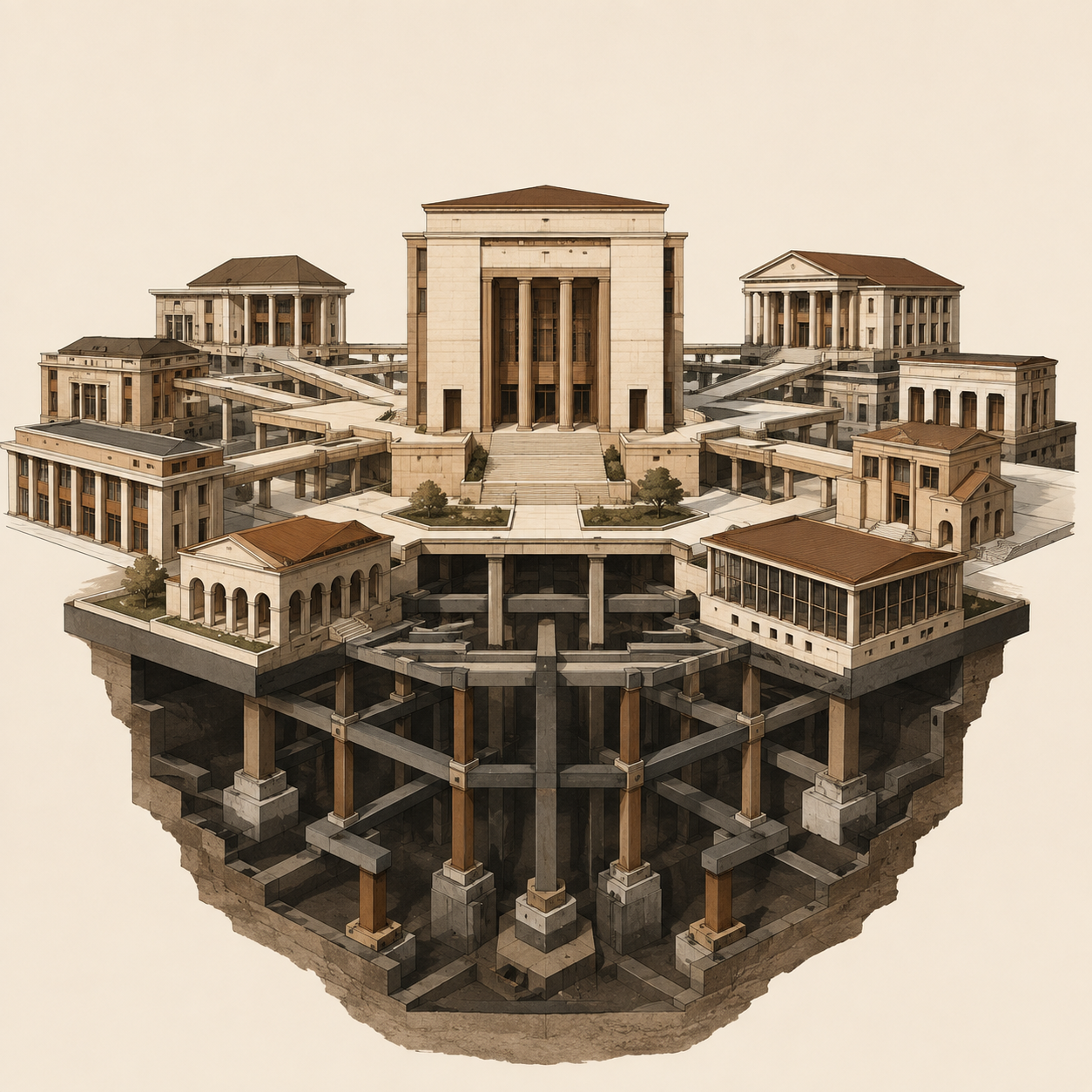
Adrian Cole writes Cultural Structures, Groundwork Daily’s series exploring how governance, ownership, institutional design, and stewardship shape cultural continuity across generations.
His work examines the systems that determine whether communities merely preserve history or successfully preserve the institutions capable of protecting that history over time.
