

Signal Check · Economic Systems
The cost of economic resilience is rising because reliable systems increasingly need expensive options before disruption arrives. Supply chains need alternate suppliers. Energy systems need spare capacity. Digital infrastructure needs backups and stronger security. Meanwhile, businesses need inventories, financing flexibility, and recovery plans.
Governments are also paying closer attention to strategic production capacity that markets once treated mainly as a question of efficiency. As a result, one of the defining tensions in the global economy is becoming easier to see: the structures that make a system harder to break can also make it more expensive to operate.
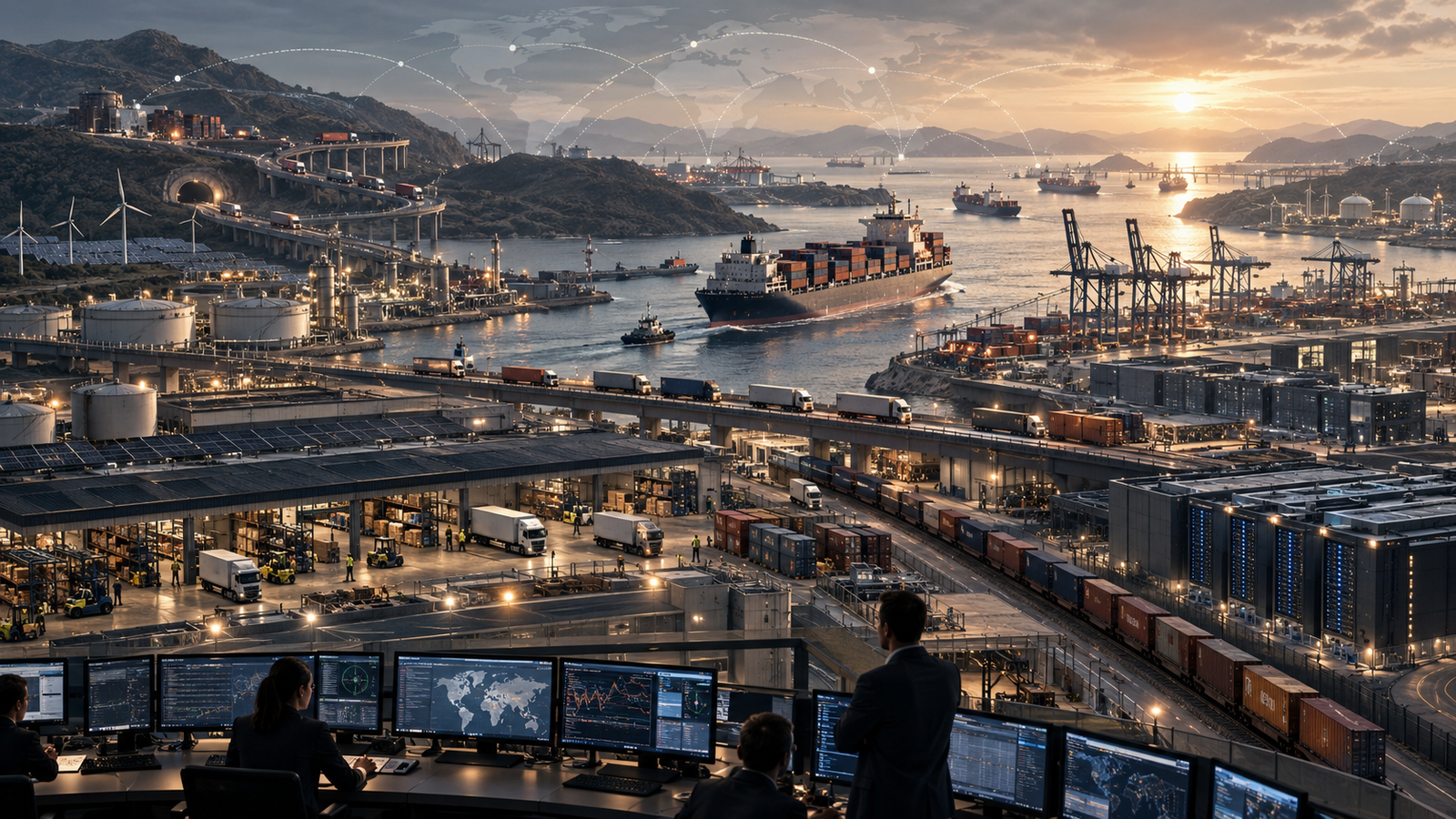
Why the Cost of Economic Resilience Is Rising
Stability can create a misleading picture. A cargo ship reaches port. Electricity stays on. A factory receives its components. Payments clear, cloud services remain available, and grocery stores restock their shelves.
From the outside, therefore, the system may appear uneventful. Yet the absence of visible failure does not reveal how much work occurred behind the scenes.
For example, the ship may have had another route available. A utility may have maintained reserve capacity. The manufacturer may have qualified multiple suppliers. Likewise, a technology company may have replicated data across regions, while a retailer carried more inventory than a perfectly efficient system would require.
In each case, continuity exists because the system contains options.
The Signal
Resilience is purchased before it is needed.
Redundancy, spare capacity, inventory, security, alternate suppliers, backup infrastructure, reserves, and recovery systems impose costs during ordinary periods. However, their economic value becomes clearest when the primary system fails.
This is the next layer beneath Groundwork Daily’s analysis of global economic trends in 2026. That earlier Signal Check identified a broader pattern: maintaining reliable systems increasingly requires redundancy, security, capital, and institutional capacity.
Here, the focus narrows to the economics underneath that signal. Specifically, what does it cost to create options before they are needed, and who ultimately pays for them?
Pressure → Redundancy → Added Cost → Continuity
Economic Resilience vs. Maximum Efficiency
Efficiency and resilience are not opposites. In fact, strong systems need both. Nevertheless, the two goals can reward different design choices.
Efficiency Asks
How little can the system use?
Efficient systems reduce unnecessary inventory, idle capacity, duplicated processes, excess staffing, unused infrastructure, and avoidable capital costs.
Resilience Asks
What happens when the first plan fails?
Resilient systems preserve alternate routes, recovery capacity, reserves, institutional knowledge, security controls, and enough flexibility to absorb disruption.
The conflict appears when optimization removes the slack that would have absorbed a shock.
For instance, a single supplier may be cheaper than maintaining relationships with three. Just-in-time inventory may use less working capital than larger buffers. Similarly, one highly utilized factory may produce more efficiently than several facilities operating below maximum capacity.
Those choices can be rational. At the same time, they concentrate dependence.
When nothing goes wrong, redundancy can look wasteful. By contrast, when a critical component, route, facility, or platform fails, the same redundancy can become the difference between interruption and continuity.
Therefore, the economic question is not whether every system should maximize redundancy. Doing so would create its own waste. Instead, institutions must decide which failures would be costly enough to justify paying for another option in advance.
Supply Chains Add to the Cost of Economic Resilience
Global trade offers one of the clearest examples. International supply chains became extraordinarily efficient because firms could specialize rather than manufacture every component themselves.
As a result, companies could source from producers with the right combination of price, expertise, scale, infrastructure, and labor. That specialization remains economically powerful. Current World Trade Organization indicators also show global merchandise trade continuing to demonstrate resilience despite geopolitical and policy uncertainty.
Even so, the risk calculation around concentration has changed.
A business that depends on one supplier, port, region, semiconductor manufacturer, mineral source, or transportation corridor may discover a hidden concentration risk inside an otherwise efficient supply chain.
The Resilience Chain
- Identify the dependency. Determine which supplier, route, component, platform, or region would be difficult to replace.
- Create another option. Qualify an additional supplier, route, facility, inventory buffer, or production source.
- Maintain the option. Relationships, contracts, infrastructure, testing, compliance, and capacity require ongoing investment.
- Use it when pressure arrives. The backup path becomes economically valuable when the primary route is impaired.
Consequently, the cost begins long before the disruption.
Groundwork Daily’s analysis of technology supply chains in geopolitics examines why this becomes especially important for semiconductors, critical minerals, manufacturing equipment, energy infrastructure, and other systems tied to national capacity.
The strategic shift is not necessarily the end of globalization. Rather, it reflects a reassessment of which dependencies are cheap enough to tolerate and which are important enough to insure against.
Energy Resilience Requires Capacity Before the Emergency
Energy systems reveal the same principle. Electricity grids need enough capacity to handle changing demand, while fuel systems depend on transportation, storage, refining, pipelines, terminals, shipping, and physical infrastructure.
Governments may also maintain strategic reserves. Meanwhile, utilities invest in reliability, grid hardening, interconnection, storage, generation, and recovery systems.
Much of that capacity can look uneventful when it works correctly. For example, a reserve that is not being used can appear idle. Backup generation can look expensive, and spare transmission capacity may seem underutilized.
Likewise, diversified energy sources may cost more than relying on whichever source is cheapest at a particular moment. Yet energy failure carries costs far beyond the energy sector.
Transportation, food production, manufacturing, heating, cooling, communications, data centers, hospitals, water systems, and household budgets all depend on reliable energy.
Therefore, the value of resilience cannot be measured only by the cost of the backup asset. It must also be compared with the cost of the failure that backup capacity is designed to prevent.
Groundwork Daily’s Why Agriculture Depends on Energy demonstrates one such transmission path. Energy enters fertilizer and agricultural production upstream, long before the resulting pressure becomes visible in a grocery aisle.
Digital Infrastructure Expands the Economic Resilience Bill
Modern resilience is not limited to factories, warehouses, ports, and power plants. Increasingly, institutions also depend on digital systems that need their own forms of redundancy.
For example, data may be replicated across locations. Networks need recovery procedures. Organizations maintain backups. In addition, critical systems require identity controls, access management, logging, cybersecurity monitoring, incident response, and continuity plans.
Artificial intelligence adds another layer because software agents can increasingly use tools and interact with other systems. As their authority expands, organizations need stronger ways to establish identity, limit permissions, record actions, isolate failures, and determine who or what was authorized to act.
The National Institute of Standards and Technology has made these questions a significant part of its 2026 work on AI agents. Its research and standards initiatives emphasize secure identity, authorization, interoperability, auditing, and controls appropriate to systems capable of autonomous action.
Importantly, those controls are not separate from productivity. They are part of the infrastructure required to use automation reliably.
Therefore, as institutions give software more operational authority, they also need more structure around that authority.
Financing the Cost of Economic Resilience
Eventually, every additional option reaches a balance sheet. Inventory ties up working capital. A second factory requires investment, while backup power requires equipment and cybersecurity requires technology and people.
Multiple suppliers may also sacrifice some purchasing efficiency. Similarly, domestic production can require new facilities, and strategic reserves require storage and maintenance.
This is why interest rates matter to resilience.
When capital is expensive, the hurdle for financing backup capacity becomes higher. Consequently, a resilience project must compete with every other use of money inside an organization or government.
The decision is especially difficult because the return on resilience often appears as something that did not happen.
Perhaps a shutdown never occurred because another supplier existed. Maybe data were restored before customers noticed. An outage might have remained local because the network was segmented. Likewise, a compromised account may have been prevented from reaching the rest of an organization’s systems.
Prevented losses are harder to celebrate than visible revenue. Nevertheless, they can be economically real.
What the Cost of Economic Resilience Actually Buys
The resilience premium appears in different forms depending on the system. In each case, however, the institution spends resources now to preserve options later.
| System | Resilience Investment | Immediate Cost | Failure It Helps Absorb |
|---|---|---|---|
| Supply Chains | Multiple suppliers, inventory buffers, alternate routes | Working capital, procurement complexity, potentially higher unit costs | Supplier failure, transport disruption, geopolitical concentration |
| Energy | Reserves, storage, diverse generation, grid capacity | Infrastructure, maintenance, underused capacity | Supply shocks, outages, demand spikes |
| Digital | Backups, redundant systems, recovery infrastructure | Hardware, cloud capacity, administration | Outages, data loss, service interruption |
| Cybersecurity | Identity controls, segmentation, monitoring, response capacity | Software, personnel, operational friction | Compromise spreading across critical systems |
| Manufacturing | Spare capacity, multiple facilities, flexible production | Capital expenditure, maintenance, lower utilization | Plant shutdowns or regional disruption |
| Finance | Liquidity, reserves, diversified funding | Opportunity cost and carrying cost | Funding stress or sudden cash requirements |
Taken together, these examples expose the central tradeoff. Resilience often requires paying today for capacity that may not produce an obvious return today.
Who Ultimately Pays the Resilience Premium?
The cost does not necessarily remain where it begins. A business may initially pay for a second supplier or larger inventory, while a utility may finance grid upgrades. Elsewhere, a government may fund strategic capacity or a technology company may increase cybersecurity spending.
Over time, however, economic costs can move through the system.
Businesses Can Absorb Part of the Cost
Firms may accept lower margins, redirect investment, reduce other expenses, or treat resilience as a normal operating cost. This approach is most feasible when companies have enough financial capacity to absorb the premium.
Consumers Can Pay Through Prices
Some resilience costs can eventually appear in the prices of goods and services. The transmission is not automatic, because competition and demand matter. Still, businesses may attempt to pass part of a sustained cost increase to customers.
Investors Can Accept Lower Returns
A company that deliberately maintains more inventory, spare capacity, or redundant infrastructure may sacrifice some short-term efficiency. In exchange, it may reduce its exposure to disruption.
Governments Can Socialize Strategic Costs
When policymakers decide that a capability has national or public importance, taxpayers may finance reserves, infrastructure, incentives, research, security, or domestic capacity.
Of course, public financing does not make the capacity free. Instead, it changes who carries the cost and how visibly that cost appears.
Workers Can Experience the Tradeoff Too
Decisions about production locations, automation, facilities, and operating costs can also affect employment and wages. Therefore, workers can experience both the benefits and the tradeoffs created by structural changes.
There is no universal answer to who pays. The distribution depends on market power, policy design, competition, financing conditions, labor markets, the type of investment, and the disruption being insured against.
That distinction matters. Saying resilience has a cost is not the same as saying one group always bears it.
When Economic Resilience Becomes Waste
More redundancy is not automatically better. A system can spend so much preparing for unlikely failures that the protection becomes economically irrational.
For example, maintaining ten backup suppliers where two would provide sufficient protection is not automatically resilient simply because it creates more options.
The goal, therefore, is not maximum duplication. It is sufficient capacity to absorb failures that matter.
Reaching that balance requires institutions to make judgments about probability, consequence, replacement time, concentration, criticality, and recovery.
The Decision Test
The value of redundancy depends on the cost of the failure it protects against.
The more consequential the failure, the harder it becomes to evaluate backup capacity only by asking whether that capacity is fully utilized during normal conditions.
Hospitals understand this principle intuitively. So do fire departments, data centers, payment networks, military logistics systems, emergency services, and utilities.
In other words, capacity that appears idle can still be performing an important function: availability.
Measuring Resilience Before Something Breaks
Efficiency is often easier to measure than resilience. Organizations can calculate unit costs, utilization rates, inventory turnover, staffing levels, delivery times, and returns on capital.
Resilience requires another set of questions. How quickly can the system recover? How much capacity remains if one supplier disappears? How many critical functions depend on one credential, facility, region, platform, or transportation route?
Leaders can also ask how long operations could continue during an interruption. Then they can estimate how expensive failure would become after one day, one week, or one month.
Together, those questions turn resilience from a slogan into system design. They also reveal why apparent inefficiency can sometimes be intentional.
Ultimately, a resilient institution does not eliminate efficiency. It decides where efficiency should stop.
Five Economic Resilience Signals to Watch
The next stage of this shift will become visible wherever institutions deliberately spend money to preserve options.
Economic Resilience Starts With the Single Point of Failure
The same reasoning scales down. A household, business, or institution does not need to duplicate everything. Instead, it needs to understand what would happen if a critical dependency disappeared.
Consider the practical questions. Which bill cannot be absorbed? Which employee holds knowledge nobody else has? Which account controls too many systems? Which supplier cannot be replaced quickly?
The same test applies to technology and finance. Which device contains data that has never been backed up? Which debt becomes dangerous if income falls? Which process stops completely when one person is unavailable?
These questions identify concentration. Once concentration becomes visible, resilience becomes a design problem rather than a vague desire to be prepared.
That is the deeper connection to Groundwork Daily’s principle that structure determines what becomes possible under pressure.
The Groundwork
The Backup System Is Part of the System
Modern economies spent decades becoming extraordinarily good at optimization. That achievement should not be dismissed.
Specialization, trade, high utilization, sophisticated logistics, digital coordination, and lean production created enormous economic value. However, optimization can also hide dependency.
When disruption exposes that dependency, institutions face a choice: accept the risk or pay to create another option.
The second choice is resilience.
Sometimes that means inventory sitting on a shelf. Elsewhere, a supplier may receive orders it would not win on price alone. A data center might maintain duplicate capacity, while a utility preserves reserves.
Governments may also finance strategic infrastructure. Meanwhile, a company may pay for security controls that add friction to an otherwise faster process.
On an ordinary day, those choices can look expensive. On an abnormal day, however, they reveal what was actually purchased: time, options, recovery, and continuity.
The backup system is not separate from the real system. When failure becomes possible, the backup system is part of what makes the real system work.
Continue Building
Follow the Structure Behind the Signal
Start with the parent Signal Check connecting energy, trade, financing, AI, and security into the broader 2026 structural shift.
See why semiconductors, critical minerals, manufacturing equipment, and infrastructure increasingly operate as strategic capacity.
Trace one upstream dependency from energy through fertilizer, agricultural production, and the food system.
Separate meaningful structural and institutional movement from temporary attention, spectacle, and noise.
Groundwork Architecture
The Principle and Condition Beneath This Article
Build What Holds
Durable systems are designed for pressure, not merely for ideal conditions. Capacity, redundancy, clear structure, and recovery pathways determine what remains usable when conditions change.
Resilience
Resilience absorbs disruption without surrendering the system’s essential function. It is the capacity to adapt, recover, reroute, and continue when the expected path no longer works.
Meet the Builder

Langston Reed
Builder · Civic Power & Policy
Langston Reed helps readers understand how institutions, governance, public policy, and civic systems shape everyday outcomes. His work looks beneath visible events to examine the structures that made them possible, the incentives moving through them, and the institutional patterns that remain after public attention shifts.
“Headlines describe movement. Systems explain movement.”
Reader Promise: Move past the visible event and understand the system underneath it.
Evidence Ledger
Receipts
Provides current evidence that global merchandise trade remains resilient and above its recent trend despite continuing geopolitical and policy uncertainty.
Examines geopolitical fragmentation, global value chains, industrial policy, digitalization, artificial intelligence, and the continuing importance of international trade rules.
Describes the need for interoperable and secure infrastructure as AI agents become capable of taking increasingly autonomous actions across digital systems.
Establishes identity, authorization, auditing, non-repudiation, and access control as core infrastructure questions for software agents.
Summarizes stakeholder findings on novel security risks associated with AI agents and the need to adapt established cybersecurity practices.
External links were live and accessible when this article was published or last substantively updated. Third-party pages may change, move, or be removed over time.