

Economy & Ownership · Stability & Structural Cost
The price of stability is easiest to miss when a system is still functioning. The lights remain on. Payroll clears. The bridge stays open. The department makes the deadline. Nothing appears broken enough to force repair. Yet keeping a strained structure upright can become its own expensive operating model.
A System Can Remain Stable While Becoming More Expensive to Hold Together
Stability has real value. Families need predictability. Businesses need continuity. Governments need functioning services, while institutions cannot rebuild themselves every time pressure appears.
The problem begins when maintaining the current arrangement costs more and more while the underlying weakness remains unchanged.
What Looks Like Stability May Actually Be Containment
A vacant position remains unfilled, so everyone else absorbs more work. A failing asset receives another temporary repair. A weak process gains another approval step because redesign feels riskier.
Individually, each response can make sense. Over time, however, the collection of workarounds can become more expensive than confronting the original problem.
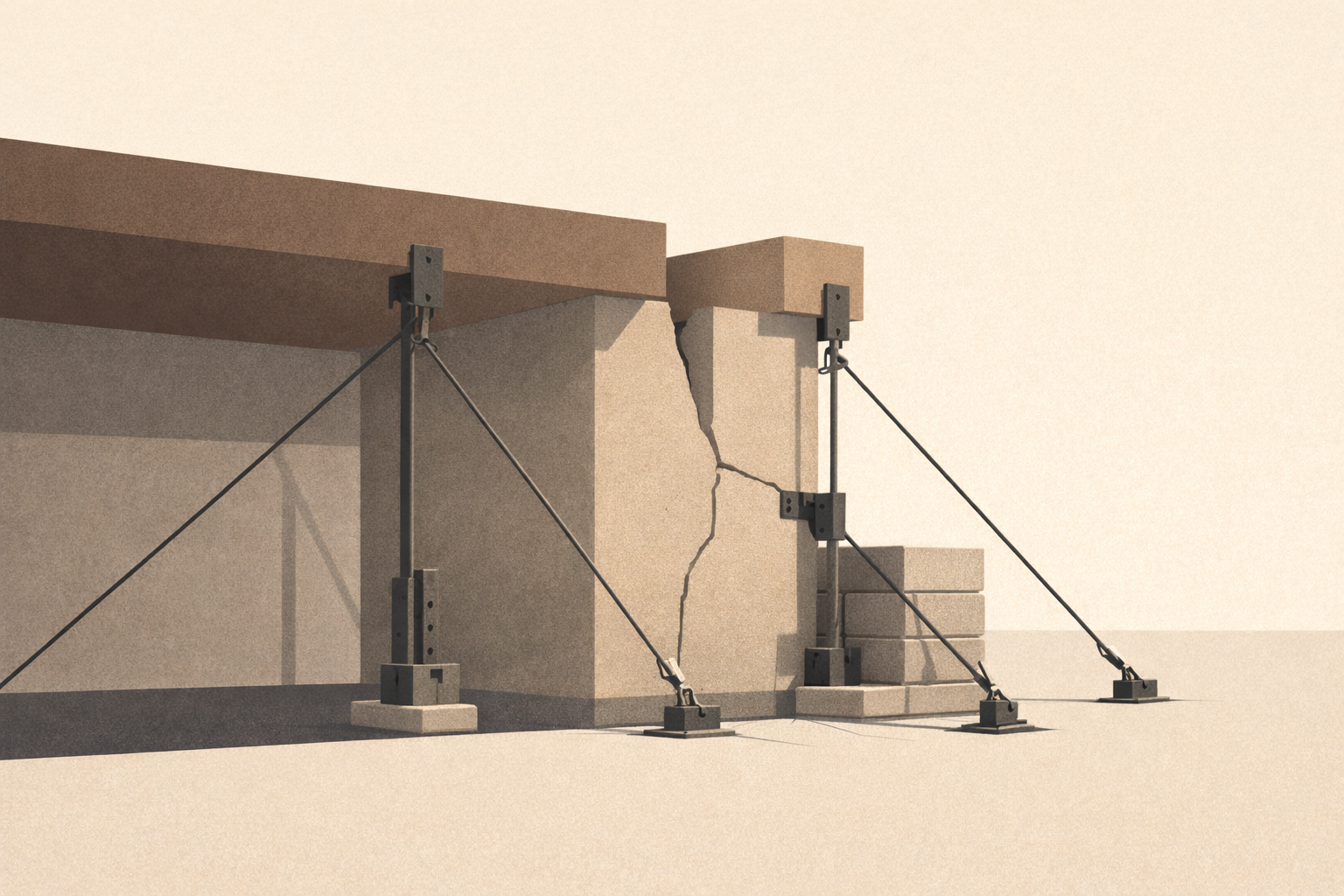
Why Stability Gets Defended
Stable systems are easier to navigate than uncertain ones.
People understand the routines, reporting lines, prices, relationships, expectations, and failure points. Even when the arrangement is imperfect, its behavior is familiar.
Predictability Has Economic Value
A business can plan around a predictable cost. A household can budget around a known obligation. An institution can organize around a process that is inefficient but understood.
By contrast, reform changes assumptions. New systems may require capital, retraining, different contracts, changed authority, new technology, or unfamiliar risk.
As a result, the existing system often receives another chance.
The Known Problem Competes Against an Unknown Solution
This creates a structural bias toward continuity.
Leaders know the cost of today’s workaround. They may not know the full cost of redesign, implementation, disruption, or failure during transition.
Therefore, keeping the current system upright can look safer even when the long-term economics are deteriorating.
The Price of Stability Is a Carrying Cost
Finance gives us a useful way to think about this problem.
An asset can create carrying costs while it is being held. Property requires taxes, insurance, maintenance, financing, and management even before the owner realizes a gain.
Weak systems behave similarly.
A Weak Structure Requires Ongoing Support
The support may be financial. It can also appear as additional labor, managerial attention, procedural controls, emergency repairs, reputational management, or lost flexibility.
None of those costs necessarily appears under a line item called stability.
Nevertheless, the organization is paying to keep the weakness contained.
The Cost Can Rise Even When the System Still Works
That is what makes the problem difficult to see.
Failure is obvious. Carrying cost is distributed.
A few more hours here, another approval there, one additional repair, another exception, a little more supervision, and one more temporary budget transfer can disappear into normal operations.
Containment Can Look Like Repair From a Distance
Containment stops a problem from becoming immediately worse.
Repair changes the underlying condition.
Temporary Support Has a Legitimate Role
Not every problem should trigger a full redesign.
A temporary brace can protect a structure while engineering work is completed. Short-term financing can bridge a cash gap. An interim policy can maintain service during a transition.
Good systems use temporary measures deliberately.
The Problem Begins When the Temporary Measure Becomes the System
A workaround becomes structural when the organization begins relying on it indefinitely.
At that point, the temporary intervention no longer buys time for repair. Instead, it helps the institution avoid repair.
The distinction matters because containment can preserve appearance while the underlying obligation continues to grow.
Where the Cost of Stability Actually Shows Up
The carrying cost of stability rarely arrives in one form.
Direct Expense
Emergency repairs, consultants, overtime, temporary labor, financing, duplicate systems, insurance, and repeated interventions increase the cash cost of keeping the system functional.
Management Attention
Leaders spend more time coordinating exceptions, solving recurring failures, approving workarounds, and managing instability that should have been removed from the operating model.
Human Capacity
Workers compensate for weak staffing, poor systems, broken tools, unclear roles, and deferred decisions through additional effort.
Deferred Obligation
Maintenance, replacement, restructuring, training, capital investment, and institutional repair remain waiting in the future budget.
Some Costs Never Reach the General Ledger Clearly
Exhaustion, delay, lost trust, weak service, slower decision-making, and reduced innovation are real economic costs even when they do not appear as separate accounting categories.
That does not mean every frustration should be monetized artificially.
It means management should stop treating hidden operating friction as free.
Complexity Is Often the Interest Payment on Deferred Repair
When a root problem remains unresolved, organizations tend to build around it.
One rule becomes three. A manual review is added. Another approval is required. A spreadsheet sits beside the software because the software cannot handle the exception.
Each Layer Makes Sense in Isolation
The first additional control may prevent an error. The second may protect against a known risk. The third may satisfy an audit concern.
Eventually, however, the organization can forget which problem each layer was originally designed to solve.
Complexity then becomes inherited infrastructure.
Every New Layer Has to Be Carried
Someone has to understand the rule, train people on it, maintain the form, reconcile the spreadsheet, monitor the exception, or enforce the additional approval.
Therefore, procedural complexity is not only annoying. It consumes capacity.
Stability Can Consume the Capacity Needed to Repair the System
This is the trap.
The weaker a system becomes, the more attention may be required to keep it functioning.
Meanwhile, the same organization needs time, money, and people to design a better structure.
Containment Competes With Improvement
If the operating team spends every day solving immediate problems, long-term repair becomes easier to postpone.
Similarly, when emergency maintenance consumes the capital budget, preventive work gets pushed further out.
The institution can then enter a loop where instability creates the very capacity shortage that prevents repair.
Power Determines Who Carries the Price of Stability
Stability is not maintained by an abstract system.
People, organizations, budgets, contracts, and communities absorb the work required to preserve it.
The Cost Usually Travels Somewhere
A business may hold prices steady by squeezing suppliers. A government may preserve current services by deferring capital maintenance. An institution may maintain output by asking fewer employees to carry more responsibility.
In each case, visible stability is being purchased through a less visible transfer.
Leverage Influences Who Can Refuse
Participants with stronger bargaining power may resist the transfer.
Those with fewer alternatives may have less ability to refuse a new workload, higher fee, reduced service level, delayed repair, or shifted obligation.
That is why Power & Price treats stability as a distribution question, not merely an operational one.
The Stability Carrying Cost
Groundwork Daily uses the Stability Carrying Cost to make the progression visible.
The Framework Is a Diagnostic, Not a Law
Not every stable system follows this path.
Healthy systems can use temporary support, recover capacity, make repairs, and return to stronger operation.
The warning sign appears when each intervention preserves the current arrangement while making future repair harder.
Stability and Resilience Are Not the Same Thing
A stable system looks unchanged under ordinary conditions.
A resilient system can absorb pressure, adapt, recover, and continue functioning without requiring every original condition to remain intact.
Rigid Stability Can Become Fragility
If a system works only when staffing is perfect, demand is predictable, equipment never fails, funding remains constant, and no one leaves, the system may look stable without being resilient.
One shock can expose how much of the stability depended on ideal conditions.
Resilience Builds Room for Variation
Reserves, cross-training, preventive maintenance, clear decision rights, redundancy, diversified suppliers, and usable contingency plans all create room for pressure.
That room has a cost too.
The difference is that resilience spending is designed to increase future capacity rather than merely preserve today’s appearance.
Sometimes Stability Is Worth Paying For
The argument cannot become simplistic.
Disruption has costs. A reckless reform can destroy functioning capacity faster than a cautious institution can rebuild it.
Therefore, preserving stability is sometimes the correct decision.
The Test Is What the Stability Purchases
If temporary stability creates time for engineering, financing, negotiation, training, replacement, or thoughtful transition, the carrying cost may be justified.
If it merely delays an unavoidable decision, the economics are weaker.
The distinction is not between stability and change.
It is between stability that creates room for repair and stability that replaces repair.
Repair Requires Spending Capacity Before Crisis
Waiting until collapse is expensive because crisis removes options.
Procurement becomes urgent. Financing becomes less flexible. Staff attention narrows. Negotiating leverage falls. Temporary measures become necessary whether they are efficient or not.
Healthy Systems Price Replacement Into Normal Operations
Buildings need lifecycle plans. Technology needs replacement schedules. Organizations need succession plans. Pension systems need credible funding assumptions, while businesses need reserves and realistic capital budgets.
The point is not prediction with perfect accuracy.
It is acknowledgment that systems wear, people leave, markets change, and infrastructure ages.
Repair Is Cheaper When the System Still Has Choices
Early repair can be staged. Financing can be planned. Alternatives can be evaluated, and stakeholders can prepare for transition.
Once failure becomes acute, the institution often pays a premium for speed.
Eventually Stability Hands the Bill to Repair
The next question in the sequence is unavoidable.
Once containment can no longer preserve function, somebody has to finance the correction.
That is where Who Pays to Fix What Broke? takes the argument next.
The Carrying Cost Becomes a Repair Cost
Temporary supports may be removed. Deferred maintenance becomes replacement. Staffing gaps become recruitment and restructuring costs. Financial weakness becomes recapitalization, rate increases, spending reductions, or public intervention.
At that stage, the hidden cost becomes visible enough to require a payer.
A Better Stability Strategy Makes the Carrying Cost Visible
The solution is not permanent disruption.
It is disciplined visibility.
Name the Workaround
Temporary processes should be identified as temporary. Their owners, purpose, cost, and exit conditions should be clear.
Measure What the Workaround Consumes
Track the money, staff time, delays, repeated incidents, outside support, and opportunity cost required to preserve the current state.
Fund the Exit
If the workaround exists because a real repair is pending, the repair needs an actual owner, plan, timeline, and resource strategy.
Otherwise, “temporary” becomes another word for indefinitely expensive.
The Price of Stability Is What the System Must Keep Spending to Avoid Change
The price of stability is not automatically evidence that stability is bad.
Continuity has value. Predictability has value. Avoiding reckless disruption has value.
The Question Is Whether the Cost Builds Anything
Money used to buy time for repair can be productive.
Additional labor used to protect a transition can be necessary. Temporary redundancy may preserve service while a stronger system comes online.
Those costs serve a destination.
Containment Without a Destination Becomes Dependency
When each workaround only protects the previous workaround, stability begins consuming itself.
More resources go toward preserving the arrangement, while fewer remain available to improve it.
Eventually, the organization discovers that it was not avoiding the cost of change.
It was paying for change in installments without receiving the repair.

Do Not Ask Only Whether the System Is Stable
Ask what stability requires.
What money, labor, rules, delays, exceptions, and future obligations are necessary to keep the current arrangement functioning?
Separate Temporary Support From Permanent Dependence
A temporary intervention should create time, options, or capacity for a stronger structure.
If it merely creates the need for another intervention, the carrying cost is compounding.
Make the Exit Visible
Every workaround should eventually answer a simple question: what removes the need for this workaround?
Stability is worth paying for when it protects the path to something stronger. It becomes expensive weakness when preserving the current state is the only objective left.
Where This Article Sits
This article examines the resources a strained system consumes to preserve continuity before its underlying weakness is repaired.
Its central distinction is between stability that creates room for stronger structure and containment that merely makes weakness more expensive to maintain.
Build What Holds
A durable structure reduces dependence on constant rescue, exception, and individual endurance. The objective is not merely to keep the system upright, but to build something capable of carrying ordinary pressure without permanent reinforcement.
Pressure
Pressure reveals the difference between genuine structural capacity and stability that exists only because people, budgets, or temporary supports are absorbing more strain than the system can sustainably carry.
Explore the Full Groundwork Architecture
Core Principles: Structure Builds Freedom · Stillness Is Strategy · Discipline Is Emotional Governance · Structure Is Mercy · Discipline Before Dollars · Accountability Is a Form of Strength · Build What Holds
Conditions: Capacity · Discernment · Alignment · Pressure · Overload · Recovery · Clear
Browse the complete Core Principles architecture and Conditions architecture.
Meet the Builder
Samual Drayton
Samual Drayton examines the structure beneath economic activity: who owns the asset, who controls access, who sets the terms, who absorbs the cost, and where value remains after money moves.
Through Power & Price, he follows pricing, leverage, markets, institutions, supply systems, ownership, and capital retention to reveal the difference between economic activity and durable economic position.
Signature philosophy: Follow the money past the transaction. The structure tells you who controls the terms, who carries the cost, and where the value settles.
Expect practical Groundwork on economic power, ownership, pricing, leverage, market structure, cost transfer, institutions, supply systems, trust, community wealth, and capital retention.
Sources & Further Reading
- Brookings Institution. Research and analysis concerning governance, public institutions, institutional capacity, reform, and the economic consequences of policy design. Review Brookings governance research .
- U.S. Government Accountability Office. Federal oversight and analysis concerning infrastructure management, deferred maintenance, fiscal exposure, program risk, and long-term public obligations. Review GAO research .
- Congressional Budget Office. Federal analysis concerning public investment, infrastructure, debt, fiscal commitments, and the long-term consequences of budget choices. Review Congressional Budget Office research .
- Groundwork Daily. Who Pays to Fix What Broke? Companion Power & Price analysis examining how deferred obligations become repair costs and how leverage determines where those costs ultimately land. Read the article .
- Groundwork Daily. Reform Is Not Free. Companion Power & Price analysis examining the financial, institutional, and operating costs attached to meaningful reform. Read the article .
- Groundwork Daily. Silence as Infrastructure. Companion Power & Price analysis examining how information control, normalized workarounds, and institutional silence can preserve weak structures. Read the article .
- Groundwork Daily. Build What Holds. The governing Core Principle for this article’s distinction between durable structure and systems that require permanent reinforcement. Explore Build What Holds .
- Groundwork Daily. Pressure. The governing Condition examining what systems reveal when demand, strain, or uncertainty tests their actual capacity. Explore Pressure .