

Presence · Responsibility · Reciprocity
What men need in stable relationships isn’t much of a mystery. A man who chooses consistency, responsibility, partnership, and home still needs respect, appreciation, peace, intimacy, room to breathe, and proof that the relationship is being carried by two people instead of held up by one.
Stability still needs somewhere to land.
Stability isn’t a personality trait. It’s something you practice.
A man who chooses a stable life makes the same small decisions over and over. Most of them never draw much attention. He comes home. He follows through. He turns down some things. He manages his impulses. He handles what he’s responsible for. He becomes predictable in the places where predictability actually matters.
None of that makes him extraordinary.
It does make him responsible for keeping something running.
A man shouldn’t expect a medal for fidelity, fatherhood, honesty, work, or basic adult responsibility. Those commitments come with the life he chose.
Still, responsibility doesn’t erase what a person needs.
The mistake is assuming that once a man chooses stability, he stops needing anything from the environment he’s helping build.
He doesn’t.
Maintenance
Stable Relationships Still Require Maintenance
People notice instability because instability makes noise.
Arguments are loud. Betrayal is disruptive. Financial chaos creates emergencies. Disappearing for hours, breaking promises, and living as if nobody else is affected all produce consequences people can see.
Stability is quieter.
Bills get handled. Somebody gets home when they said they would. The hard conversation happens instead of getting avoided. The family calendar gets checked. The kid gets picked up. Money gets discussed before it gets spent. A promise gets kept even after the mood that produced it is gone.
Because these moments are so ordinary, they can go invisible.
That’s exactly where a healthy relationship can start weakening without either person noticing right away.
What becomes normal eventually becomes assumed. Once effort is assumed, people can stop noticing how much maintenance still sits underneath the calm.
Both people can keep benefiting from a stable environment while getting less and less deliberate about maintaining it.
The question isn’t who deserves applause.
The question is whether both people still understand that a good relationship is something they have to maintain.
Restraint
Restraint Is Part of Building a Stable Life
Adult stability needs limits.
That’s true for men and women both. Still, it matters in a specific way when the conversation turns to responsible masculinity inside partnership.
A man can’t chase every opportunity, every attraction, every impulse, every invitation, and every appetite as if commitment changed absolutely nothing.
Commitment changes the decision environment.
Some choices stay possible but stop being useful. Others become flatly inappropriate. Some might look harmless on their own but start competing with the home, the relationship, or the future he says he actually wants.
Restraint is how intention turns into behavior.
That doesn’t mean a man should go joyless, isolated, or permanently glued to the house. A stable man still needs friends, interests, movement, laughter, private thought, and a life that’s still recognizably his.
The goal isn’t confinement.
The goal is proportion.
Stability is not the absence of options. It is knowing which options are worth protecting the life you built from.
Margin
A Stable Life Can Create More Financial Room
There’s an economic side to stability too, though it shouldn’t get overstated.
A quieter lifestyle can cut down certain kinds of discretionary spending. Fewer expensive nights out, fewer impulse buys, and less pressure to perform a lifestyle for other people can free up room for saving, paying down debt, travel, home projects, investing, or just breathing easier between paychecks.
But staying home doesn’t automatically build wealth.
Plenty of money disappears straight from a couch.
Online shopping, delivery food, subscriptions, gambling, gaming purchases, convenience spending, and weak financial habits don’t require leaving the house.
The real financial advantage comes from structure.
Pair a stable lifestyle with deliberate financial decisions, and reduced social friction can turn into usable margin. That margin can go toward emergency reserves, debt reduction, long-term investing, family goals, or other kinds of durable capacity.
Home shouldn’t just be where money stops moving.
It should also be one of the places where two people actually decide what their money is supposed to build.
Respect
Respect Still Matters After the Relationship Becomes Stable
Respect isn’t a prize a man wins for coming home.
It’s part of the operating environment of a healthy partnership.
The same goes for the woman beside him.
Stable relationships get fragile once familiarity turns into contempt, dismissal, ridicule, chronic criticism, or the assumption that somebody’s effort stops deserving acknowledgment just because it’s expected.
Expectations matter. So does how people carry them.
A man should be able to hear that he fell short without treating accountability like disrespect.
At the same time, his partner should be able to voice disappointment without treating humiliation like communication.
That distinction sits at the center of Accountability Is a Form of Strength .
Accountability asks whether behavior matches the standard both people claim to value. Respect shapes whether that correction can happen without needlessly damaging the relationship along the way.
Strong couples need both.
Recognition
Appreciation Is Not the Same as Applause
Most grown men aren’t asking for a standing ovation because they went to work, took care of their kids, came home, or kept a promise.
At least they shouldn’t be.
But there’s a lot of distance between applause and being taken for granted.
Appreciation lives somewhere in that distance.
It can be simple. Notice the effort. Say thank you. Recognize when somebody carried more during a rough week. Notice that a habit actually changed. Acknowledge that a hard conversation went better than the last one did.
Those moments tell a person their contribution is still visible.
Men need that too.
Not because men are somehow uniquely fragile, and not because appreciation excuses poor behavior somewhere else.
Recognition matters because people generally maintain things better when they stay connected to why the effort matters in the first place.
Peace
Peace Is Not Silence or Freedom From Accountability
The word peace gets sloppy fast in relationship conversations.
Sometimes a man says he wants peace when what he really wants is freedom from accountability.
That’s not peace.
A home isn’t peaceful because nobody’s allowed to challenge the man living there.
A relationship isn’t peaceful just because the hard subjects stay buried until resentment hardens around them.
Real peace asks more than that.
It means the home isn’t built around unnecessary volatility. Conflict can happen without turning into destruction. A concern can get raised without somebody bracing for war. Both people can have a bad day without making the other one pay for it.
Peace is the absence of needless instability, not the absence of truth.
That kind of environment is good for everyone who lives inside it.
Reciprocity
Stable Men Still Need a Partner, Not an Audience
One of the easiest traps in a relationship is letting one person’s reliability become the reason the other person stops carrying as much.
Competence can attract dependency.
The person who remembers things eventually remembers everything. The person who handles money can wind up handling every money problem. The person who stays calm can slowly become responsible for regulating every disagreement.
That arrangement can run for a while.
It doesn’t necessarily hold.
Reciprocity matters because a stable partnership can’t become one reliable person servicing an entire relationship alone.
Both people should contribute to the emotional environment. Both should show up for hard decisions. Both should be capable of apologizing. Both should notice when the load has tilted too far in one direction.
Equal contribution won’t always mean identical contribution.
There will be seasons when one person carries more.
Temporary imbalance isn’t automatically a problem. The danger is temporary imbalance quietly becoming the permanent operating model.
The Practical Answer
What Do Men Need in Stable Relationships?
Strip away the noise and the list is pretty ordinary.
Respect
Not obedience. Not immunity from criticism. Respect means disagreement doesn’t require contempt, humiliation, or damage to someone’s dignity.
Appreciation
Not applause for basic adulthood. Appreciation means the contribution stays visible even after reliability becomes familiar.
Peace
Not silence. Peace means the relationship isn’t constantly generating avoidable chaos, hostility, uncertainty, or emotional punishment.
Reciprocity
A stable man shouldn’t have to become the entire stability system. Responsibility, care, planning, repair, and emotional adulthood need to travel both ways.
Intimacy
Affection, physical closeness, sexual connection where it fits, conversation, humor, friendship, and feeling wanted help separate partnership from household administration.
Room to Remain a Person
Partnership should deepen responsibility without erasing who someone is. Friends, interests, solitude, thought, and personal growth still matter.
None of these needs belongs only to men.
That’s worth saying plainly.
Looking specifically at men doesn’t mean pretending men need a completely different emotional ecosystem. It makes room for a conversation that usually gets flattened into grievance on one side and silence on the other.
Men have relational needs.
Mature men should be able to name those needs without turning them into a demand for control.
After Stability Arrives
Coming Home Is the Beginning of Another Responsibility
There’s another part of this conversation worth naming.
Sometimes people spend years asking a man to settle down, get consistent, stop moving recklessly, and build a stable home.
Then he does.
And expectations keep growing.
That question gets explored more directly in He’s Home. Now What? .
Stability doesn’t freeze a relationship in place. New expectations show up because life keeps moving.
Careers change. Kids arrive. Parents age. Money shifts. Sex changes. Bodies change. Ambitions evolve. Stress comes through doors neither person saw coming.
So the answer can’t just become, “I came home. What more do you want?”
Coming home isn’t the final achievement.
It’s where the next layer of building starts.
The Groundwork
Stability Needs Somewhere to Land
A man shouldn’t expect praise for doing what his commitments already require.
Nobody should mistake responsibility for invulnerability either.
Stable men still need to be seen.
They need respect without being shielded from accountability. They need appreciation without being celebrated for basic adulthood. They need peace that can survive the truth. They need intimacy that keeps partnership from turning into administration. They need room to stay whole while building something shared.
Most of all, they need reciprocity.
The healthiest version of a stable relationship isn’t a good man coming home to prove he’s changed.
It’s two adults who keep building a home neither one has to carry alone.
The question isn’t only whether he comes home. What are the two of you still building once he’s there?
Continue Building
Follow the Relationship Structure
Stability gets more useful once both people understand what it takes to keep it running after the obvious chaos is gone.
Groundwork Architecture
The Principle and Condition Beneath This Work
This article looks at what keeps a stable relationship dependable once consistency stops feeling special.
Core Principle
Build What Holds
Stability matters most when the relationship is built well enough to stay respectful, reciprocal, repairable, and useful through ordinary pressure and time.
Primary Condition · Holds
Durability
Durability asks whether a relationship can keep dependable function going through repetition, responsibility, changing expectations, maintenance, and time.
See the full Core Principles and Conditions architecture .
Meet the Builder
Marcus Vaughn
Economy, Ownership & Generational Structure
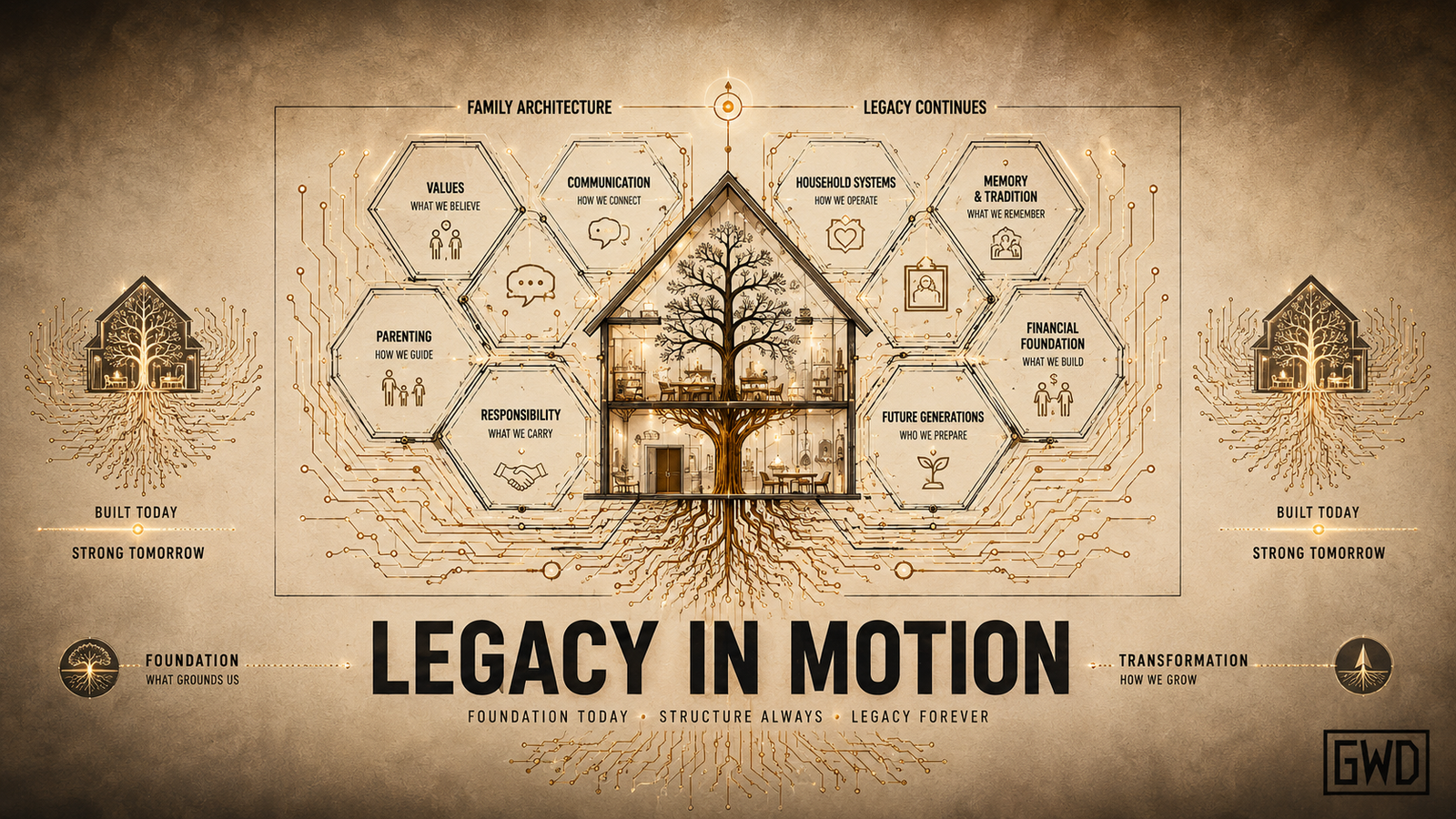
Marcus Vaughn writes about ownership, financial discipline, family structure, and generational continuity. Through Money Monday and Legacy In Motion, he looks at the systems that turn income into stability, responsibility into structure, and today’s decisions into tomorrow’s inheritance.