

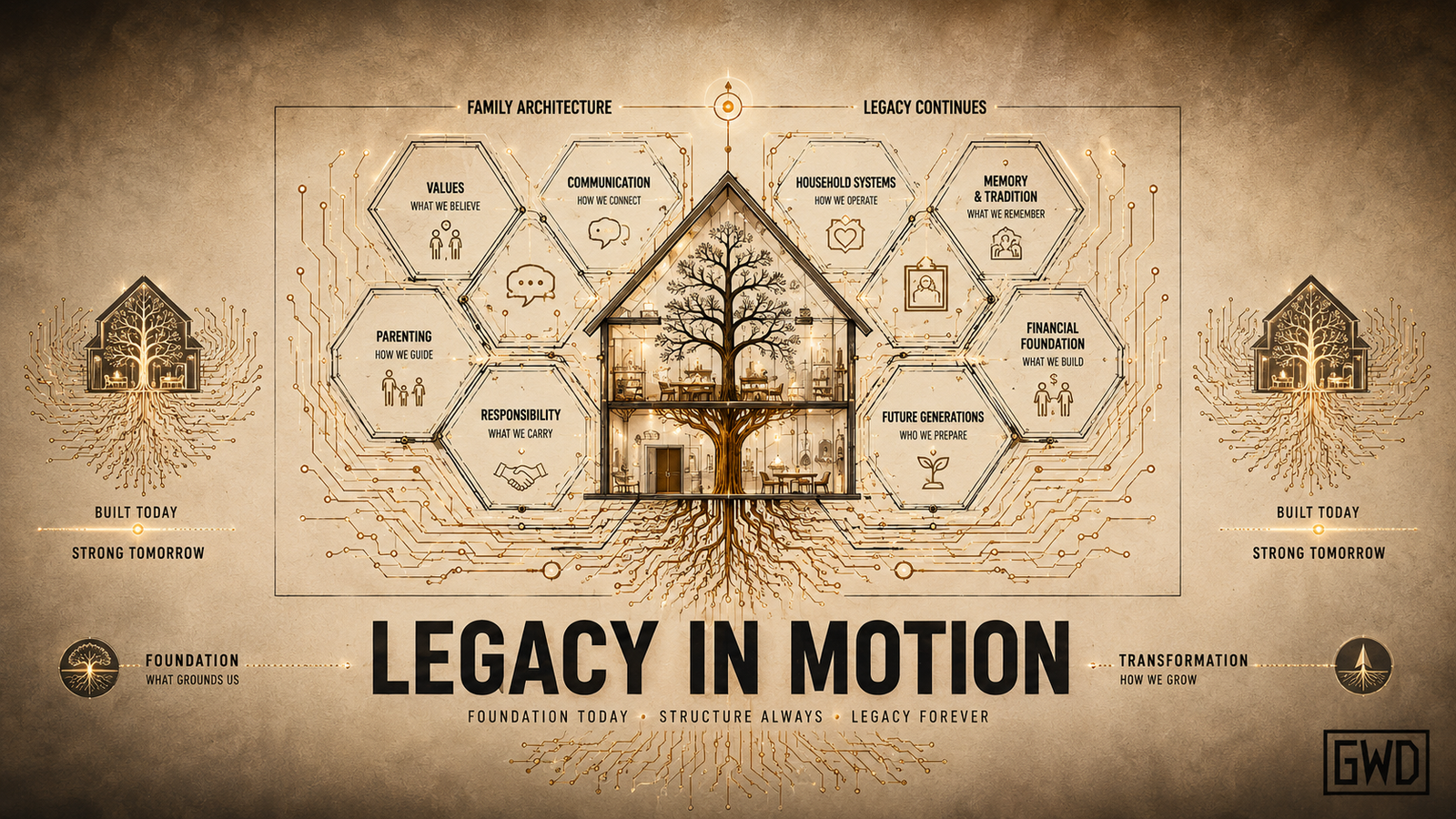
Legacy In Motion
Continuity · Responsibility · Transmission
Succession planning for nonprofits is not simply about choosing who comes next. It is the work of making sure an institution can still think, decide, operate, and protect its mission after the person carrying the most knowledge or authority is no longer there.
Organizations often confuse a strong leader with a strong institution. Those conditions can exist together. However, they are not the same thing.
A founder may know every donor. An executive director may understand every program, every political relationship, every unwritten agreement, and every reason a strange-looking process exists. Meanwhile, a longtime board chair may know which tensions require intervention and which ones need patience.
That accumulated knowledge can make an organization effective. It can also make the organization dangerously dependent.
The real question is therefore not merely Who will take over? The harder question is: What must transfer so the institution can continue carrying its purpose after leadership changes?
01 · Continuity
Why Succession Planning for Nonprofits Is About Continuity
Most succession conversations begin too late and with the wrong question.
Someone announces a retirement. A founder becomes ill. An executive director accepts another position. Suddenly, the board realizes it has six months to solve a problem that should have been addressed over several years.
Then the search begins.
That is recruitment. Succession planning for nonprofits is larger.
A real succession system protects the institution’s ability to make decisions, maintain relationships, preserve institutional memory, enforce standards, operate programs, understand its finances, and keep moving while authority changes hands.
In other words, the job is not merely to move a title from one person to another. The job is to move capability.
This is one reason organizational collapse often appears after early momentum fades. Groundwork Daily examines that failure pattern in Why Most Community Organizations Collapse After Year Five . Growth can hide weak architecture for a while. Transition exposes it.
02 · Dependency
The Indispensable Leader Problem
Strong leaders often become indispensable for understandable reasons.
They remember the history. They built the relationships. They know why certain decisions were made. They can recognize danger before everyone else sees it. Eventually, people stop asking where information lives because they already know whom to call.
For a time, that arrangement looks efficient.
The weakness appears when that person becomes unavailable.
If the institution cannot function without one person, that person is not only carrying responsibility. The institution is carrying succession risk.
This does not mean founders or longtime executives should become interchangeable. Some leaders possess judgment, trust, history, and capability that cannot be duplicated exactly.
That is precisely why succession planning matters. The objective is not to copy the leader. It is to prevent essential institutional knowledge and authority from disappearing with the leader.
03 · Transmission
What Succession Planning for Nonprofits Must Transfer
A title is one of the easiest things to transfer. The harder work lives underneath it.
Transfer 01
Knowledge
Which decisions depend on history that only one or two people understand? Which processes exist only in someone’s memory?
Transfer 02
Authority
Who can approve spending, hire staff, negotiate commitments, sign documents, communicate externally, or act in an emergency?
Transfer 03
Relationships
Which donors, funders, community partners, vendors, staff members, and allies know the organization primarily through one person?
Transfer 04
Capability
Who is being prepared to carry more weight? Leadership development has to begin before the vacancy announcement.
Transfer 05
Institutional Memory
What must future leaders understand about past failures, commitments, cultural norms, community trust, and prior decisions?
Transfer 06
Standards
Which principles should survive the personality of the current leader? Durable standards belong to the institution, not one individual.
The Continuity Chain
Knowledge → Authority → Capability → Transfer → Continuity
Miss one of those links and the organization may technically replace its leader while still losing the structure that made leadership effective.
04 · Governance
Why Boards Own Part of Succession Planning for Nonprofits
Leaders have responsibilities in succession planning. Boards do too.
A board that waits for an executive to design every part of that executive’s own succession has misunderstood governance.
Leadership continuity belongs inside the institution’s governing structure because the board has responsibility for protecting mission, executive capacity, accountability, and operational continuity through change.
Founder authority can make this more complicated. An organization may formally have a board while informally operating around the founder’s preferences, relationships, and accumulated influence.
The tension between formal authority and practical control is explored further in Boards vs. Founders: Who Actually Controls an Institution?
Succession Forces the Authority Question Into the Open
Who actually has authority? Which responsibilities belong to the office rather than the person? What happens when the founder disagrees with the board? Can a new executive act without seeking informal permission from the former leader?
Those questions can feel uncomfortable. Left unresolved, they become expensive.
External reference: For broader nonprofit governance information, review the IRS Charities and Nonprofits resources .
05 · Readiness
Emergency Succession Is Not a Succession Strategy
Every nonprofit should know what happens if a key leader becomes unavailable tomorrow.
That is emergency succession.
What an Emergency Plan Must Answer
- Who assumes temporary authority?
- Who can sign contracts or authorize spending?
- Who communicates with staff and the board?
- Who handles banking and financial access?
- Who contacts major funders and partners?
- Where are critical documents and credentials stored?
Those questions matter. Still, an emergency plan is not the same as a long-term succession system.
Emergency succession keeps the organization alive during disruption. Planned succession prepares the institution to remain capable after transition.
Emergency
Protect the next seventy-two hours.
Succession
Protect the next era.
A mature institution needs both.
06 · Stress Test
The Nonprofit Succession Planning Continuity Test
An organization does not need to know the identity of its next leader before beginning succession planning for nonprofits.
It needs to know whether the next leader could inherit a functioning structure.
The point is not to diminish leadership. It is to expose dependency. A strong leader should leave behind more than accomplishments. A strong leader should leave behind increased institutional capacity.
07 · Legacy In Motion
What Institutions Teach Families About Legacy
This is where succession planning for nonprofits becomes a Legacy In Motion question.
Families face the same structural problem on a smaller scale.
One person knows where every document is stored. Another manages every account. One elder carries the family history. A parent understands every appointment, school process, insurance detail, household obligation, and routine.
Everyone else benefits from the system without necessarily understanding how the system works.
Then life changes.
Illness arrives. A parent dies. A caregiver becomes unavailable. Children become adults. Property has to transfer. Someone needs the paperwork. Someone has to know which traditions matter and which obligations were merely assumed.
Information that cannot transfer becomes vulnerability.
Legacy is therefore not only what you accumulate. It is what another person can understand, carry, maintain, and continue.
That includes money. It also includes memory, expectations, responsibility, documents, relationships, standards, routines, judgment, and the story of why something was built in the first place.
Connected Architecture
Continue Building the Continuity System
Succession belongs to a wider Groundwork Daily conversation about whether systems can survive pressure, authority changes, and the departure of the people who first carried them.
Build What Holds
Test whether structure can survive load, pressure, maintenance, and transfer.
Why Most Community Organizations Collapse After Year Five
See how early momentum can conceal weaknesses that transition later exposes.
Boards vs. Founders: Who Actually Controls an Institution?
Examine the authority problem that succession forces into the open.
Legacy In Motion
Explore family architecture, responsibility, continuity, and what must move from one generation to the next.
The Groundwork
If the Structure Cannot Survive the Builder, the Build Is Not Finished
Succession planning does not begin with a retirement announcement.
It begins when leaders decide that knowledge should not live in one head, authority should not depend on one personality, relationships should not belong to one person, and the future should not require the past to remain permanently available.
Look at the organization. Then look at the household.
Ask the same question of both:
What currently works only because one person still knows how to carry it?
Find one answer. Document it. Teach it. Share the authority required to maintain it.
Then test whether the structure still works when the original builder steps away. That is succession. More importantly, that is legacy becoming structure.
Keep Building
Legacy Is Built Before It Has to Transfer
Groundwork Daily examines the systems underneath money, family, responsibility, ownership, institutions, relationships, and the decisions that determine what survives pressure.
An organization that refuses to transfer knowledge eventually makes transition harder than it needed to be. A family can do the same. When everything important remains undocumented, unexplained, or concentrated in one person, the next generation inherits responsibility without architecture.
What we fail to transfer does not disappear. Someone else inherits the work of reconstructing it.

Groundwork Daily Builder
Marcus Vaughn
Economy, Ownership & Generational Structure
Marcus Vaughn writes about ownership, financial discipline, family structure, and generational continuity. Through Money Monday and Legacy In Motion, he examines the systems that turn income into stability, responsibility into structure, and today’s decisions into tomorrow’s inheritance.