
Creative career sustainability begins where the spotlight ends.
Attention can change a creative career quickly. One project travels farther than expected. An audience grows. A collaboration opens a new room. Demand accelerates. Suddenly, work that once had to fight for visibility has more opportunity than the person behind it may be prepared to carry.
Culture usually celebrates that moment as success.
But visibility creates a second question that receives far less attention: Can the structure underneath the work survive what the opportunity is about to ask of it?
A larger audience can mean more customers, expectations, deadlines, communication, production, administration, scrutiny, and decisions. Therefore, attention is not merely a reward. It is also additional load.
The spotlight can accelerate the work. It cannot become the infrastructure underneath it.
Can your creative structure survive the opportunity you keep asking for?
That is the Culture Ledger revaluation. Visibility has value. However, durability determines how much of that value can remain useful after attention moves elsewhere.
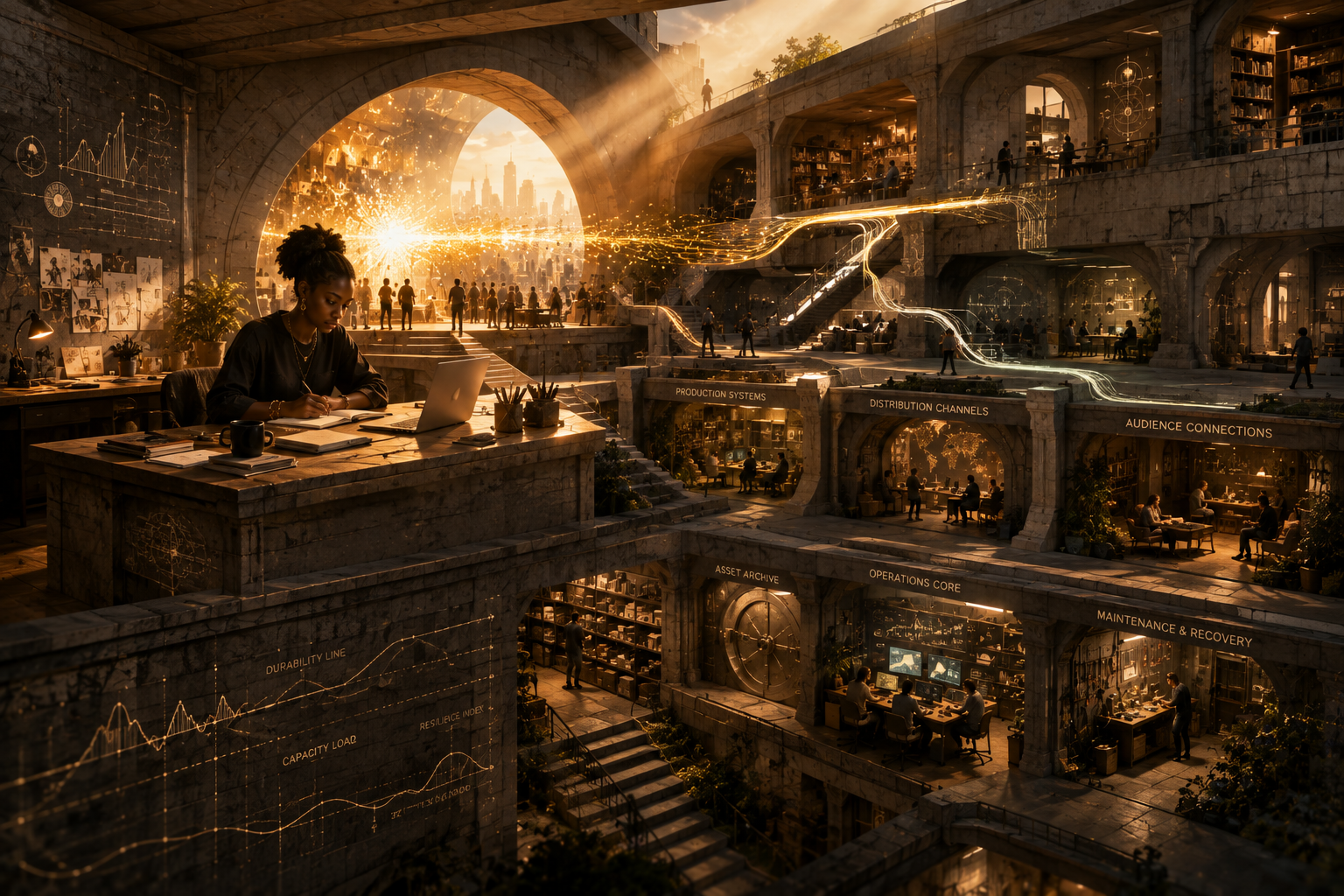
Creative Career Sustainability Starts After Attention Arrives
Before visibility, the problem often feels simple: get the work seen.
That challenge is real. Creative markets are crowded, distribution is uneven, and excellent work can remain invisible. Consequently, creators have legitimate reasons to pursue reach, discovery, media coverage, collaborations, audience growth, and better distribution.
Yet visibility solves only one problem. If it works, it creates several more.
Can production increase without quality collapsing? Can inquiries be handled? Can customers find what they need? Can deadlines remain realistic? Can the creator distinguish worthwhile opportunities from distractions? Can the business absorb a surge without rebuilding itself every week?
In other words, attention tests capacity.
Groundwork Definition
Durability Discount: the hidden reduction in long-term value that occurs when something attracts attention faster than its underlying structure can support, maintain, or reproduce the resulting demand.
A creator can appear more valuable publicly while becoming more fragile operationally. That contradiction is easy to miss because culture measures what is visible much faster than it measures what holds.
The Spotlight Creates Load
Imagine a creator whose work suddenly reaches ten times as many people.
The obvious interpretation is growth. Still, the operational reality may be different. Ten times the attention does not automatically create ten times the capacity.
More people may visit the website. More messages may arrive. Customers may expect faster delivery. Potential partners may request meetings. Existing audiences may expect more frequent output. Meanwhile, administrative work expands precisely when the creator is expected to produce at a higher level.
Opportunity begins competing with execution.
That is why sudden attention can expose weaknesses that were almost invisible at a smaller scale. A process that worked for twenty customers may fail at two hundred. A creator who personally answers every request may discover that accessibility does not scale indefinitely. A production process built around improvisation may struggle once other people depend on predictable delivery.
The opportunity did not create every weakness. It revealed the load limit.
Watch This
Infrastructure should support creative work, not bury it in administration. The goal is not to turn every artist, writer, designer, musician, filmmaker, or independent creator into a miniature corporation. Build only enough structure to protect the work, the person producing it, and the value the work creates.
Attention and Capacity Are Different Assets
Culture frequently prices attention as though it were capacity.
They are not the same asset.
Attention describes how many people are looking. Capacity describes how much useful demand the underlying system can absorb without unacceptable deterioration.
A viral project can create attention overnight. It cannot create years of operating experience overnight. A large audience can generate demand, but it cannot automatically create inventory, working capital, editorial discipline, customer support, scheduling systems, legal infrastructure, production bandwidth, or recovery time.
As a result, creators need to ask a harder question than “How do I grow?”
What breaks if growth works?
That question is less glamorous. It is also more valuable.
Repeatability Turns Opportunity Into Infrastructure
Creative work should not become formulaic merely because systems are useful. Originality often depends on experimentation, uncertainty, and room to change direction.
Still, everything surrounding the creative act does not need to be reinvented every time.
Files can be organized consistently. Contracts can use established processes. Invoices can follow a system. Projects can have defined stages. Publishing can use repeatable workflows. Intellectual property can be documented. Customer communication can have boundaries. Routine administrative work can eventually be automated, delegated, or standardized where appropriate.
None of that replaces creativity, but structure protects creative attention from being consumed by avoidable operational chaos.
The system should carry what does not require your originality so your originality has more room to do what only you can do.
Distribution Is Powerful Until It Becomes a Single Point of Failure
Creative careers increasingly depend on distribution systems the creator does not own. That is not automatically a problem, since platforms, publishers, galleries, marketplaces, streaming services, retailers, media organizations, agencies, and other intermediaries can provide extraordinary reach. They can solve difficult problems involving discovery, transactions, logistics, audience aggregation, financing, or commercialization.
However, access to distribution is different from control over distribution.
If nearly all discovery depends on one platform, one client, one algorithm, one retailer, one publication, or one relationship, then apparent scale can conceal structural concentration.
The response should not be to reject intermediaries. That would sacrifice useful leverage.
Instead, creators can gradually develop complementary infrastructure they control: an owned website, customer records gathered with appropriate consent, direct audience relationships, an organized catalog, documented intellectual property, diversified revenue channels, or other durable assets appropriate to the work.
Rented reach can be extremely valuable. Owned infrastructure gives the creator somewhere to stand when rented conditions change.
Financial Resilience Buys Creative Decision-Making Time
Creative sustainability also has a financial layer.
Revenue can be volatile. A strong month does not guarantee another one. A successful launch can be followed by a quiet quarter. A large contract can create temporary confidence while simultaneously producing dependence on one customer.
For that reason, revenue alone does not describe resilience.
Margins matter. Expenses matter. Taxes matter. Cash reserves matter. Revenue concentration matters. Payment timing matters. Personal obligations matter. The cost of maintaining whatever infrastructure produced the revenue matters too.
Financial reserves are particularly valuable because they can create decision-making time.
Without sufficient room, every opportunity can begin to look necessary. A poor-fit client becomes difficult to refuse. A bad contract becomes easier to rationalize. Rest feels financially dangerous. Short-term monetization starts outranking long-term positioning.
Resilience does not eliminate those pressures. However, it can reduce the number of decisions that must be made under immediate economic stress.
Sustainability Requires Maintenance
Infrastructure is not something a creator builds once and then forgets.
Websites need maintenance. Systems become obsolete. Contracts need review. Equipment wears down. Audience behavior changes. Distribution channels shift. Team members leave. Creative interests evolve. Products reach the end of their useful life.
People require maintenance too.
A creative career that works financially while steadily destroying the person’s ability to continue producing is not particularly durable.
That does not mean every difficult season is unhealthy. Creative careers can demand extraordinary effort, especially during launches, deadlines, tours, production cycles, or periods of transition. Nevertheless, temporary intensity and permanent operating design are different things.
A system that requires emergency effort every week is not experiencing an emergency anymore. That is simply how the system was built.
Do Not Confuse Output With Durability
High output can create the appearance of a strong creative operation.
Sometimes it is one.
Other times, the creator is personally carrying almost every load: ideation, production, editing, publishing, marketing, sales, customer communication, bookkeeping, scheduling, fulfillment, strategy, and administration.
The work may be successful while the operating model remains dangerously dependent on one person’s uninterrupted availability.
This is where creative career sustainability requires an uncomfortable audit.
What stops when you stop?
Which processes exist only in your memory?
What cannot happen unless you personally touch it?
Which revenue disappears immediately if you take a month away?
Where does quality depend on exhaustion?
Which parts genuinely require your authorship, and which parts simply require a reliable process?
The goal is not to remove the creator from creative work. The goal is to identify unnecessary dependence before success makes that dependence expensive.
The Archive Can Become an Asset
Creative culture often overprices the new.
The newest release receives attention. The newest project drives conversation. The newest post gets promoted. Meanwhile, years of previous work can sit in poorly organized folders, abandoned websites, old drives, forgotten accounts, or platforms the creator does not control.
That is an infrastructure failure.
An archive can become a working asset when the underlying rights permit it and when the material is properly organized. Previous work can be rediscovered, licensed, republished, referenced, bundled, adapted, taught from, incorporated into new projects, or used to demonstrate a body of expertise.
Moreover, the archive reduces the pressure to create value only by producing something new every day.
The work already completed should not automatically become economically invisible merely because culture has moved to the next thing.
The Audience Relationship Should Survive the Algorithm
Attention is most fragile when the creator cannot reach the audience that supposedly follows the work.
A large following on a platform can be useful. Yet the platform determines significant parts of that relationship: what gets distributed, how frequently people see it, which formats receive priority, what commercial tools exist, and sometimes whether the account remains accessible at all.
That makes direct connection strategically important.
An email list, membership, customer relationship, owned publication, community, website, or other direct channel can create continuity between moments of algorithmic visibility.
Again, this is not an argument for abandoning social platforms. Distribution networks can be tremendous leverage.
The stronger architecture uses attention from those networks to strengthen relationships capable of surviving beyond a single feed.
What This Means
Attention is an accelerator, not a foundation. Use visibility to strengthen the systems, assets, relationships, reserves, and capabilities that remain useful after the visibility spike is gone.
The Spotlight Can Also Be Worth Pursuing
There is an equally weak version of this argument that romanticizes obscurity.
That is not the point.
Attention matters. Distribution matters. Recognition can matter. A breakthrough opportunity can materially change a career. Cultural visibility can bring customers, collaborators, financing, negotiating power, institutional access, and entirely new possibilities.
The mistake is not pursuing attention.
The mistake is treating attention as though it completes the architecture.
A creator with excellent infrastructure but no meaningful distribution may remain economically invisible. Likewise, a creator with enormous distribution and weak infrastructure may become publicly successful faster than the underlying operation can mature.
The strongest position combines both.
Build something worth seeing. Build a way for people to see it. Then build enough underneath it that being seen does not break it.
The Culture Ledger Repricing: Sustainability Over Spotlight
Culture naturally notices peaks.
The breakout project.
The viral moment.
The major placement.
The sold-out event.
The collaboration everybody recognizes.
The sudden audience surge.
Those moments deserve celebration. Still, peaks tell us surprisingly little about what happens afterward.
Culture Ledger is interested in the structure beneath the peak.
Can the creator repeat useful outcomes without reproducing the exact same work? Can demand be served without quality collapsing? Can the audience relationship continue? Can the finances withstand volatility? Can valuable intellectual property be located and managed? Can the system absorb a setback? Can the creator recover?
Most importantly, can the work remain valuable when culture temporarily looks somewhere else?
That is creative career sustainability.
The Groundwork: Build for the Day After the Breakthrough
Do not build as though attention is irrelevant. Build as though attention might actually work.
Organize the archive.
Know what you own.
Understand the economics.
Create repeatable processes where repetition helps.
Protect the parts of the work that genuinely require human originality.
Reduce unnecessary single points of failure.
Strengthen direct audience relationships where appropriate.
Build reserves when the economics allow it.
Know the capacity of the current system before promising beyond it.
Then maintain what you build.
The spotlight can be extraordinary. It can introduce the work to people who might never have found it otherwise. It can compress years of gradual discovery into a single cultural moment.
But eventually, the light moves.
What matters then is what remains standing.
Receipts
U.S. Small Business Administration — Manage Your Business
Evidence: The SBA’s business guidance treats operations, finances, employees, taxes, compliance, and preparedness as continuing management responsibilities rather than one-time startup tasks.
Why it matters: Creative businesses are still operating systems. Increased demand becomes more durable when the underlying business can manage the responsibilities created by growth.
View source →
U.S. Small Business Administration — Grow Your Business
Evidence: SBA guidance on business growth emphasizes preparation, financing, partnerships, expansion, and other operational considerations involved in scaling a business.
Why it matters: Growth creates requirements beyond simply attracting more attention. Capacity has to develop alongside demand.
View source →
U.S. Copyright Office — Copyright Basics
Evidence: Copyright law provides protection for qualifying original works of authorship, while ownership and registration questions affect how creative rights can be documented and enforced.
Why it matters: A sustainable creative operation needs to understand the rights associated with the work it produces rather than treating the archive as merely yesterday’s content.
View source →
U.S. Bureau of Labor Statistics — Self-Employment
Evidence: BLS labor data track self-employment as a meaningful part of the U.S. labor market and provide context for workers whose economic activity depends partly or entirely on independently managed work.
Why it matters: Creative independence is not merely an identity. For many workers, it involves operating within real labor and economic conditions that require financial and organizational durability.
View source →
Evidence note: These sources support the broader operating principles involving business management, growth, intellectual property, and self-employment. They do not establish a universal formula for creative career sustainability or prove that every creator should build the same systems. Appropriate infrastructure depends on the work, business model, rights structure, audience, resources, and creator’s goals.
Groundwork Principle
Build What Holds
Success does not reduce the need for structure. Often, it increases the load the structure must carry.
Load. Pressure. Maintenance. Transfer. Durability.
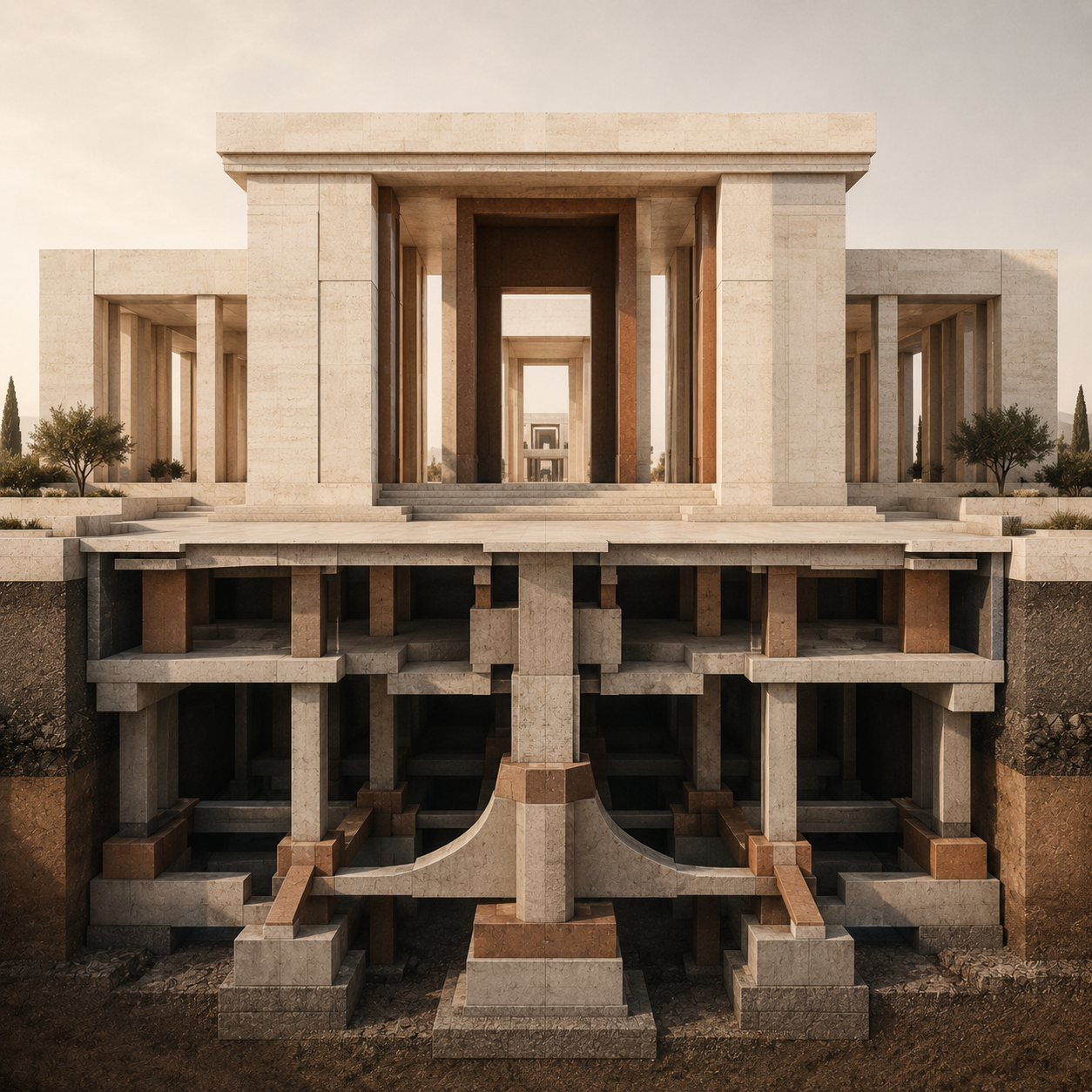
The same tests that reveal whether a physical structure can endure also sharpen the way we evaluate a creative career. What carries the load? What happens under pressure? What requires constant maintenance? What can be transferred beyond one person’s labor? What remains useful when conditions change?
Do not build only for the breakthrough. Build what can hold after it.
Further Groundwork
→ Leverage Is Currency: Turning Ideas Into Equity
Explore how systems, distribution, productive assets, and ownership allow valuable work to travel farther than direct labor alone.
→ Discipline Before Dollars
More resources do not automatically create stronger outcomes. Durable capacity begins with the systems governing what is already available.
→ Structure Builds Freedom
Structure is not the enemy of creative freedom. Well-designed systems can protect attention, reduce unnecessary chaos, and create more room for meaningful work.
→ More from Culture Ledger
Follow the gap between cultural price and underlying value across creativity, work, ownership, attention, relationships, institutions, leadership, and media.
Explore Culture, Media & Leadership
Culture teaches us to notice the breakthrough. Groundwork asks what had to exist underneath it, what the opportunity requires next, and what remains valuable after collective attention moves on.
→ Explore Culture, Media & Leadership
→ Explore Culture Ledger
Keep the Ledger
See what culture is overpricing before you build your life around it.
Attention can masquerade as value. Intensity can masquerade as connection. Prestige can hide weak fundamentals. Culture Ledger follows those gaps and asks what is actually carrying the weight.
Get the next Groundwork analysis on creativity, work, ownership, culture, incentives, leadership, relationships, and the systems underneath what we are taught to value.
Meet the Builder
André Toussaint
Culture Ledger | Culture, Media & Leadership
André Toussaint is the Builder behind Groundwork Daily, where he examines what sits beneath everyday outcomes and what might work better. In Culture Ledger, he follows the gap between what culture teaches us to value and what actually produces durable value.