

Children learn by observation long before they can explain what they are learning. They absorb the operating rules of a household through tone, repetition, pressure, repair, money, responsibility, and the ordinary behavior adults stop noticing because it feels normal.
They watch before they have language for the pattern. They notice tone before they understand conflict. They feel pressure before they know what the bills cost.
They study how adults enter rooms, leave rooms, apologize, avoid, prepare, spend, rest, repair, and recover. No formal lesson is required. The room teaches anyway.
This is where inheritance begins.
Not with the will. Not with the speech someone gives years later when it finally feels like time to “teach a lesson.” By then, the lesson has already been underway for years.
Memory becomes structure. Structure becomes inheritance. Inheritance eventually becomes stewardship.
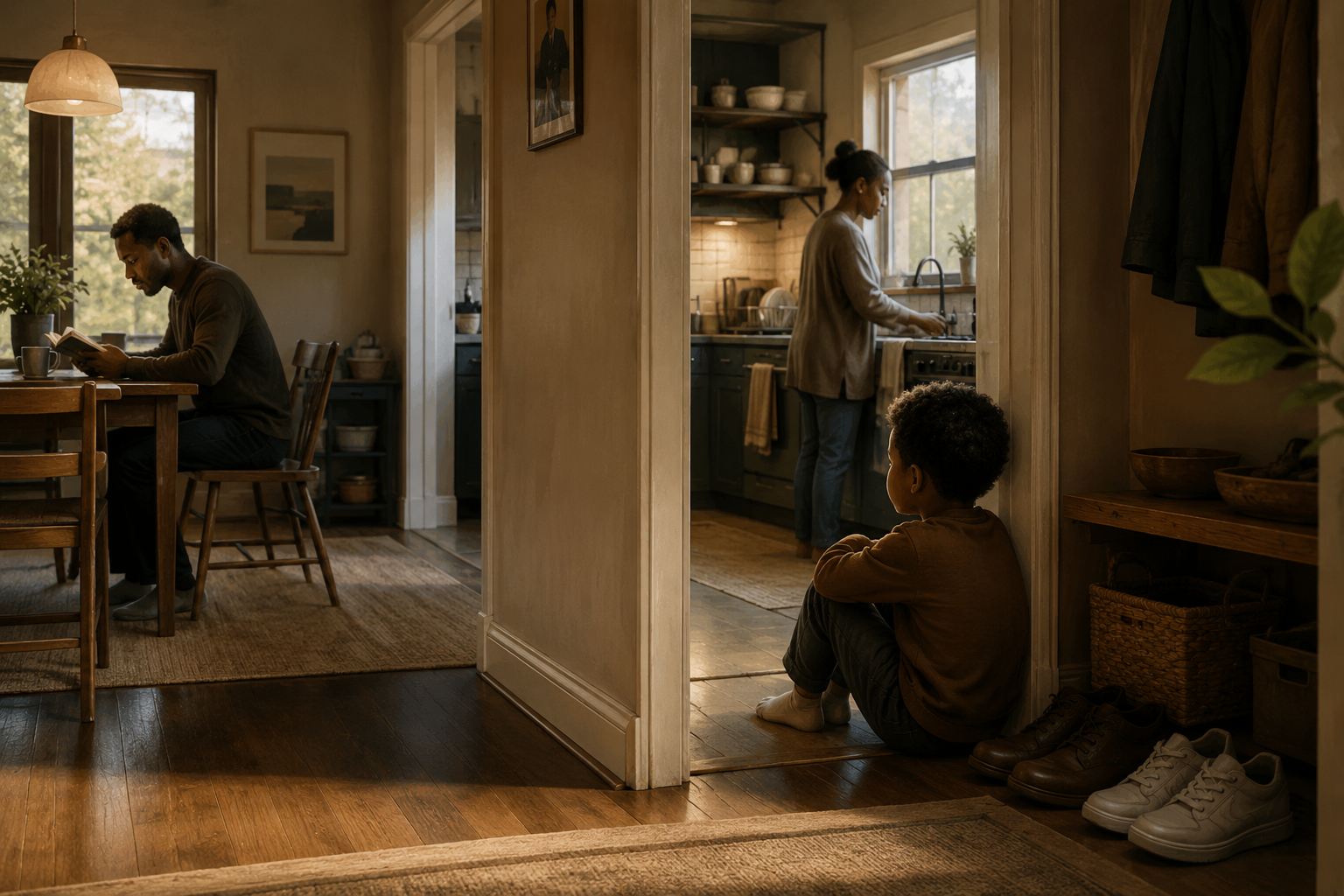
Children Learn Before They Understand
Repetition teaches long before explanation.
Children watch how adults handle frustration, whether promises survive inconvenience, who receives patience, who absorbs pressure, and whether responsibility disappears when somebody is tired.
They are not taking formal notes. They are building expectations.
That distinction matters because adults often place too much faith in what they eventually explain. A parent can give excellent advice about discipline, respect, money, or relationships. If the home has modeled the opposite for years, the spoken lesson has competition.
None of this means adults have to perform perfection. That standard is fake, brittle, and useless.
Children need something more valuable than flawless adults. They need a home where behavior has shape, repair has a path, and responsibility does not vanish the moment life gets difficult.
The question is not whether children are watching. They are.
The question is what repeated behavior is teaching them.
Every Home Teaches a Definition of Normal
Normal may mean people speak calmly even when they disagree. It may mean people shut down and disappear.
Normal may mean money is discussed with discipline. It may mean bills create fear, secrecy, and blame.
Normal may mean apologies happen after impact. It may mean pride gets protected at the cost of trust.
Children rarely know these are patterns while they are living inside them. They simply learn the room.
They learn whether adults tell the truth when truth is uncomfortable. They notice whether affection becomes cold during conflict, whether responsibility is shared or assigned to whoever complains the least, and whether anger gives somebody permission to be careless.
Eventually, what happens repeatedly begins to feel natural.
Children may forget the lecture. They rarely forget the atmosphere.
Atmosphere becomes a child’s first school of expectation.
Before children can define trust, they experience whether people keep promises. Before they can define accountability, they watch whether adults own impact. Before they can define discipline, they see whether structure holds when nobody feels like holding it.
Early patterns do not determine everything. People can grow, revise, heal, and rebuild.
But the first atmosphere still matters because it gives expectation a starting point.
Some adults spend years calling something personality when it may partly be inherited pattern. “This is just how I am” can sometimes mean, “This is what I watched long enough to repeat.”
Children Learn the Operating Rule
Adults often overestimate speeches and underestimate repetition.
A parent can tell a child to be respectful while modeling contempt during disagreement. A household can talk about discipline while running on chaos. A family can praise responsibility while repeatedly rewarding avoidance.
Children notice the contradiction.
They may not name it or challenge it. They may not even know what to do with it. But they register the distance between the stated rule and the operating rule.
Children learn whether conflict leads to repair, punishment, silence, avoidance, or growth.
Children notice whether money is planned, feared, hidden, wasted, discussed, or weaponized.
Children learn what receives presence and what survives on leftover attention.
Children learn whether mistakes create accountability or simply produce defensiveness.
The stated rule may be, “Tell the truth,” while the operating rule is, “Avoid consequences.”
The stated rule may be, “Family matters,” while the operating rule is, “Presence is optional.”
The stated rule may be, “Respect people,” while the operating rule is, “Respect only matters when somebody has power.”
That gap is where confusion grows.
Children do not need perfect alignment every day. Real households experience fatigue, stress, pressure, and mistakes. But the larger direction has to be credible. When the message and the model consistently disagree, the model usually wins.
Inherited Family Systems Travel Quietly
Family systems rarely announce themselves.
They move through habits, reactions, schedules, spending patterns, conflict loops, food rituals, silence, expectations, recovery, and emotional defaults.
This is why inheritance is bigger than money.
Money can transfer assets. Behavior transfers systems.
A child may inherit discipline without hearing the word. Another may inherit instability without anyone intending to pass it forward. One person may inherit responsibility. Someone else may inherit avoidance.
The system travels because it became normal first.
The earlier entries in this phase built toward this point.
Disciplined Legacy: The Discipline of Being Remembered examined how repeated behavior becomes memory.
When Love Becomes Infrastructure examined how relationships become systems.
This article asks what happens when somebody watches those systems long enough to believe they are simply how life works.
Children are often observing inheritance long before adults realize they are transmitting it.
Repair May Be the Most Important Lesson
Children do not need to believe adults never fail.
Life destroys that illusion quickly. Adults get tired, lose patience, misread situations, forget promises, make poor decisions, and sometimes carry stress into rooms where it does not belong.
The important question is not whether children will see failure.
It is whether they will also see repair.
Repair teaches that accountability is survivable. It shows that dignity does not disappear when someone admits fault and that relationships do not have to end every time truth enters the room.
It also shows children that love can correct itself without becoming humiliation.
Silence Is Not the Same as Repair
Some homes pretend nothing happened. Some treat apology as weakness. Others simply move on because the adults are tired, not because trust has been restored.
Children learn those patterns too.
They learn that conflict has no bridge back, that pride matters more than clarity, or that emotional safety depends on reading the mood of the room.
That is expensive inheritance.
A repair-centered household offers another operating system. It teaches people to name harm, own responsibility, correct behavior, and return with a cleaner standard.
Look at What the Home Teaches Without a Lesson Plan
The point of this conversation is not guilt.
Guilt burns hot and then fades. It can become another emotional performance that changes nothing.
The better move is an audit.
Look at the household as a system. Pay attention to the patterns that repeat when nobody is trying to make a point. Watch the emotional climate during pressure. Notice who apologizes, who absorbs responsibility, how money gets discussed, and whether rest is respected or treated like laziness.
Does disagreement usually produce repair, distance, punishment, clarity, avoidance, or growth?
Who notices what needs to be done? Who carries the invisible work? Who gets protected from accountability?
Does money create secrecy, panic, planning, discipline, resentment, or shared responsibility?
What receives the best energy in the home? What receives whatever is left?
After harm happens, does the household have a reliable path back toward trust?
Does the household treat recovery as part of sustainable responsibility, or as something people must earn through exhaustion?
These questions are structural.
A home does not become stronger because adults claim good intentions. It becomes stronger when repeated behavior can be seen, reviewed, corrected, and rebuilt.
That is how inheritance changes direction.
Children inherit more than names. They inherit definitions of normal.
Name the Pattern Before It Repeats
Write down three household rules you lived under as a child.
Not the official rules. The real rules.
Maybe the rule was, “Do not talk back.” Maybe it was, “Money is always stressful.” Maybe it was, “Keep the peace even if nobody tells the truth.” Perhaps it was, “Work comes before rest,” or, “People apologize by acting normal later.”
That answer matters.
Next, choose one pattern that deserves to end and one that deserves to continue.
Do not try to rebuild everything in one week. That is how people confuse intensity with change.
Choose one visible behavior. Make it repeatable. Let the household see it long enough to trust it.
Children learn by observation. Give them something worth observing.
Legacy Is Happening While Everybody Is Still in the Room
Families often talk about legacy as though it begins later.
After the career. After the house. After the children are grown. After somebody has enough money to leave something behind.
But legacy is already moving.
It moves through the way pressure gets handled, through what happens after somebody makes a mistake, through whose time is respected, through what a child sees adults do with responsibility when nobody is applauding.
That is why inheritance cannot be reduced to what a family owns.
The deeper inheritance is the operating system people learn to carry when the original household is no longer around to supervise them.
The work, then, is not to convince children that the household is perfect.
The work is to build a home whose repeated behavior is worth carrying forward.
Developmental Context
The broader developmental research around early relationships and resilience reinforces a basic point: children’s environments and relationships shape how they adapt, regulate, and respond over time.
External links were live and accessible when this article was published or last substantively updated. Third-party pages may change, move, or be removed over time.
Follow the Phase One Arc
Move backward into memory and relationship structure, or forward into stewardship.
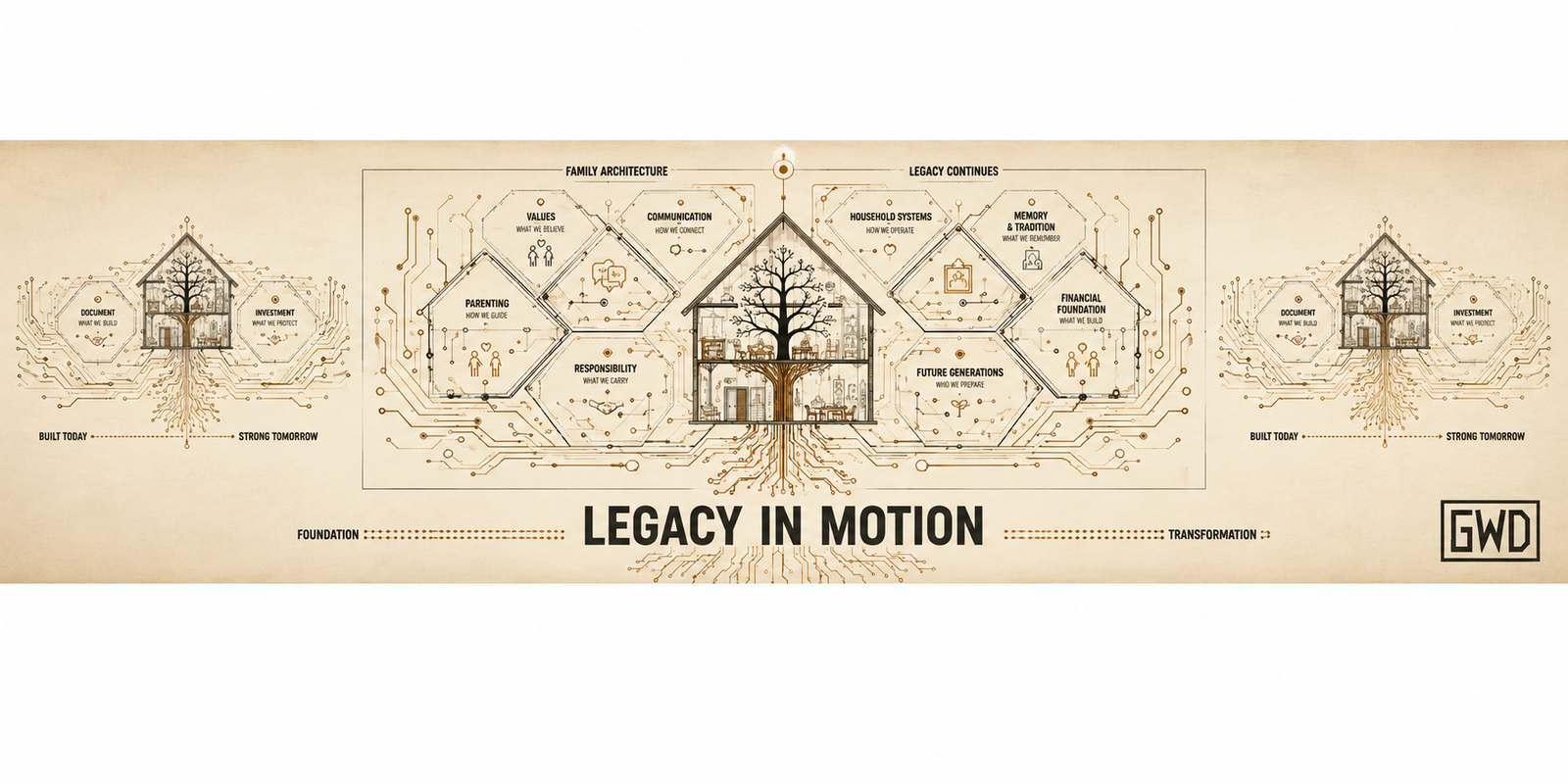
The strongest family lessons are not the ones adults announce. They are the structures children can observe holding under pressure.
Repeated household behavior becomes teachable structure long before anyone formally names the lesson.

Marcus Vaughn
Economy, Ownership & Generational Structure
Marcus Vaughn writes about ownership, financial discipline, family structure, and generational continuity. Through Money Monday and Legacy In Motion, he examines the systems that turn income into stability, responsibility into structure, and today’s decisions into tomorrow’s inheritance.