Legacy In Motion
Silence is not always disinterest. Sometimes it is a response to a conflict system that no longer feels safe or useful.
Why some men withdraw during conflict is often misunderstood because silence is easy to interpret from the outside.
A partner may see distance and conclude that a man does not care, does not want to communicate, or lacks the emotional maturity to stay in a difficult conversation. Sometimes that interpretation is correct.
Sometimes it is not.
Withdrawal can also develop when a man stops trusting the process of conflict itself. If previous disagreements repeatedly became hostile, circular, personal, or impossible to resolve, staying in the argument may begin to feel less like communication and more like exposure.
The deeper issue is therefore not simply whether someone is willing to talk.
It is whether the relationship has built a conflict process both people can trust.
Withdrawal Is Not Always Disinterest
Silence does not tell you why someone became silent.
A man can withdraw because he is indifferent. He can also withdraw because he is overwhelmed, angry, unsure how to explain himself, afraid of making the situation worse, or convinced that the conversation is no longer capable of producing resolution.
Those are different conditions. Treating them as identical makes the conflict harder to understand.
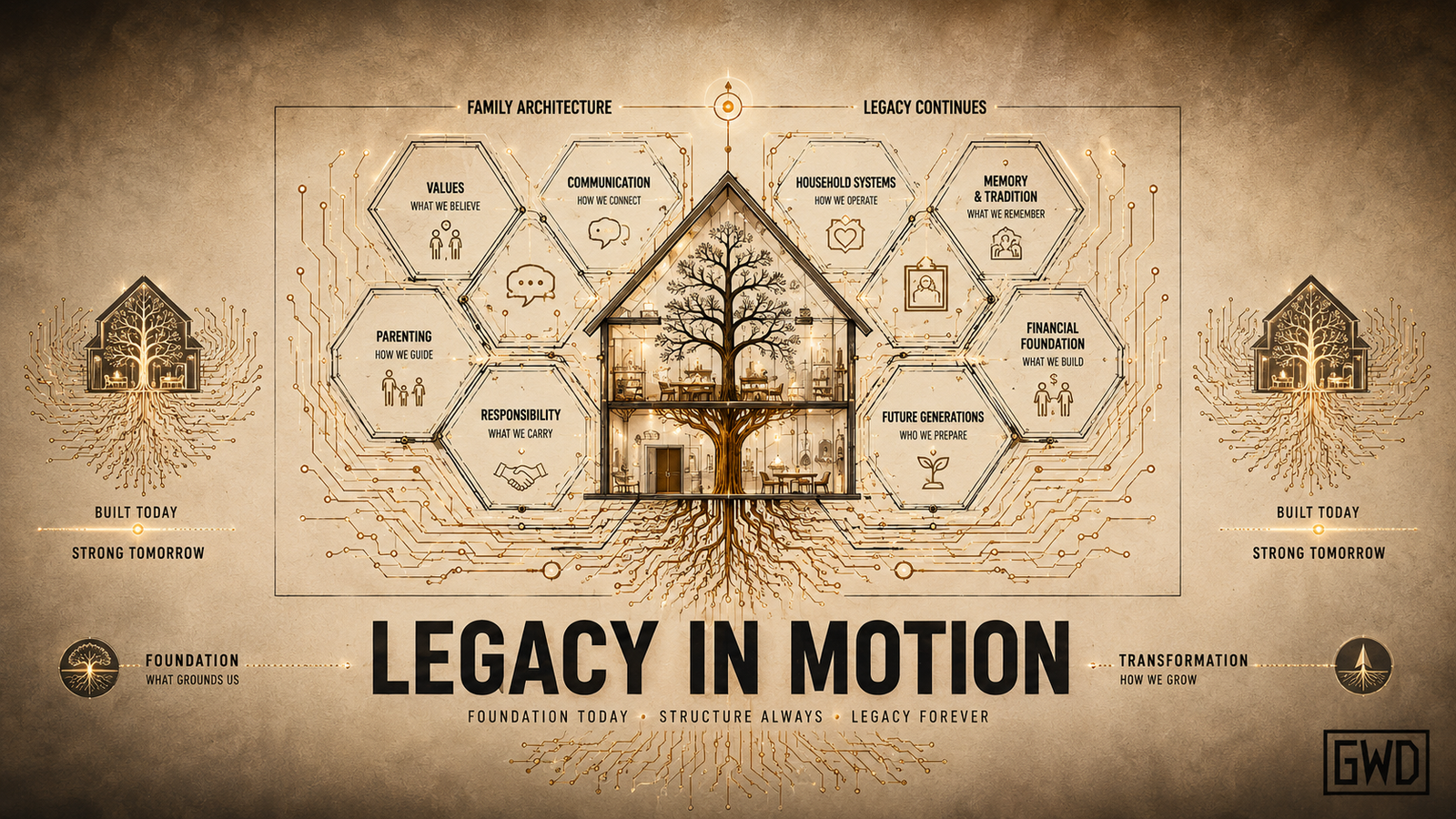
Legacy In Motion begins with structure for exactly this reason. Relationships create repeated outcomes through the systems people build around expectations, communication, responsibility, boundaries, and repair.
Conflict is part of that system.
If disagreement regularly produces clarity, accountability, and repair, both people have reason to stay engaged. If disagreement repeatedly produces humiliation, escalation, scorekeeping, or punishment, the incentives begin to change.
People adapt to the environment they repeatedly encounter.
The Real Issue Is Process Trust
Most relationship conversations focus on trust between people.
There is another form of trust that matters just as much: trust in the process.
Process trust means believing that disagreement can happen without the entire relationship becoming unsafe.
Process Trust Means
- One issue can remain one issue.
- Honesty does not automatically become ammunition.
- A mistake can be discussed without becoming a character indictment.
- Both people get room to speak.
- Emotion does not erase proportion.
- A pause is not automatically treated as abandonment.
- Repair remains possible after disagreement.
When those conditions disappear, conflict changes.
It stops feeling like a shared attempt to solve a problem and starts feeling like something to survive.
Engagement requires trust in the process, not only trust in the partner.
Why Distance Can Begin to Feel Safer Than Debate
Repeated conflict teaches people what conflict costs.
If a man learns that frustration leads to escalation, explanation leads to interrogation, or emotional honesty creates another vulnerability that may later be used against him, he may begin reducing what he reveals.
That is not necessarily a conscious decision made all at once.
It can happen incrementally.
He explains less. He stops correcting assumptions. He gives shorter answers. He avoids subjects that regularly explode. Eventually, he may decide that saying nothing produces less damage than saying the wrong thing.
From his perspective, withdrawal can begin to look like risk management.
That does not automatically make the strategy healthy. It does explain why simply demanding more communication may fail.
If the underlying communication system remains unchanged, demanding more participation only sends more traffic through a damaged road.
When Vulnerability Starts to Carry a Cost
Conflict requires exposure.
To stay fully engaged, a person may have to admit fear, disappointment, uncertainty, insecurity, regret, anger, or confusion. Those admissions carry risk because they reveal where a person is tender.
A strong relationship handles that information carefully.
A weak conflict system may not.
If something shared during an argument later becomes ridicule, leverage, gossip, or evidence in an unrelated dispute, the lesson is difficult to miss.
Vulnerability becomes expensive.
Once that happens repeatedly, emotional restraint can begin to feel more rational than emotional openness.
This is why Respect Is the Infrastructure of Relationships matters. Respect is not merely politeness when things are easy. It determines what happens to another person’s dignity when the relationship is under strain.
Why Silence Can Feel Safer Than Words
Words create material.
A sentence can be misunderstood. Tone can become the new argument. One poorly chosen phrase can replace the original issue entirely.
Silence appears to remove those risks.
No new sentence means no new sentence to defend.
No explanation means no explanation to dissect.
No disclosure means no new vulnerability entering the room.
That is why withdrawal can create short-term relief. It reduces the immediate number of moving parts.
But short-term safety can create long-term instability.
When Strategic Withdrawal Becomes a Problem
A temporary pause and chronic disengagement are not the same thing.
There are moments when stepping away from a heated conversation is responsible. Someone may need time to regulate emotion, think clearly, or keep anger from becoming cruelty.
That kind of pause should have structure.
A Structured Pause
“I am too activated to handle this well right now. I need some time. I want to come back to it tonight.”
That is different from disappearing, refusing to revisit the issue, or using silence as punishment.
When withdrawal becomes habitual, the relationship begins losing information.
Thoughts go unsaid. Frustrations accumulate. Problems remain technically quiet but structurally unresolved.
The household may still function. Bills get paid. Children get picked up. Dinner gets made. Calendars continue moving.
But operation is not the same as connection.
Eventually, a relationship can become efficient at avoiding the very conversations required to keep it healthy.
What Helps Keep Men Engaged in Conflict
There is no single conflict style shared by all men. Personality, upbringing, emotional skills, relationship history, culture, temperament, and the specific relationship all matter.
Still, one structural principle travels well:
People are more likely to remain engaged when disagreement feels contained.
Containment means the issue stays identifiable. Old grievances are not imported simply to increase leverage. Insults remain outside the process. Neither person has to defeat the other to be heard.
A useful conflict system also makes room for different processing speeds.
One partner may think while speaking. Another may need time before speaking accurately.
Demanding immediate emotional fluency from someone who processes more slowly does not automatically produce better communication. Sometimes it only produces rushed communication.
On the other hand, needing processing time does not create an unlimited exemption from difficult conversations.
Both people still owe the relationship a return.
Relationship Operating Standard
A Better Conflict Standard
A relationship should be able to answer five questions before conflict becomes crisis:
- What are we actually discussing?
- What behavior is off-limits while we discuss it?
- Can either person request a pause without permanently ending the conversation?
- When will the conversation resume?
- What would resolution or repair actually look like?
If those questions have no answer, the couple may not have a communication problem alone. They may have a governance problem.
The Pursue-Withdraw Cycle
Withdrawal rarely happens in isolation.
One partner retreats. The other experiences that retreat as rejection and pushes harder for engagement. The increased pressure makes the withdrawing partner feel even less capable of participating safely, so that person retreats further.
The harder one person pursues, the more the other may withdraw.
The more one withdraws, the more urgently the other may pursue.
Soon, both people are responding less to the original issue and more to each other’s defensive strategy.
This is where blame becomes particularly unhelpful.
The useful question is not simply, Who started it?
The better question is: What pattern are both people now reinforcing?
That distinction matters because explanation is not exoneration.
A hostile conflict environment can contribute to withdrawal. Chronic withdrawal can then make that environment even more hostile.
Both can be true.
Groundwork Daily Core Principle
Structure Builds Freedom
Healthy conflict needs enough structure for honesty to survive disagreement.
Clear boundaries around tone, timing, subject, pauses, and repair do not make a relationship rigid. They create enough room for two people to disagree without treating every disagreement as a threat to the relationship itself.
Freedom inside a relationship is not the absence of rules. It is the presence of structure strong enough that both people can tell the truth without having to destroy each other to do it.
What This Pattern Reveals
Withdrawal should not automatically be praised as wisdom or condemned as emotional immaturity.
It needs examination.
What happened before the withdrawal?
What does conflict normally become?
Does a pause lead back to conversation, or does it become permanent avoidance?
Can both people speak honestly without humiliation?
Is silence being used to regulate, or to punish?
Those distinctions tell you more than the silence alone.
Relationships become stronger when both people stop treating communication as merely the exchange of words and begin examining the conditions under which those words are exchanged.
The architecture matters.
From Reading to Practice
The Groundwork
Do not begin by asking whether withdrawal is right or wrong.
Inspect the system producing it.
Think about the last three serious disagreements in the relationship.
01. Did both people know what the conversation was actually about?
02. Could either person pause without the pause becoming punishment?
03. Did honesty create understanding, or merely more ammunition?
04. Did the conversation eventually return to the original issue?
05. Was anything actually repaired?
If the answer keeps coming back no, demanding more communication is not enough.
The conflict architecture needs rebuilding.
Silence is not always the problem. Sometimes silence is evidence that the system around speaking has already failed.
Continue Building
Further Groundwork
Research & References
Receipts
- American Psychological Association — reporting and research context on men’s communication, emotion, and help-seeking.
- The Gottman Institute — relationship research and educational material on withdrawal and destructive conflict patterns.
These sources provide general research context. Individual conflict behavior varies by person, relationship history, personality, culture, and circumstance.