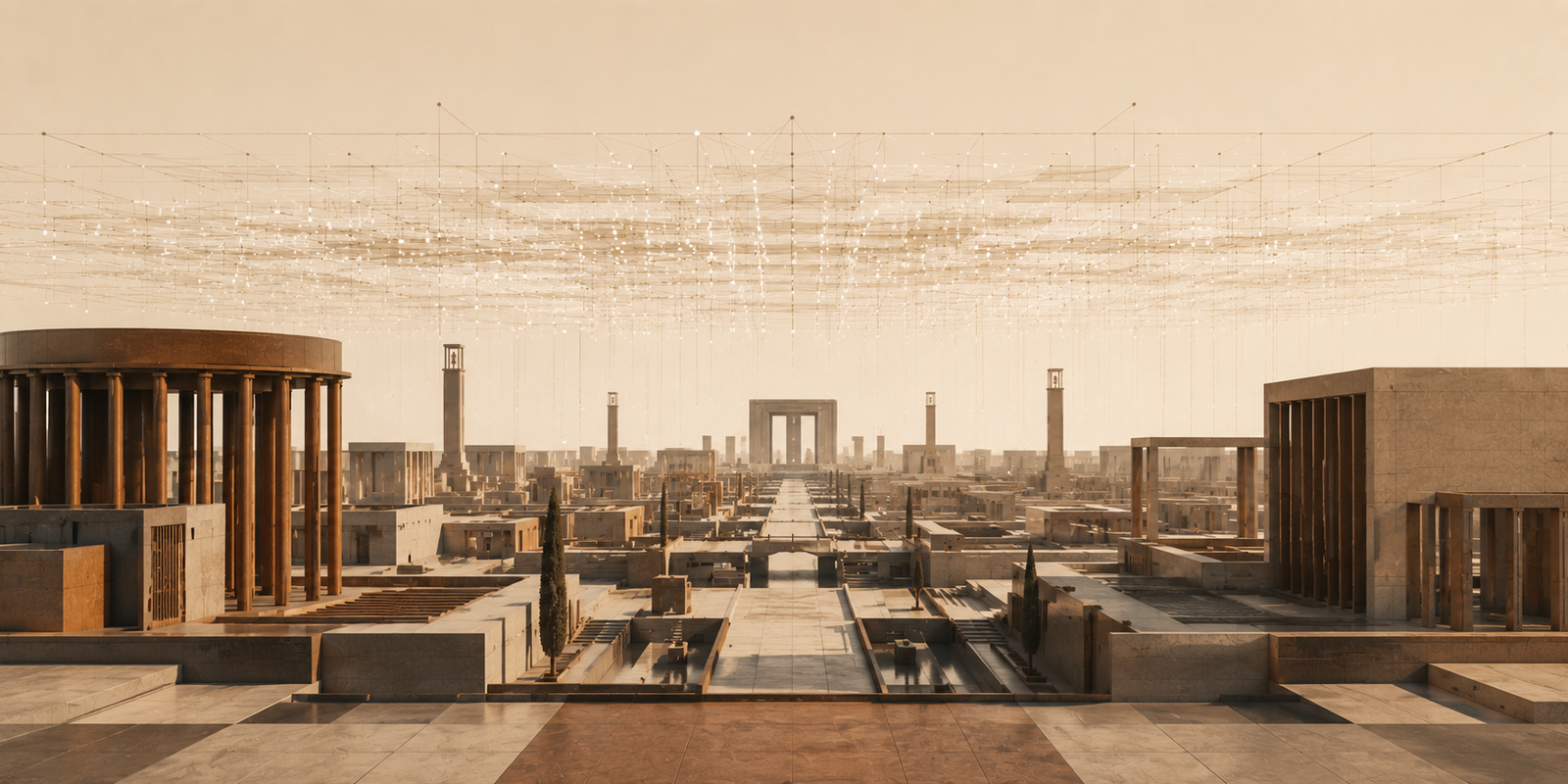
The psychology of being watched begins before anyone says a word.
A person feels it first.
Posture changes. Speech slows. The mind edits itself before the mouth opens. The body makes small adjustments while moving through a room.
Being watched does not always create fear.
Sometimes it creates performance.
Other times it creates caution.
In many cases, it creates a version of the self that feels safer, quieter, smaller, and more acceptable to whatever gaze feels present.
That is why this question matters.
Surveillance does not only measure behavior.
It can shape the person behind the behavior.
The Psychology of Being Watched
The psychology of being watched is not only about cameras, platforms, devices, or public systems.
Those tools matter. They create the conditions. Still, the deeper issue happens inside the person who begins to feel observed.
People change when they believe others are watching.
They may become more careful, polished, defensive, and restrained. Experimentation can slow down. Mistakes may feel more dangerous. Honest speech may give way to language that sounds acceptable.
At first, this can look like maturity.
Sometimes it is.
But there is a difference between self-control and self-erasure.
Self-control is chosen.
People often learn self-erasure under pressure.
The Psychology of Being Watched in Daily Life
Observation has a weight.
It may be subtle, but it is real.
A child behaves differently when an adult enters the room. A worker changes tone when a supervisor walks by. Cameras can alter how a person speaks. A community may gather differently when every movement might become a record.
That does not mean people only behave well when watched.
It means observation changes the atmosphere.
The mind begins to scan itself.
Should this be said?
Will this be misunderstood?
Does this look suspicious?
Could this moment travel farther than intended?
Those questions can exhaust a person when they become ordinary.
Over time, many people stop noticing the pressure because adaptation has done its work.
That is where the danger lives.
Behavioral Surveillance Changes Behavior
Behavioral surveillance does not need to punish every action in order to be powerful.
It only needs to make people aware that someone can track, store, review, or judge their actions later.
Once that awareness settles in, behavior begins to organize around the possibility of being seen.
People may avoid certain places, limit conversations, or stop asking certain questions. They may choose a cleaner version of themselves for public life, not because it is truer, but because it feels safer.
This is not always dramatic.
Most of the time, it is quiet.
A joke disappears.
A question stays buried.
Risk gets avoided.
A thought remains private.
Someone skips the gathering.
A version of the self stays hidden because the room feels watched.
That is how behavioral surveillance reaches beyond conduct.
It begins to shape possibility.
The Observation Effect
The observation effect is simple in everyday life.
People often behave differently when they know someone is watching.
The deeper question is what happens when that feeling does not turn off.
A person who feels watched once may adjust for the moment. Constant observation can turn adjustment into habit. Over time, that habit can become part of identity.
This is where external observation becomes internal monitoring.
The watcher moves inside.
People begin correcting themselves before anyone else does. They anticipate judgment before it arrives. They carry an invisible audience inside the mind.
That audience may sound like caution.
It may sound like wisdom.
Sometimes it is.
But when fear of being seen incorrectly dominates the inner voice, freedom begins to narrow.
When the Psychology of Being Watched Becomes Identity
Identity forms through repeated practice.
What people repeat, they begin to believe.
If a person repeatedly edits themselves for acceptance, performance can start to feel like personality. Hidden curiosity can begin to look like wisdom. Repeated risk avoidance can start to feel like character.
That is not always growth.
Sometimes it is adaptation to pressure.
This is why constant observation deserves serious attention.
It can train people to confuse being acceptable with being whole.
Approval can start to feel like safety.
The body may remain guarded even when no immediate threat exists.
Under enough observation, a person may stop asking, “What do I believe?”
The quieter question becomes, “How will this look?”
That is a profound shift.
The Quiet Cost of Self-Monitoring
Self-monitoring can be useful.
It helps people act with care, prevent harm, and sustain relationships.
But constant self-monitoring drains the spirit.
A person cannot remain fully present while continuously managing how every moment might be interpreted. Attention gets divided. One part of the mind lives the moment. Another part watches the moment being lived.
That split creates fatigue.
It can also create distance from the self.
People begin to live as if every action needs a future defense. Every sentence needs a public version. Every mistake needs damage control before it even happens.
That is not peace.
That is managed exposure.
What Happens to Freedom?
Freedom is not only the absence of force.
True freedom also requires enough inner space to think, move, question, create, and change.
A person can technically be free and still feel watched into restraint.
That restraint matters.
Curiosity needs room.
Creativity needs room.
Growth needs room.
Accountability also needs room, because accountability without repair becomes performance instead of transformation.
When observation becomes too constant, people may still move through life, but with less range. Experimentation shrinks. Honesty narrows. The willingness to remain unfinished in public gets weaker.
That is the hidden cost.
A watched society may become more orderly.
It may also become less alive.
The Psychology of Being Watched Beneath the Data
This article sits inside the larger Who Governs the Data? conversation.
Governance Before Capability asked whether powerful tools should outrun responsibility.
When Public Safety Becomes Infrastructure examined what happens when safety systems become permanent.
Trust, Safety, and the Cost of Constant Monitoring asked what constant monitoring does to neighborhoods and families.
Smile, You’re an Algorithm asked why people keep trading privacy for convenience.
This piece asks the quieter question.
What happens inside a person when observation becomes normal?
The answer is not simple.
Some people become more careful.
Others become more polished.
Many grow anxious.
A few become less honest.
Eventually, some become strangers to their own instincts.
That is why the psychology of being watched cannot remain a side issue.
It belongs inside the system.
Stillness Notes
Stillness helps reveal what constant observation can hide.
In stillness, a person can ask a cleaner question.
Who am I when I am not performing?
What would I say if no system could measure it?
What would I try if no invisible audience needed to approve?
Which part of the self has been edited for so long that it now feels like discipline?
These questions do not reject accountability.
They protect humanity inside accountability.
The most powerful forms of observation do not always force compliance.
Sometimes they teach people to monitor themselves.
That is why the psychology of being watched matters.
Not because somebody is always looking.
Eventually, people may begin looking at themselves through the eyes of the system.
The final question is not whether observation changes behavior.
The final question is whether it changes who people believe they are.
→ Governance Before Capability
→ When Public Safety Becomes Infrastructure
→ Trust, Safety, and the Cost of Constant Monitoring
→ Smile, You’re an Algorithm
→ Who Governs the Data?
For broader research on privacy, technology, and public trust, see the Pew Research Center’s work on privacy and technology.