

Economy & Ownership · Ownership Economy
Group economics begins with ownership, not spending. Consumer support can create demand, but durable economic power requires systems capable of turning that demand into retained value, assets, institutions, and continuity.
Buying from one another can matter. Supporting aligned businesses can matter too. Likewise, redirecting consumer demand can strengthen enterprises that might otherwise struggle to gain attention.
Still, spending is not the same as building.
A purchase creates revenue at one moment in the system. Ownership determines what has a chance to remain after the transaction, which means the distinction is not minor. It is the architecture.
Group Economics Cannot Stop at Coordinated Consumption
Too many conversations about group economics stop with the same commands: buy from us, keep the dollar in the community, and support our businesses.
Those instructions can be useful. However, they cannot carry an economic strategy by themselves.
Without ownership systems, organized capital, institutions, supplier access, property control, professional capacity, and trust, group economics becomes a mood instead of a machine.
A mood can inspire people. A machine, by contrast, can keep producing after the excitement fades.
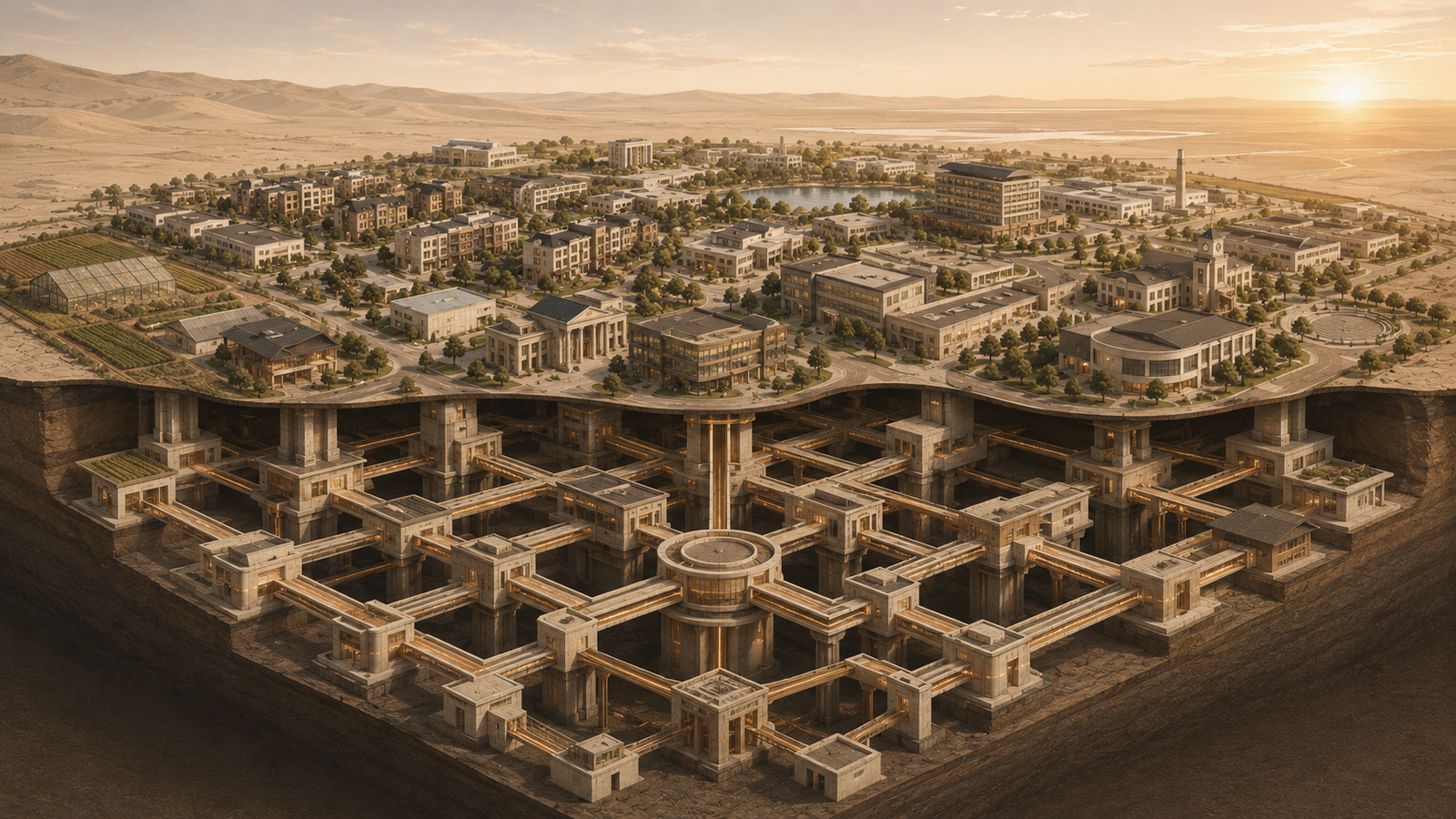
What Group Economics Actually Means
Group economics is the practice of organizing economic behavior so a community can retain, grow, govern, and transfer value over time.
That definition moves the idea beyond slogans. A boycott, directory, vendor list, hashtag, or weekend of intentional spending may support the work, but none of those activities is the complete system.
The Better Questions Are About Control
A serious strategy asks who owns the land, buildings, businesses, and productive assets. It also asks who controls financing, supplier relationships, institutional governance, professional expertise, and the upside when demand increases.
Those questions matter because a group can spend together while still building very little durable position.
For example, economic activity can remain high while value leaves through rent, debt, supplier payments, outside property ownership, platform fees, financing costs, and external investors.
That is why Why Money Leaves the Neighborhood So Quickly matters in this arc. Capital leakage exposes the weakness of a spending-only strategy.
Group Economics Has a Spending Limit
Coordinated spending can create a useful signal. It can reward good service, punish exploitation, reveal demand, and give younger businesses time to improve.
Nevertheless, a purchase does not turn a customer into an owner. Nor does temporary customer enthusiasm automatically create a stable enterprise.
Revenue Is Not the Same as Retained Value
Spending produces revenue. Revenue can support payroll, inventory, rent, debt service, and survival.
Yet survival alone does not create durable wealth. Something still has to remain after those obligations are paid.
Retained value may appear as business equity, property, cash reserves, productive equipment, intellectual property, investments, institutional capacity, professional skill, or transferable ownership.
Without those forms of retention, economic activity can create motion without creating position.
Consumers and Owners Hold Different Leverage
Consumers choose among available options, whereas owners help shape the options themselves. Customers see price at the point of purchase, while owners must understand margin, financing, property, labor, suppliers, and risk earlier in the system.
For that reason, Buying Power Without Ownership Is Not Wealth belongs earlier in this Power & Price arc.
Buying power can influence a market. Ownership determines where value has a chance to settle.
“Keep the Dollar in the Community” Is Too Simple
The phrase sounds useful until somebody asks how a dollar is supposed to stay.
Money does not remain because people want it to remain. Instead, value stays longer when systems exist to receive revenue, circulate capital, acquire assets, finance growth, and govern what has been built.
A Local Business Can Still Have an External Cost Structure
Consider a neighborhood restaurant with strong customer support. The dining room may be local, yet much of the underlying economic structure may not be.
If the restaurant leases from an outside landlord, buys from distant suppliers, carries expensive debt, pays platform fees, and owns little productive property, much of its revenue will leave again.
That does not make the restaurant unworthy of support. Rather, it shows why support must mature into a broader ownership strategy.
Demand should eventually connect to better supplier terms, stronger financing, financial visibility, property strategy, technology, management capacity, and long-term ownership.
Therefore, the better question is not simply where the first dollar is spent. The stronger measure is how many productive systems that dollar strengthens before it leaves.
Ownership Systems Make Group Economics Durable
Ownership systems are structures capable of holding, managing, protecting, using, and transferring value.
Those structures can include businesses, buildings, land, equipment, supplier contracts, intellectual property, software, brands, data, farms, warehouses, vehicles, investment funds, financial institutions, cooperatives, trusts, and community development entities.
Ownership Changes Where the Margin Lands
When more businesses are locally owned, more profit can remain connected to local decision-making. Likewise, commercial property ownership can turn rent from a permanent expense into income and equity.
Financial institutions can transform deposits into lending, while productive assets can allow local demand to support employment and supplier networks.
Ownership Extends the Time Horizon
Consumers can focus on immediate need. Owners, however, must think about maintenance, pricing, debt, insurance, taxes, reserves, repairs, succession, and transfer.
That longer horizon is not a burden separate from ownership. It is part of what ownership means.
Ownership Still Requires Competence
Ownership does not rescue weak operations automatically. Poor governance can destroy assets, weak bookkeeping can kill a company with strong sales, and misplaced trust can turn an investment into resentment.
Therefore, ownership systems require rules, records, training, transparency, decision rights, accountability, and succession planning.
Group Economics Requires More Than Business Ownership
Business ownership matters, but a functioning economy contains more than businesses.
Enterprises still need property, suppliers, lenders, technology, skilled workers, insurance, transportation, accounting, legal protection, and institutions capable of carrying pressure.
Ownership Has to Become Layered
Business Equity
Operating companies, professional firms, manufacturers, contractors, retailers, service businesses, and acquisition platforms create productive ownership.
Land and Buildings
Homes, commercial property, industrial space, development sites, farmland, and community-controlled land create a physical asset base.
Tools and Intellectual Property
Equipment, software, brands, copyrights, patents, media assets, vehicles, data, and production systems can generate value beyond one sale.
Capital Assets
Investment accounts, fund interests, cooperative shares, retirement assets, cash reserves, debt instruments, and equity stakes expand financial capacity.
Strength Does Not Require Isolation
No serious ownership strategy requires every good, service, customer, or financing source to remain inside one community.
Outside exchange is normal and necessary. The objective is to own enough, govern enough, and retain enough that those exchanges occur from a stronger position.
Group Economics Requires Organized Capital
A community may contain high earners, entrepreneurs, donors, churches, nonprofits, alumni networks, civic organizations, and successful families.
Even so, private resources do not become strategic capital simply because they exist in the same population.
Capital Needs Containers
Depending on the economic problem, useful containers may include credit unions, CDFIs, revolving loan pools, investment funds, cooperative purchasing groups, community development corporations, land trusts, acquisition vehicles, or family investment structures.
Different structures perform different jobs, which means the form should follow the need.
Governance Comes Before Excitement
Organized capital has to be protected from favoritism, ego, weak underwriting, panic, and vague promises.
Consequently, strong capital systems require standards, documentation, competent management, risk evaluation, and measurable objectives.
That bridge is often missing. People correctly identify the need for capital but skip the governance required to use capital well.
Institutions Hold Group Economics Together
Campaigns can create attention and mobilize people quickly. Institutions perform a different job because they hold responsibility after the campaign ends.
A functioning institution can manage contracts, records, property, lending, procurement, training, reporting, governance, and succession. More importantly, it can preserve knowledge after public attention moves elsewhere.
Continuity Cannot Depend on One Person
Economic efforts built around a charismatic organizer remain vulnerable to burnout, departure, death, or loss of credibility.
By contrast, durable institutions store memory, define authority, enforce standards, manage assets, train successors, and keep obligations visible.
Strong Institutions Often Look Boring
They reconcile accounts, maintain records, review performance, document decisions, hold meetings, define authority, and update systems.
This connects directly to Building an Ownership Economy That Lasts , because durable ownership requires institutions that can hold assets beyond one founder or one moment.
Group Economics Needs Standards
Support cannot mean lowering expectations for service, financial discipline, employment practices, recordkeeping, or governance.
Otherwise, solidarity becomes an excuse for avoiding correction.
Trust Is Too Expensive to Waste
Customers should not be shamed into accepting poor service, just as investors should not be pressured into vague deals.
Workers should not have to tolerate disorder in the name of loyalty. At the same time, business owners should not be expected to carry an entire community narrative without adequate operating support.
The stronger path combines support with accountability.
Businesses need standards, institutions need enforcement, capital needs discipline, customers deserve respect, and builders need room to improve.
A serious group economics strategy therefore does not protect incompetence. It builds capacity.
Entrepreneurship Needs Ownership Systems Around It
Entrepreneurship creates businesses, jobs, products, services, management roles, and ownership opportunities. However, entrepreneurship cannot carry the whole economic system alone.
A founder may have strong demand and still fail because rent increases, supplier terms deteriorate, or working capital disappears between payments.
Entrepreneurs Need an Ecosystem
Growing firms require bookkeeping, legal guidance, credit, insurance knowledge, procurement access, skilled workers, dependable suppliers, technology, and managers who understand operations.
Customers also have responsibilities. A community cannot demand strong businesses while refusing to respect pricing, timelines, boundaries, or quality standards.
The founder is not a miracle worker.
Entrepreneurship becomes more durable when institutions and ownership systems carry some of the load that individual founders would otherwise have to rebuild alone.
Production Beats Performance
Group economics becomes stronger when the question shifts from how an effort looks to what the effort leaves behind.
Ask What Was Actually Produced
Did the initiative create an asset, train an operator, improve supplier access, secure property, create reliable employment, or strengthen an institution?
If the answer is no, visibility may have been mistaken for development.
Panels, photographs, announcements, social posts, and applause can make an initiative look active. Yet the room can still empty with the underlying economic structure unchanged.
The Stronger Work Usually Happens Quietly
Accounting support, property acquisition, supplier networks, lending relationships, management training, and governance rarely generate the most attention.
Nevertheless, those systems are often what allow businesses and institutions to survive the unglamorous middle.
Trust Makes Group Economics Work
Trust affects how quickly people can coordinate, exchange information, lend capital, refer customers, and form partnerships.
As a result, low-trust environments become expensive because everyone has to spend more time protecting against uncertainty.
Trust Lowers Transaction Costs
In stronger trust environments, owners can ask for help before collapse, lenders can assess risk more accurately, younger entrepreneurs can find mentors, and customers can recommend businesses with confidence.
However, trust is not a feeling. It is evidence accumulated through repeated behavior.
Trust Requires Consequences
Reliability grows when people keep agreements, pay on time, tell the truth about capacity, correct mistakes, protect records, and avoid promises they cannot keep.
Consequences matter too, because trust without accountability becomes sentiment.
Sentiment cannot govern capital, protect investors, maintain property, or repair broken agreements.
That is why The Business of Trust belongs inside the larger Power & Price architecture.
Buying Together Is the First Floor
Coordinated buying should not be discarded. It should be placed correctly inside the larger system.
Demand can reveal market size, stabilize a young business, and show institutions where opportunity exists.
However, the next floors still have to be built.
Demand Has to Travel Somewhere
Demand should connect to business development. Business development should connect to financing, while financing should connect to ownership.
Ownership then needs institutions, and institutions need trust, governance, and continuity.
That sequence gives group economics a spine.
The Group Economics Value Chain
The economic progression becomes easier to diagnose when the movement from spending to durable position is made visible.
Demand Creates the Opening
Customers create economic opportunity by deciding where spending goes.
Revenue Enters the Enterprise
Once money arrives, the business still has to pay wages, rent, suppliers, debt, taxes, technology, and other operating costs.
Retained Value Is What Remains
Margin, reserves, retained earnings, customer relationships, skills, and institutional knowledge determine whether the transaction leaves something behind.
Assets Turn Retention Into Position
Retained value can become property, equipment, equity, intellectual property, technology, inventory capacity, or financial reserves.
Institutions Hold What Assets Alone Cannot
Institutions preserve governance, standards, records, relationships, and operating knowledge beyond one transaction or founder.
Continuity Is the Final Test
Durable value should survive leadership changes, market pressure, succession, and the fading of public attention.
The Group Economics Blueprint
Use this framework as a diagnostic rather than branding language. Its purpose is to identify the systems that are actually missing.
- Map where money enters the community.
- Map where money leaves the community.
- Identify which businesses are locally owned.
- Identify who owns the commercial property.
- Identify supplier bottlenecks and weak terms.
- Build trusted capital containers.
- Strengthen bookkeeping and financial visibility for owners.
- Create shared purchasing or supplier networks where useful.
- Support property acquisition and stronger lease strategy.
- Train entrepreneurs for operations, not merely launch.
- Build institutions capable of holding assets.
- Create standards that protect trust.
- Plan succession before leadership becomes a crisis.
- Measure retained value, not only spending volume.
Support Has to Be Designed
Saying people should support one another is not enough. Durable support needs channels, roles, systems, records, governance, and clear expectations.
The work is less glamorous than the slogan. That is not a weakness. Glamour has never been a substitute for infrastructure.
What Communities Should Build First
There is no universal first project because different places have different constraints.
One community may need capital access, while another needs business training, property strategy, trust repair, a stronger merchant organization, technical assistance, or a cooperative purchasing structure.
Start With the System Map
Begin by identifying where money enters, where it leaves, what is locally owned, and which assets remain controlled externally.
Then examine which institutions are trusted, which businesses could scale with support, which owners face displacement risk, and whether younger people are being trained for ownership and professional economic roles.
Build the Missing Capability, Not the Loudest Project
The correct intervention may be lease education, bookkeeping support, supplier aggregation, acquisition financing, succession planning, or a property strategy.
Therefore, the objective is not to do everything at once. It is to stop doing random things loudly.
Group Economics Requires Governance
Any shared economic effort has to answer basic governance questions before money and conflict test the relationships.
Authority Has to Be Clear
Who makes decisions, manages money, reports results, audits records, resolves disputes, removes bad actors, and defines success?
When those questions remain unanswered, pressure eventually answers them through conflict.
Governance Protects Trust
Clear structure is not evidence of distrust. In fact, written expectations can protect trust because everyone understands the rules before money, ego, failure, or disagreement arrives.
A serious group economics effort therefore needs agreements, role clarity, financial controls, reporting, performance standards, dispute processes, and succession planning.
Group Economics Also Requires Culture
Culture determines which behaviors receive praise, protection, and repetition.
A culture that rewards flash may produce fragile efforts, whereas a culture that rewards discipline can support institutions.
Stewardship Is an Economic Culture
Strong systems respect the bookkeeper, property manager, trainer, careful board member, elder preserving institutional memory, founder documenting processes, honest customer, and investor willing to ask difficult questions before writing a check.
Those roles may attract less attention than the founder or public spokesperson. Nevertheless, they are part of the economic skeleton.
Support Cannot Become Extraction
A business cannot remain healthy if every customer expects a discount. Likewise, workers cannot build stability when owners underpay in the name of community, and institutions cannot preserve trust while handling money casually.
Group economics is therefore not permission to demand sacrifice from the nearest builder. It is a discipline of shared responsibility.
What Group Economics Should Not Become
Visibility is not wealth, spending is not ownership, loyalty is not a substitute for standards, and a directory is not an economic strategy.
Likewise, a campaign is not an institution, a founder is not a system, and a popular moment is not durable capacity.
Hard Questions Reveal the Structure
Ask who owns the asset, governs the money, keeps the records, trains the next operator, absorbs the risk, and receives the upside.
Then ask who can keep the work alive after attention fades.
Those questions are harder than slogans because they force the system into view.
The Arc Moves From Consumption to Ownership
This article closes the second Power & Price arc by moving from consumer activity toward the systems required for durable ownership.
Buying Power
Buying Power Without Ownership Is Not Wealth explains why consumer spending cannot substitute for asset ownership.
Market Architecture
The Rules Were Written Before We Entered the Market examines how public policy and institutions shape opportunity before individual effort begins.
Capital Circulation
Why Money Leaves the Neighborhood So Quickly follows the systems through which money can pass through a place without building durable wealth there.
Ownership Economics
This article completes the turn by arguing that group economics has to move beyond coordinated consumption toward ownership systems, capital strategy, institutional capacity, and operating discipline.
Group Economics Begins With Ownership, Not Spending
Group economics begins with ownership because spending alone does not determine where value settles.
Consumer demand can support a business, while ownership can create equity. Spending can signal values, whereas institutions can preserve strategy after public attention changes.
Excellent Customers Are Not an Ownership Economy
Communities build durable wealth when economic activity leaves behind assets, productive capacity, professional knowledge, governed institutions, and ownership capable of surviving across generations.
That work includes accounting, property, supplier access, financing, production, trust, governance, training, and succession.
Buying together may open the door.
Ownership is what builds the house.

Build Something the Spending Can Feed
Consumer support matters when an economic system is capable of converting demand into something durable.
Revenue must first survive operating costs. After that, retained value can become property, equipment, equity, reserves, intellectual property, and productive capacity.
Those assets then need institutions capable of holding them through governance, professional competence, trust, standards, and succession.
The Objective Is Stronger Exchange, Not Isolation
A durable group economics strategy does not attempt to trap every dollar inside a geographic boundary.
Instead, it seeks enough ownership and institutional capacity that outside exchange occurs from a stronger position.
Demand starts the movement. Ownership determines what remains. Institutions determine whether it lasts.
Where This Article Sits
This article examines what has to exist beyond consumer coordination for economic activity to become durable community position.
Its central argument is that demand matters, but demand becomes durable economic power only when structures exist to retain value through ownership, capital, institutions, governance, professional capacity, and continuity.
Build What Holds
A durable economic system must hold assets, standards, records, governance, relationships, capital, and institutional memory after consumer attention moves elsewhere.
Therefore, coordinated spending becomes economically meaningful only when something capable of retaining its value already exists or is deliberately built.
Capacity
Capacity determines whether businesses, institutions, capital systems, owners, and professional networks can carry demand without collapsing under growth, weak governance, or founder dependence.
In this context, group economics becomes durable when enough operating, financial, institutional, and human capacity exists to convert activity into ownership.
Explore the full Groundwork Daily Core Principles and The Conditions architecture.

Meet the Builder
Samual Drayton
Samual Drayton examines the structure beneath economic activity: who owns the asset, who controls access, who sets the terms, who absorbs the cost, and where value remains after money moves.
Through Power & Price, he follows pricing, leverage, markets, institutions, supply systems, ownership, capital, and retention to reveal the difference between economic activity and durable economic position.
Signature philosophy: Follow the money past the transaction. The structure tells you who controls the terms, who carries the cost, and where the value settles.
Expect practical Groundwork on economic power, ownership, pricing, leverage, market structure, institutions, supply systems, trust, community wealth, and capital retention.
Sources & Further Reading
-
U.S. Census Bureau · Business Ownership
U.S. Census Bureau. Annual Business Survey. Federal data on employer businesses, ownership characteristics, receipts, employment, payroll, business conditions, and owner demographics. Review the Annual Business Survey . -
U.S. Treasury · Community Capital
U.S. Department of the Treasury, Community Development Financial Institutions Fund. Federal programs and institutional resources supporting CDFIs, lending capacity, community development entities, capital access, and investment in underserved markets. Review the CDFI Fund . -
U.S. Economic Development Administration · Regional Capacity
U.S. Economic Development Administration. Programs addressing regional competitiveness, business ecosystems, infrastructure, planning, and local economic resilience. Review the Economic Development Administration . -
U.S. Small Business Administration · Business Operations
U.S. Small Business Administration. Manage Your Business. Guidance on finances, hiring, taxes, compliance, operations, growth, and business-management systems. Review SBA business-management resources . -
USDA · Business & Cooperative Infrastructure
U.S. Department of Agriculture Rural Development. Business programs supporting lending, enterprises, cooperatives, infrastructure, and community economic development. Review USDA business programs . -
Groundwork Daily · Capital Circulation
Groundwork Daily. Why Money Leaves the Neighborhood So Quickly. Companion Power & Price analysis examining capital leakage, outside ownership, supply systems, rent, debt, and why local activity does not automatically become local wealth. Read the article . -
Groundwork Daily · Buying Power
Groundwork Daily. Buying Power Without Ownership Is Not Wealth. Companion analysis distinguishing consumer demand from durable asset ownership. Read the article . -
Groundwork Daily · Market Architecture
Groundwork Daily. The Rules Were Written Before We Entered the Market. Companion analysis examining public policy, institutions, property systems, education, infrastructure, and market rules. Read the article . -
Groundwork Daily · Ownership Economy
Groundwork Daily. Building an Ownership Economy That Lasts. Companion analysis connecting assets, institutions, supply, governance, trust, and economic continuity. Read the article . -
Groundwork Daily · Trust
Groundwork Daily. The Business of Trust. Companion analysis examining trust as economic infrastructure that lowers friction and supports repeated cooperation. Read the article .