

You can learn plenty about somebody by what they do with a thing that belongs to somebody else.
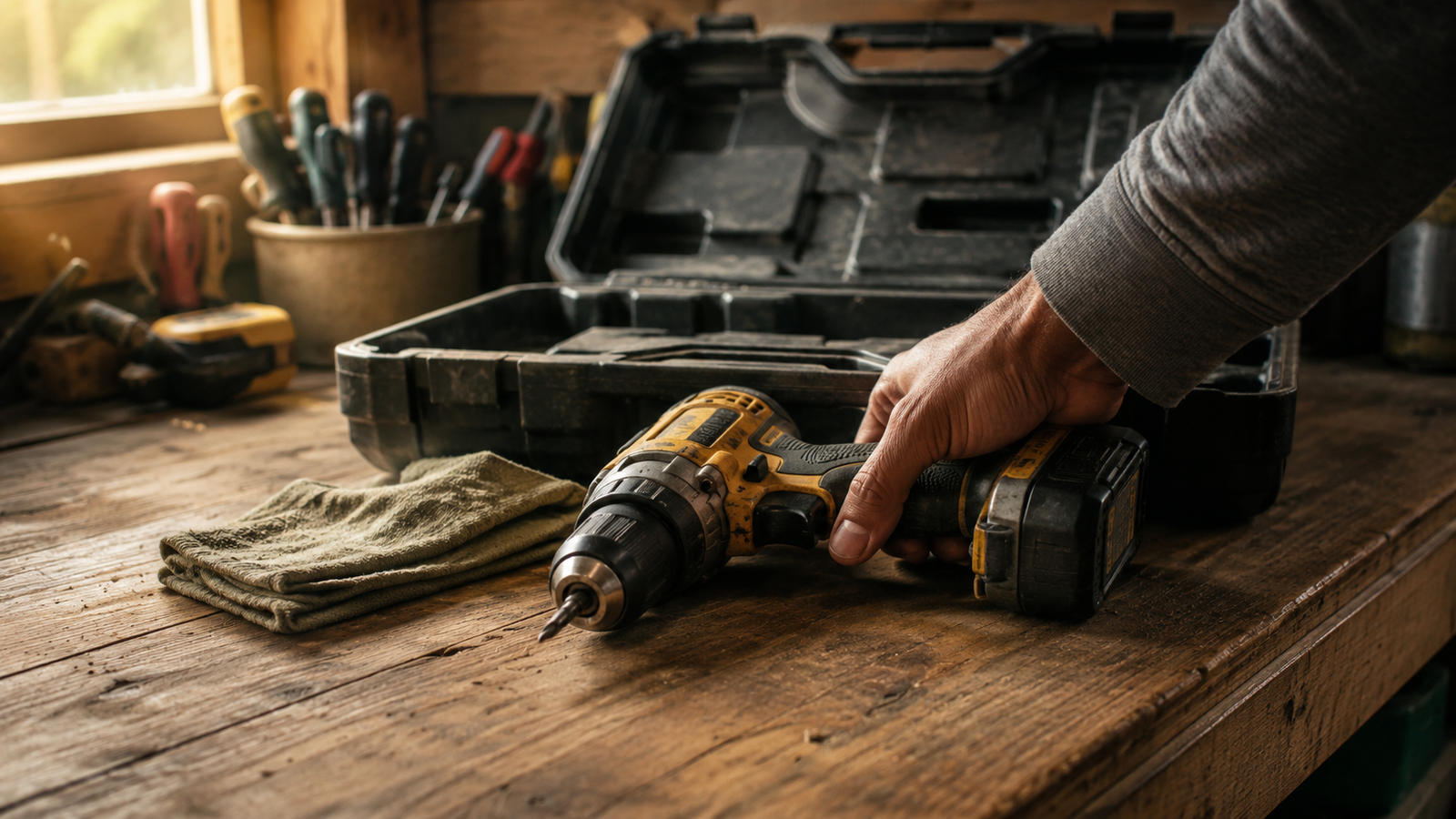
A man borrows your drill.
Nothing dramatic about that.
You hand it over because he needs it.
Maybe he has a shelf to hang.
Maybe a loose board needs fixing.
Maybe he bought one of those television mounts with nineteen pieces, six bags of screws, and instructions written like somebody lost a bet.
Either way, he asks.
You say yes.
Then comes the part people do not think much about.
He has your drill now.
Not forever.
Just for a while.
And for that little while, something that belongs to you has been placed inside his care.
That is where borrowing stops being about the drill.
It becomes about trust.
Borrowing Creates a Small Responsibility
Some people think borrowing works like this:
You ask.
You receive.
You use.
You return.
Technically, that is correct.
So is saying cooking means putting food near heat.
There is a little more to it if you want anybody to enjoy the result.
When somebody lets you use what belongs to them, you have accepted a temporary responsibility.
That responsibility includes the obvious thing:
Bring it back.
But grown folks know that is only the beginning.
Bring it back when you said you would.
Bring all of it back.
Bring the charger.
Bring the case.
Bring the little attachment you took out and put on the windowsill because you were absolutely going to remember where you put it.
And if you used something up, replace it.
If you damaged something, say so.
If it needs cleaning, clean it.
The minimum standard is not merely that the owner eventually gets possession again.
The standard is that your use should not become their new problem.
How You Return Borrowed Things Reveals Your Standards
People talk a lot about respect.
Respect is one of those words that gets dressed up for company.
Everybody claims to have it.
Then somebody borrows your truck and returns it with the gas light on.
Now we have evidence.
That is the useful thing about ordinary behavior.
It does not need a speech.
A person can tell you all day that they respect your time, your property, and your effort.
Fine.
Watch what happens when they have possession of something you worked to buy.
Watch whether they treat it like it cost somebody something.
That is a better audit.
The difference matters because stewardship begins where ownership stops giving you an obvious incentive.
Most people are careful with things they know they will have to replace themselves.
The sharper question is whether they remain careful when somebody else would absorb the loss.
That is where character starts leaving fingerprints.
Returning It Is Not the Whole Favor
There is a strange little trick people play with borrowed things.
They act like returning the item means the responsibility has been satisfied automatically.
Not quite.
If I lend you a pressure washer and you bring it back missing a hose, you did not return my pressure washer.
You returned most of a pressure washer and assigned me a scavenger hunt.
If I lend you my car with half a tank and you return it running on fumes, you did not simply borrow transportation.
You transferred part of your expense back to me.
If I lend you a ladder on Saturday and have to call you three times the next week because I need my own ladder, the problem is no longer equipment.
Now we are discussing whether your convenience outranks somebody else’s ownership.
That is the part people miss.
A borrowed object carries more than its replacement cost.
It carries the owner’s time.
The owner’s labor.
The owner’s planning.
Sometimes the owner’s memory.
Some tools have been in a family longer than the person borrowing them has been paying bills.
So yes, bring it back.
But do not act like crossing the finish line with one wheel missing deserves a medal.
Good Stewardship Tries Not to Leave a Bill Behind
The best borrowers understand something simple:
Your favor should not create cleanup for the person who helped you.
That applies to more than tools.
Borrow somebody’s car?
Put the gas back.
Borrow a dish?
Wash it.
Borrow money?
Do not make the lender become your collections department.
Borrow a room?
Leave it straight.
Borrow somebody’s time?
Do not waste it because you did not prepare.
Different objects.
Same underlying standard.
Do not convert another person’s generosity into another person’s maintenance.
That standard is closely related to the broader truth behind the small habits that reveal character. Big claims about responsibility become believable only when ordinary behavior can carry them.
The difference here is ownership.
You are not caring for what is yours.
You are temporarily carrying what belongs to someone else.
That requires a little more attention because the cost of your carelessness can land in somebody else’s lap.
Accountability Begins Before Something Goes Wrong
People often hear accountability and imagine the conversation after somebody messed up.
That is part of it.
But accountability starts earlier.
It starts when you understand what you agreed to carry.
You borrowed the drill.
That means you are responsible for knowing where it is.
Not your son.
Not your cousin.
Not the neighbor you let use it because you figured the owner would not mind.
You.
That last one deserves attention.
Do not loan out something you borrowed.
That should not require a committee meeting.
Someone trusted you with access.
That did not make you regional director of distribution.
If another person needs it, they can ask the owner.
Temporary possession is not temporary ownership.
Knowing the difference is part of being trustworthy.
If You Break It, Bring the Truth Back Too
Things happen.
A drill falls.
A dish cracks.
A tool breaks under normal use.
A truck catches a nail.
Accidents are not automatic evidence of bad character.
What happens next is more interesting.
Some folks bring the damaged thing back and become unusually quiet.
They place it down carefully.
They say thank you.
They begin backing toward the door.
Then the owner discovers the problem later.
That is not an accident anymore.
That is avoidance.
If something happened while it was in your care, say what happened.
Do not make somebody conduct an investigation into their own property.
Do not wait for them to ask why the handle feels different, why the cord is taped, or why the thing now makes a sound normally associated with farm equipment.
Tell them.
Then offer to repair or replace what your use damaged when that is appropriate.
This is where Accountability Is a Form of Strength stops being an abstract principle.
Strength is not pretending nothing happened.
Strength is being sturdy enough to bring the truth back with the object.
The Owner Should Not Have to Chase You
There is another kind of borrower everybody knows.
The long-term temporary borrower.
You lend them something on Tuesday.
By Friday, it has apparently entered a witness protection program.
You send a message.
“Hey, you still have my drill?”
They answer six hours later.
“Yeah, I got you.”
That sentence has caused more unnecessary follow-up than some government forms.
Three days later, you ask again.
Now they are going to bring it “tomorrow.”
Tomorrow moves around a lot when somebody else owns the calendar.
Here is the standard:
If you know when something is due back, return it without being chased.
If you need more time, ask before the deadline becomes an argument.
The owner should not have to manage your responsibility for you.
Because once somebody has to remind you repeatedly to return what belongs to them, the favor has changed shape.
They helped you.
Now they are doing administrative work to reverse the help.
That is poor stewardship with extra steps.
Care Is Different When the Thing Is Not Yours
There is a reason borrowed things make such a useful character test.
Ownership can hide motive.
You may care for your own things because neglect costs you.
Fair enough.
But borrowed property asks another question:
Can you maintain a standard when somebody else bears the financial risk?
That is a deeper kind of responsibility.
The careful borrower does not say, “It isn’t mine.”
They think, “Exactly. So I need to be careful.”
That little reversal tells you plenty.
A person with mature stewardship often handles borrowed things with more care, not less.
Not because they are afraid.
Because somebody trusted them.
Trust changes the standard.
A borrowed thing is somebody else’s property sitting inside your character for a little while.
Respect Has a Return Condition
We usually talk about respect as tone.
How somebody speaks.
Whether they say thank you.
Whether they look you in the eye.
Those things matter.
But respect also has logistics.
Respect remembers the due date.
Respect wipes the mud off.
Respect replaces what was consumed.
Respect says, “I damaged this, and I want to make it right.”
Respect does not require the owner to ask whether the missing battery plans on returning from vacation.
That is why manners without responsibility can get thin fast.
Polite words are nice.
But if every favor leaves somebody else with repair work, reminders, or replacement costs, the behavior is saying something louder.
Trust Is Built in Small Transfers
People sometimes wonder why certain folks get trusted with more.
More responsibility.
More access.
More important work.
More expensive equipment.
More confidence.
Usually the answer did not begin with the big opportunity.
It began with a small transfer.
Somebody handed them something.
A key.
A task.
A tool.
A responsibility.
A promise.
They carried it well.
Then they returned the responsibility complete.
That pattern matters.
It is the same reason you can tell who someone is by what they take care of.
Care accumulates.
So does carelessness.
Eventually people stop evaluating the explanation and start evaluating the pattern.
That is how reputation gets built without anybody announcing construction.
Do Not Improve Somebody’s Property Without Asking
Now here is one people do not always think about.
Taking care of borrowed property does not mean redesigning it.
Do not decide somebody’s tool needs your custom improvement.
Do not put stickers on it.
Do not sharpen, sand, paint, modify, reset, rewire, or “upgrade” something just because you have opinions and access to YouTube.
Care includes restraint.
The thing is not yours.
Your job is to use it responsibly and return it appropriately.
Stewardship does not mean taking ownership in your imagination.
Sometimes respect looks like leaving well enough alone.
The Front Porch Test
Here is the test.
When you borrow something, does the owner have to ask for it back?
Do you return it clean, complete, and when you said you would?
If you use up gas, supplies, batteries, or materials, do you replace what you reasonably consumed?
If something breaks or gets damaged, do you tell the owner before they discover it?
Would you ever lend the borrowed item to somebody else without permission?
When the favor is over, does the owner have more work because they helped you?
And when you hand the thing back, is their trust in you stronger, weaker, or exactly where it started?
Those answers tell plenty.
Not about the drill.
Not about the ladder.
Not about the casserole dish somebody’s mother is still asking about six Thanksgivings later.
They tell what kind of steward you are when ownership belongs to somebody else.
Anybody can say they respect people.
Anybody can say they are responsible.
The porch likes evidence.
So the next time somebody trusts you with something that belongs to them, remember what you are actually carrying.
It is not only an object.
For a little while, you are carrying somebody else’s trust.
Return both in good condition.
That’s the truth, from the front porch. Now go build.
Further Groundwork
Keep building the structure beneath the habit:
Build Stronger Foundations Every Morning
Groundwork Daily publishes practical frameworks on discipline, systems, leadership, and rational thinking designed to strengthen everyday decision-making.