

The first effect of automation is often not disappearance. It is a quiet redistribution of what humans execute, supervise, verify, and remain responsible for.
Automation changes work before it replaces jobs. A worker can keep the same title, report to the same team, and remain fully employed while the actual structure of the role shifts underneath them.
One task becomes automatic. Another becomes faster. A third moves almost entirely into software. Instead of producing every output directly, the employee begins reviewing, correcting, escalating, interpreting, or approving what the system produces.
From the outside, employment may look stable. Inside the role, however, execution is moving, supervision is growing, and the knowledge required to do the job is changing.
That is why the usual debate about whether automation will replace jobs begins too late.
Headcount is a lagging indicator.
The earlier question is what the worker must still know once the system begins doing more of the work.
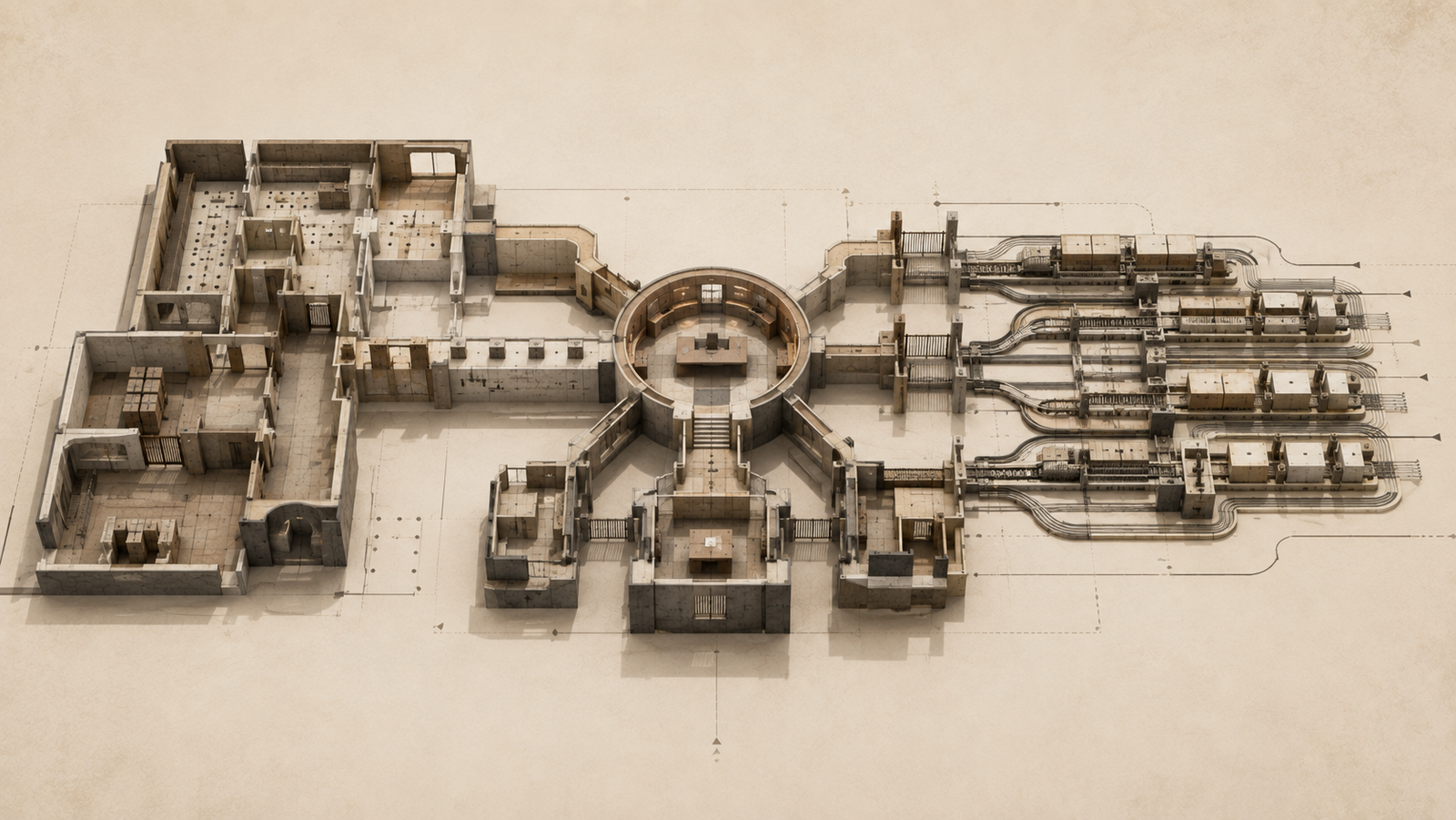
Automation Changes Work Because Jobs Are Bundles of Tasks
A job is rarely one activity. Most roles combine execution, judgment, communication, coordination, memory, verification, documentation, exception handling, and responsibility.
Automation usually enters that bundle unevenly. Repetitive and structured tasks are often easier to transfer first. Work that depends on context, trust, negotiation, physical presence, or judgment tends to remain human longer.
A job can survive while its internal structure changes
Because tasks move at different speeds, a job does not have to disappear for the work to change significantly. One layer can be automated while the rest of the role remains.
The International Labour Organization’s research on generative AI and jobs reflects this task-level view. Occupational exposure is examined through the work inside occupations rather than through a simple assumption that exposure equals elimination.
Headcount can stay still while the job moves
Consider an analyst who once gathered data, cleaned it, built a report, checked anomalies, wrote a summary, and presented the conclusion. Those activities sit inside one title, but they do not demand equal levels of judgment.
Automate the collection and formatting steps and the analyst is still employed. Yet the role is already different. More value now sits in checking data quality, interpreting anomalies, challenging assumptions, and explaining what the result means.
How Automation Changes Work by Moving Execution First
Systems are especially effective at recurring execution. They can move information, populate fields, generate drafts, classify records, schedule events, reconcile transactions, search documents, route requests, and repeat defined processes at a scale people cannot match.
That can be a genuine improvement. Removing repetitive execution may reduce errors, shorten cycle times, and return attention that was previously tied up in administrative labor.
Execution is only one layer of a job
Once execution moves into software, the human role often shifts around it. A worker may specify the task, inspect the result, handle exceptions, resolve ambiguity, maintain the workflow, or decide when the automation should not be trusted.
Those responsibilities may require fewer clicks but more judgment.
Less execution can create more supervision
Organizations can underestimate this transfer because the original manual step is no longer visible. Yet somebody may still need to investigate errors, maintain rules, review unusual cases, and absorb the consequences when the automated process behaves incorrectly.
Direct production becomes supervision. Routine activity becomes exception handling. Doing turns into checking.
That is one of the first ways automation changes work, even when nobody has been replaced.
Automation Changes Work When Review Replaces Production
Human labor can appear to disappear when it has actually moved downstream.
A system generates the answer and someone checks it. A model ranks the options and someone approves the result. Software identifies an anomaly and someone investigates what happened.
The machine gets the normal cases
When automation handles predictable situations, the remaining human workload changes. Routine cases decline, while ambiguous or unusual cases become a larger share of the job.
That remaining work may be smaller in volume but harder in kind. The worker spends less time assembling outputs and more time deciding whether those outputs deserve trust.
Review can demand more judgment than production
A person reviewing automated output needs enough context to recognize an error, enough domain knowledge to understand why it matters, and enough authority to stop or correct the process.
Without those conditions, review becomes ceremonial rather than meaningful.
In this way, automation changes work by concentrating human attention around the cases the system cannot resolve cleanly.
Automation Changes Work by Changing Which Skills Matter
Organizations often assume that automation creates one new requirement: learn the tool. Tool fluency matters, but it is only part of the transition.
The more important shift is in the skills required around the tool.
Judgment becomes more valuable around automated execution
Workers may need stronger problem definition, contextual judgment, communication, verification, escalation, coordination, and domain knowledge. They also need to recognize when a system is operating outside the conditions where it performs reliably.
Research from the OECD on artificial intelligence and changing skill demand likewise focuses on how AI changes the mix of skills inside occupations, including roles where workers are not AI specialists.
Productivity gains can hide skill loss
When a person stops performing part of a task, that skill may stop being practiced. Over time, someone can become highly efficient at operating an automated workflow while becoming less capable of diagnosing the underlying work without it.
That trade is not automatically harmful. Some obsolete skills should disappear.
The danger appears when workers remain responsible for detecting errors in systems they no longer understand well enough to inspect.
A faster process is not automatically stronger if the humans responsible for it lose the knowledge required to challenge it.
When automation enters a role, separate the work into six layers before deciding whether the redesign is actually an improvement.
Execution
Which recurring actions can the system perform reliably without requiring fresh human judgment?
Verification
Which outputs still need a person to inspect accuracy, relevance, quality, or context?
Exceptions
Who handles cases that fall outside the automated pattern or produce conflicting signals?
Judgment
Which decisions still require interpretation, tradeoffs, values, experience, or domain knowledge?
Understanding
What must the worker still know in order to recognize when the system is wrong?
Responsibility
Who owns the outcome after more of the execution moves into the automated system?
Automation Changes Work Without Automatically Moving Responsibility
Job redesign becomes an authority problem when execution moves but accountability does not.
A worker may perform less of a process while remaining responsible for the result. A manager can oversee a workflow they no longer fully understand. An organization may automate a decision path while still expecting employees to intervene when something goes wrong.
Responsibility needs matching authority
If a worker is expected to approve an automated output, that person needs more than an approval button. They need time to inspect the result, enough information to question it, and the authority to reject or redirect it.
Without those conditions, formal responsibility stays human while practical control moves elsewhere.
Authority must remain legible
This problem sits at the center of The Structure of Control: Automation, AI, and Human Authority . Systems can execute and recommend, but decision rights still need a clear owner.
Once authority and accountability separate, automation changes work in a way that productivity metrics rarely capture.
Audit How Automation Changes Work Before Calling It a Win
When a new system enters a workflow, do not measure success only by hours saved. Audit how the work itself is being redistributed.
-
Which tasks move to the system?
Identify the exact execution being automated instead of treating the entire job as one unit. -
Which tasks remain human?
Look for supervision, interpretation, exception handling, coordination, communication, verification, and final judgment. -
Does the remaining work become harder?
Removing routine cases can leave humans with a higher concentration of difficult and ambiguous work. -
Which skills stop being practiced?
Determine whether lost practice weakens the worker’s ability to verify, diagnose, or recover when automation fails. -
Where does responsibility now sit?
Make sure accountability is matched by enough information, time, and authority to act. -
Can the worker still understand the whole process?
Full manual execution may not be necessary. Sufficient system understanding often is.
The audit is about architecture, not adoption
A tool can work exactly as intended and still create a weak work structure. Efficiency alone does not tell you whether the remaining human role is clear, sustainable, or capable.
The stronger question is what kind of work remains after the automation succeeds.
The Best Automation Changes Work Without Hollowing It Out
Good automation should reduce unnecessary labor without making the remaining human role empty.
It should remove repetition while preserving enough understanding to supervise the system. Routine execution can move faster without making exception handling impossible.
The human role should become more consequential, not merely smaller
Strong redesign moves human effort toward context, interpretation, trust, communication, judgment, and responsibility. Those are areas where capability still matters even after routine execution becomes easier.
This is a more useful way to think about the future of work than waiting for job titles to disappear.
Prepare for task movement, not just job loss
A workforce can remain fully employed and still experience significant automation. Titles can stay intact while competence is redistributed underneath them.
The practical response is not simply to ask whether your job will survive.
Ask which parts of the work are moving. Identify the judgment that becomes more valuable. Notice which skills stop being practiced. Check whether responsibility is moving with authority or separating from it.
Automation changes work without needing to replace the worker. It only needs to change what the work now requires from them.
That is the transition worth preparing for.
The Groundwork
The labor question is too often reduced to a binary: job or no job.
Real transitions are messier.
Automation can remove pieces of a role while leaving the role intact. It can compress execution while increasing supervision. It can make routine cases easier while making the remaining human cases harder. It can increase output while weakening the practice that once taught workers how the process behaved.
That is why job titles are poor early-warning systems.
Watch the task structure instead.
Ask what moves to the machine. Ask what remains human. Ask what becomes harder. Ask which capability is no longer being rehearsed. Ask who still owns the decision when the system is wrong.
Good automation should reduce unnecessary execution without erasing the knowledge, authority, and judgment required to carry the work responsibly.
→ Convenience Has a Cost Nobody Calculates
→ Technology Does Not Save Time. It Reallocates Attention
→ The Structure of Control: Automation, AI, and Human Authority
Continue Tech as Discipline by Malik Rivers

The Principle and Condition Beneath This Work
This article examines how technological structure redistributes tasks, authority, judgment, knowledge, and responsibility inside work before an organization changes headcount.
Structure Builds Freedom
Useful structure separates repeatable execution from the judgment that still needs human authority. Automation creates more usable capacity when redesigned roles preserve clear ownership, competence, and decision rights.
Structure
Structure creates roles, relationships, pathways, constraints, and decision architecture. In automated work, it determines what the system executes, what humans still decide, what workers must still understand, and where responsibility remains.
See the full Groundwork Daily Core Principles and Conditions architecture .
Receipts
- International Labour Organization. Generative AI and Jobs, 2025 Update. The research evaluates occupational exposure through task composition and distinguishes transformation within occupations from assumptions of automatic job elimination. Review the ILO research .
- Organisation for Economic Co-operation and Development. Artificial Intelligence and the Changing Demand for Skills in the Labour Market. The analysis examines how AI adoption changes the mix of skills required across occupations, including work performed by people who are not AI specialists. Review the OECD analysis .