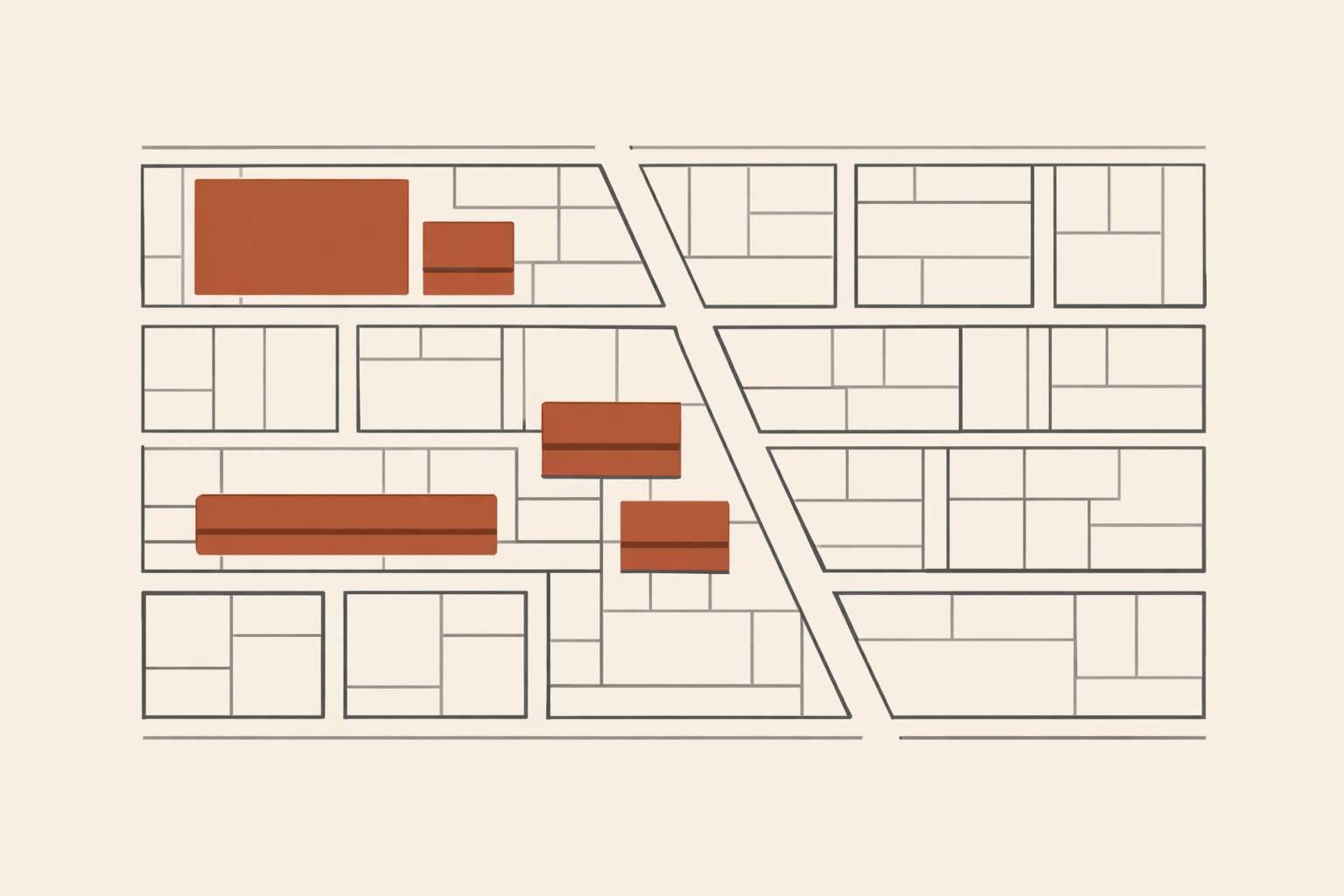
Civic budgeting priorities reveal what a government actually protects. Every city, county, and state budget shows what gets funded, what gets delayed, what gets maintained, and what gets quietly abandoned.
Civic Budgeting Priorities Are Allocation, Not Rhetoric
Speeches can inspire. Budgets allocate.
When the dollars move, the system has spoken.
That is why civic budgeting is not just public finance. It is institutional accountability.
What Civic Budgeting Priorities Really Mean
Civic budgeting priorities are the choices public institutions make with money.
They show what gets reinforced.
They also show what gets neglected.
Public housing or policing. Parks or potholes. Libraries or overtime. Arts or enforcement. Maintenance or ribbon-cuttings.
These are not only talking points.
They are line items.
Grow funding in one area and the system usually constrains, postpones, or reshapes another.
Public finance runs on trade-offs, timing, rules, debt, political appetite, and institutional capacity.
That last phrase matters.
A government can want good outcomes and still lack the structure to deliver them.
This is why civic budgets belong inside Building Institutional Literacy. Citizens cannot judge public promises well unless they understand the systems behind those promises.
Budgets Are Values Under Pressure
Budgets show what leaders protect when there is not enough money for everything.
Heavy enforcement spending signals a bet on control.
Heavy housing, schools, health, prevention, and maintenance spending signals a bet on stability.
Still, do not treat every allocation like a pure philosophy statement.
Court mandates, federal grant rules, pension obligations, union contracts, and debt payments can lock dollars into categories that look like preference but behave like gravity.
That reality does not excuse weak priorities.
It explains why budgets must be read like systems, not slogans.
Why Budgets Have Always Been Political
Budgets have always been instruments of power.
Ancient governments used public spending to fund roads, armies, grain systems, courts, and public works.
Medieval cities used money to protect trade routes, walls, markets, churches, and local authority.
Early American municipalities used budgets to build roads, ports, schools, policing systems, sanitation networks, and civic offices.
During the Progressive Era, reformers pushed more formal budgeting practices to reduce corruption and improve administration.
Later, performance budgeting tried to connect spending to outcomes.
Today, city budgets still carry that history.
They are not neutral documents.
They are governance maps.
They show how institutions translate public pressure, political promises, legal obligations, and administrative capacity into actual operating choices.
How the Local Budget Cycle Works
Most residents only hear about the budget near adoption.
That is too late.
Budget priorities form long before the final vote.
The Typical Budget Path
- Departments submit funding requests.
- The mayor, executive, or budget office reviews those requests.
- A proposed budget is released.
- Committees hold hearings.
- Residents and advocacy groups submit comments.
- Legislators negotiate amendments.
- The final budget is adopted.
- Agencies implement the budget.
- Audits, reports, and performance reviews show what happened.
- The next budget cycle begins.
The key lesson is simple.
Budget power does not only sit in the final vote.
It sits in the requests, assumptions, hearings, amendments, implementation, and oversight.
Citizens who wait until the end are reacting to a structure already built.
Citizens who understand the cycle can intervene earlier.
Three Budget Distinctions Most People Ignore
A budget becomes easier to read once three distinctions are clear.
These distinctions keep citizens from getting played by big numbers and polished announcements.
Operating Budget vs. Capital Budget
The operating budget keeps the lights on.
It funds payroll, sanitation, routine maintenance, public safety staffing, utilities, libraries, school operations, health programs, and recurring services.
The capital budget builds or replaces long-term assets.
It funds schools, bridges, roads, housing projects, parks, public buildings, water systems, and major equipment.
Leaders can brag about “historic investment” while the operating budget quietly starves staffing, inspections, and maintenance.
That is why Operating vs Capital Budgets matters. The distinction explains whether government is funding daily delivery, long-term infrastructure, or both.
One-Time Money vs. Recurring Money
One-time funding can create headlines.
Recurring funding creates stability.
A city can fund a pilot program once, celebrate it, study it, and then let it fade.
That is not structural commitment.
It is temporary activity.
By contrast, recurring funding shows that a government has decided to keep paying for a function over time.
That is where real priorities become visible.
Restricted Funds vs. Discretionary Funds
Many public dollars are restricted by law, formula, grant condition, or dedicated revenue source.
Restricted dollars matter, but they do not always reveal preference.
Discretionary dollars show values more clearly because leaders have more room to move them.
If leaders want credit, they talk about totals.
If citizens want truth, they track what is flexible and where it goes.
How to Read Civic Budgeting Priorities Without Getting Played
Skip the press conference.
Start with the categories.
Compare year-over-year changes.
Flag what grew faster than inflation.
Identify what shrank.
Then look for quiet moves.
Those moves include deferred maintenance, vacant staffing lines, delayed capital projects, contract increases, broad program consolidations, and shifting costs into future years.
Four Budget Lenses
- Shares: What percentage goes to public safety, education, housing, transportation, health, parks, libraries, and debt?
- Shifts: What changed from last year, and what stayed locked?
- Trade-offs: What did leaders reduce to expand something else?
- Delivery: Do dollars fund direct services, contracts, administration, or reserves?
This method does not require a finance degree.
It requires discipline.
A budget is not meant to be read like a novel.
It should be scanned like a system map.
The Quiet Signals That Matter More Than Speeches
Some of the most important budget choices hide in plain sight.
They do not always appear in the headline number.
They appear in capacity.
Vacancies Reveal Priorities
A “funded” department can still fail when positions remain unfilled.
Vacancies act as soft cuts.
They reduce service capacity while avoiding the public backlash of an official cut.
If a housing agency, inspections department, health office, or maintenance unit has money on paper but too few people to execute, the budget is not delivering.
The number exists.
The capacity does not.
Maintenance Spending Shows Reality
Deferred maintenance creates slow crisis.
It pushes costs forward, increases risk, and turns predictable repair into emergency spending.
A city can look solvent while its buildings, roads, parks, water lines, vehicles, and technology quietly decay.
Keep maintenance flat year after year and the city chooses future disorder to afford present politics.
This is the budget version of Structure Builds Freedom. Systems only support public life when they are maintained.
Debt and Pensions Shape Flexibility
Debt service and pension obligations reduce flexibility.
As those costs climb, discretionary room shrinks.
Leaders can promise transformation while the hard floor expands in the background.
Treat long-term obligations as infrastructure, not trivia for accountants.
They determine what future leaders can actually do.
Why Budget Transparency Matters
Transparency is not just posting a PDF online.
A budget can be public and still unreadable.
True transparency means residents can understand what changed, why it changed, who benefits, who pays, and what outcomes are expected.
Strong transparency tools include open data portals, plain-language budget summaries, agency dashboards, contract databases, hearing calendars, public comment records, and audit reports.
These tools matter because budgets are too important to live only inside technical documents.
However, transparency also needs interpretation.
Data without civic literacy becomes clutter.
Civic literacy turns data into leverage.
Why Budgets Drift Over Time
Budgets rarely collapse all at once.
They drift.
New mandates arrive.
Emergencies interrupt plans.
Inflation raises costs.
Debt service grows.
Pension obligations expand.
Maintenance gets postponed.
Staffing vacancies become normal.
Contracts expand because internal capacity is thin.
Meanwhile, political incentives reward visible announcements more than boring repair.
Over time, the budget becomes less strategic and more reactive.
This is institutional drift.
The system does not fail because one person made one bad choice.
It weakens because small choices compound.
How Citizens Can Participate
Voting matters.
But voting is not the only point of influence.
Residents can participate through budget hearings, community boards, advisory councils, participatory budgeting, capital planning meetings, written testimony, public comment, neighborhood associations, and oversight campaigns.
Local budget participation often has lower turnout than national elections.
That creates an opening.
The people who show up can shape priorities more than the people who only complain after adoption.
Participation does not guarantee victory.
Still, silence guarantees weaker leverage.
Attention builds budgets.
Ignore civic budgeting priorities and they still shape the city.
They just stop reflecting the people who stayed silent.
Civic Budgeting Priorities Checklist
A resident can learn a lot in twenty minutes.
The goal is not to master every line item.
The goal is to find the system signals.
- Open the budget summary and identify the largest spending categories.
- Scan year-over-year changes for the top five categories.
- Separate capital from operating so “investment” does not hide weak delivery.
- Mark one-time funding versus recurring commitments.
- Check vacancy assumptions and unfilled positions.
- Review maintenance lines and state-of-good-repair funding.
- Locate debt and pension costs to understand the hard floor.
- Follow procurement through contracts, vendors, and outsourced services.
- Compare the speech to the spreadsheet and note what changed.
- Ask what remains unfunded even though leaders keep naming it as a priority.
This checklist turns a budget from a wall of numbers into an accountability document.
The System: Updated
Every budget is a public blueprint.
It shows what a community intends to protect.
It also reveals what leaders believe can wait.
Roads, schools, housing, policing, parks, libraries, public health, maintenance, and debt are not just competing ideas.
They are competing allocations.
Citizens who understand budgets stop asking only what government promises.
They begin asking what government is structurally capable of delivering.
That is the shift.
Civic budgeting priorities are not just numbers.
They are the operating language of public power.
The Groundwork
Budgets do not argue. They allocate. A serious citizen learns to read the allocation, question the trade-offs, and follow the money from promise to delivery.
FAQ on Civic Budgeting Priorities
Why do civic budgets feel impossible to understand?
Budgets are written for compliance, not clarity. Some complexity is real. Some complexity is convenient. The fix is not outrage. The fix is a repeatable reading method.
Do higher civic budgets guarantee better outcomes?
No. Spending can rise while outcomes stagnate when overhead expands, contracting grows, vacancies persist, maintenance is delayed, or incentives misalign.
What is the simplest way to spot civic budgeting priorities?
Track discretionary dollars over time. Watch what receives recurring funding. Watch what gets one-time headlines. Watch what stays unfunded but remains a constant talking point.
What is the difference between operating and capital budgets?
Operating budgets fund recurring services and daily operations. Capital budgets fund long-term public assets such as buildings, roads, parks, water systems, and major equipment.
Why does one-time funding matter?
One-time funding can support pilots or temporary needs, but it cannot responsibly sustain permanent services unless recurring revenue is identified.
How can residents influence a local budget?
Residents can participate through public hearings, written testimony, community boards, participatory budgeting, advisory councils, and local election participation.
Learn How Public Systems Really Work
Groundwork Daily explains the budgets, institutions, policies, and incentives that shape civic life.
Subscribe for clear analysis that turns public complexity into practical civic literacy.
Subscribe to Groundwork Daily