
System Updates
Langston Reed examines the systems beneath familiar outcomes: the standards, incentives, authority, capacity, and repeated decisions that shape what an institution eventually becomes.
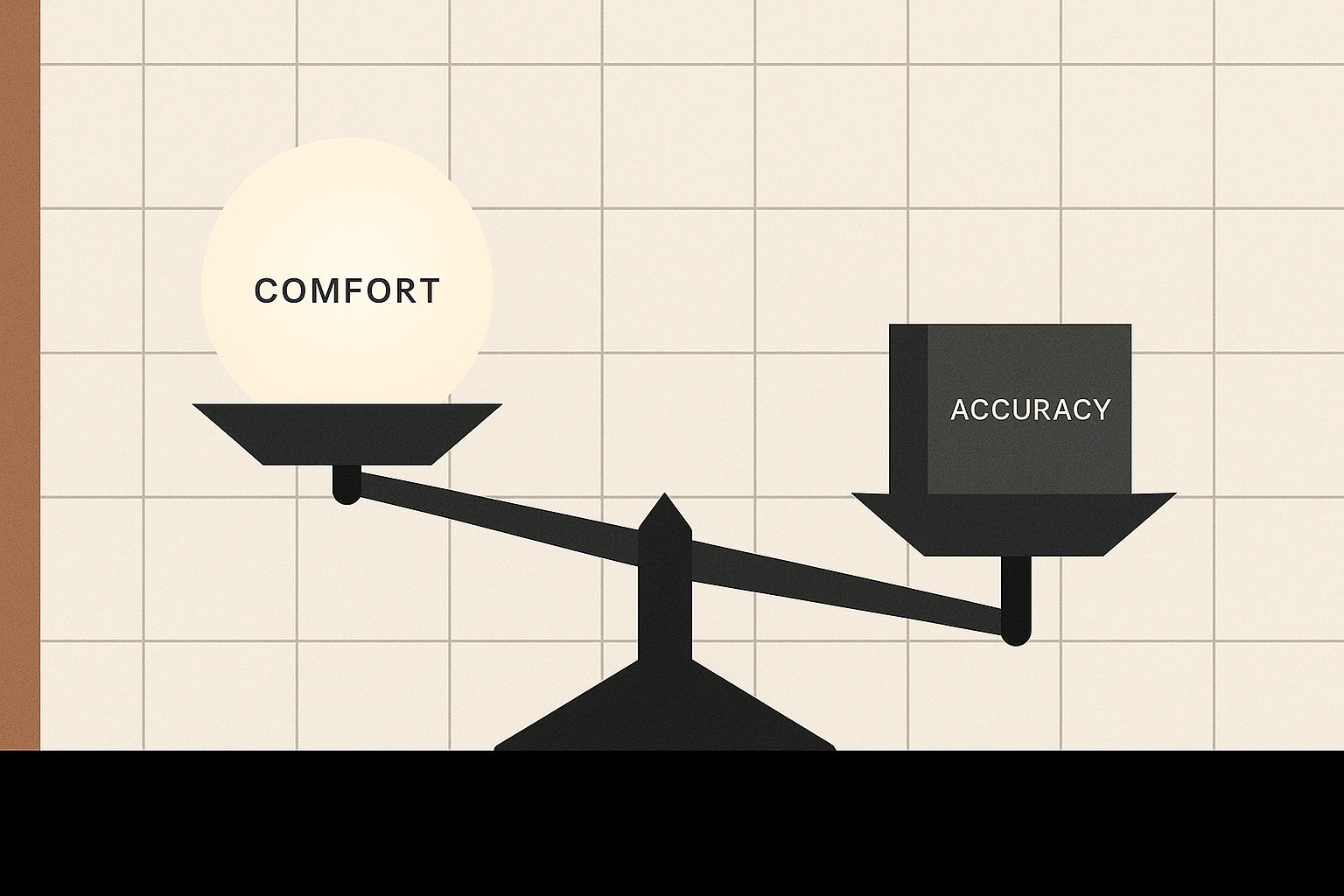
The cost of comfort systems rarely appears at the moment comfort is chosen. It appears later, when a difficult conversation has been postponed too many times, an exception has become routine, a weak report has been accepted, or an operating standard exists on paper but no longer governs what people actually do.
That does not make comfort inherently weak. Good systems need empathy, discretion, flexibility, and room for human judgment. The problem begins when avoiding discomfort becomes more important than preserving accuracy. Once that trade-off is repeated often enough, people begin adapting to the accommodation rather than the original standard.
This is how drift can become structural without anyone formally voting for it. Each individual choice may appear reasonable in isolation. The deadline needed one exception. The report needed softer language. The employee needed another chance. The family did not want another argument. The institution wanted to avoid public embarrassment. Over time, however, repeated exceptions teach the system which rules are real and which rules disappear under pressure.
Short Answer
The cost of comfort systems is the debt created when a system repeatedly avoids necessary correction in order to preserve short-term ease. The immediate benefit may be less conflict, less embarrassment, or less friction. The longer-term cost can be weaker standards, unclear expectations, declining trust, and a correction that becomes more expensive because it was delayed.
The Cost of Comfort Systems Begins With Governance
Governance is not limited to constitutions, boards, formal policies, or votes. Governance also appears in repeated decisions about what a system protects when competing priorities collide. Does it protect accuracy or image? Standards or convenience? Accountability or harmony? Speed or verification? Relationships or performance?
Those choices do not always have one correct answer. Healthy systems sometimes bend a deadline, make an exception, soften a process, or protect a relationship. The structural question is whether the exception remains an exception. If accommodation repeatedly overrides the governing standard, participants learn that the written rule is weaker than the unwritten preference for comfort.
That lesson changes behavior. People stop raising problems that create friction. Managers learn which employees are effectively exempt from correction. Teams discover how much information can be softened before anyone objects. Families learn which subjects are too disruptive to name directly. What began as a series of isolated accommodations can eventually become the operating culture.
The operating sequence
Discomfort appears → correction is postponed → an exception becomes easier to repeat → expectations adjust downward → the informal rule overtakes the written standard → later correction becomes more disruptive.
Why Comfort Often Feels Rational in the Moment
Weak systems are not always created by careless people. Intelligent and well-intentioned people choose short-term comfort because it frequently solves an immediate problem. Avoiding confrontation can preserve a relationship. Extending a deadline can protect someone under unusual pressure. Softer language can keep a negotiation alive. Discretion can keep rigid rules from producing unnecessary harm.
Those benefits are real, which is why the pattern is difficult to govern. A system that never allows flexibility becomes brittle. Yet a system that cannot distinguish principled flexibility from repeated avoidance eventually loses the ability to enforce its own standards.
Immediate Relief Can Hide Future Cost
Human beings naturally give more weight to consequences that are immediate and visible. The argument happening today can feel more urgent than the trust problem developing six months from now. The uncomfortable performance review feels more concrete than the future burden created when weak work becomes normalized.
That creates an incentive mismatch. Comfort delivers its benefit immediately, while the cost often arrives later and is distributed across other people. The manager avoids conflict today, but the team carries the performance problem. The institution avoids embarrassment today, but the public carries weaker information. The family avoids confrontation today, but several people may continue reorganizing their behavior around the unresolved problem.
How Comfort Creates Structural Debt
A useful way to describe the accumulated cost is structural debt. Like financial debt, structural debt allows the system to avoid paying the full cost immediately. Instead of correcting a problem, clarifying authority, enforcing a standard, or repairing a process, the organization carries the unresolved issue forward.
The debt can appear as mismatched expectations, undocumented exceptions, declining trust, inaccurate reporting, unclear responsibility, or workarounds that exist because nobody wants to repair the underlying process. The organization may still look functional because meetings continue, reports are produced, services are delivered, and people show up. Movement, however, should not be confused with alignment.
The Interest Is Paid Through Repetition
An unresolved problem rarely remains isolated. People compensate for it. Supervisors check work that should not require extra review. Coworkers carry tasks that somebody else consistently misses. Families design routines around behavior nobody wants to confront. Institutions add layers of messaging to avoid naming an operational weakness directly.
Each workaround can make the underlying problem more expensive to correct because more people become dependent on the workaround. What once required one direct conversation may eventually require a personnel change, a policy revision, a budget correction, a governance intervention, or a repair to public trust.
System Updates Principle: A problem does not become cheaper merely because a system postpones naming it. Delay can move the cost, distribute it, or hide it, but unresolved conditions continue shaping behavior.
How Comfort Drift Becomes the New Normal
Comfort drift usually develops through precedent rather than declaration. A standard exists, then an exception is granted. If the exception is reasonable and remains limited, the system can absorb it. Trouble begins when the same exception is repeatedly granted without a clear rationale, boundary, or review.
Repetition changes expectations. Participants begin assuming that deadlines are negotiable, reports can be softened, weak performance will be accommodated, or certain people cannot be challenged. Eventually, the informal expectation becomes more predictive than the formal rule.
Standard
↓
Exception
↓
Repeated Accommodation
↓
New Expectation
↓
Informal Rule
↓
Institutional Drift
Systems Remember Precedent Better Than Intent
The people making an exception may have excellent reasons. Future participants, however, often inherit the precedent without inheriting the context. They learn what happened, not necessarily why it happened.
That is why exceptions require governance. The system should know what justified the departure, who authorized it, how long it lasts, and whether the underlying standard remains intact. Otherwise flexibility can quietly rewrite the rule.
Where Comfort-Driven Systems Show Up
The pattern can appear anywhere people repeatedly avoid necessary accuracy in order to preserve immediate ease. The specific mechanism changes by setting, so the examples should not be treated as identical. What connects them is the substitution of accommodation for a correction the system already knows it needs.
Organizations and Workplaces
In a workplace, comfort drift can appear when managers refuse to address chronic underperformance because the employee is well liked, politically connected, or difficult to confront. Other employees may then begin compensating for the gap, which hides the problem while increasing the workload on stronger performers.
The risk is not kindness. A humane organization should support people through temporary difficulty. The problem is indefinite accommodation without a clear performance standard, review process, or corrective path.
Public Institutions
Public institutions can experience a similar problem when internal reporting becomes more concerned with avoiding embarrassment than describing operational conditions accurately. The danger is especially significant because policy, budgets, and public decisions depend on information moving upward without being stripped of inconvenient facts.
Strong governance does not require organizations to dramatize every problem. It requires them to preserve enough accuracy that leaders can distinguish an uncomfortable reality from a manageable communications problem.
Families and Communities
Families and communities can also organize themselves around an unresolved pattern. People may avoid one subject, absorb one person’s responsibilities, or continually redefine expectations because naming the underlying problem creates conflict.
The structural lesson remains the same, although the remedy may be very different from a workplace or public institution. Informal systems still develop rules. If everyone learns that preserving calm always outranks naming the problem, avoidance can become part of the family’s operating structure.
Accuracy Is a Load-Bearing Requirement
Accuracy does not mean harshness. It means keeping the system sufficiently aligned with reality that decisions can be made from conditions that actually exist. A budget must correspond to available resources. A report must correspond to what is happening on the ground. A workflow must correspond to the work being performed. Expectations must correspond to the behavior the system is willing to enforce.
When that alignment weakens, downstream decisions become less reliable. Leaders allocate resources based on distorted information. Teams plan around capabilities they do not actually possess. Families make commitments without resolving the behavior that repeatedly disrupts those commitments.
Accuracy and Mercy Can Coexist
The strongest systems do not force a false choice between truth and compassion. They can acknowledge a missed standard without humiliating the person who missed it. They can make an exception without pretending the exception has become the new baseline. They can acknowledge failure while still protecting dignity.
That distinction matters because systems often become comfort-driven precisely when correction has been designed badly. If every correction produces humiliation, retaliation, or panic, people will naturally avoid correction. Better governance makes accurate feedback ordinary enough that reality does not have to arrive as a crisis.
Where the Cost-of-Comfort Argument Can Go Wrong
The framework becomes weak if every act of flexibility is treated as institutional decay. Good systems need discretion because rules cannot anticipate every human circumstance. An organization that never bends can become unjust, inefficient, or incapable of responding intelligently to unusual conditions.
Accuracy can also become a rhetorical shield for cruelty. Someone can claim to be “just telling the truth” while ignoring context, dignity, power differences, or the actual purpose of the correction. The goal is not maximum confrontation. It is enough truth and accountability to keep the system aligned without creating unnecessary damage.
The Real Test Is Whether the Standard Still Governs
A healthy exception is explicit, bounded, and explainable. People understand why it occurred and why the underlying standard still matters. A drifting system behaves differently: exceptions multiply, nobody can explain the boundary, and enforcement increasingly depends on who is involved rather than what happened.
The question is therefore not whether a system permits comfort. It should. The question is whether comfort supports the system’s purpose or quietly replaces the standards required to achieve it.
How to Recognize Comfort Drift
Comfort drift becomes easier to identify when the investigation focuses on repeated behavior rather than isolated frustration. One missed deadline is not a system. One difficult employee is not a governance failure. One exception is not structural drift. The pattern matters when similar deviations recur and the system stops correcting them.
The following questions help separate an isolated accommodation from a structural problem.
- Which standard is becoming difficult to enforce?
- Are exceptions documented, or simply repeated?
- Who carries the cost of avoiding correction?
- Does the same problem return after repeated meetings or promises?
- Does enforcement depend more on who is involved than on the rule?
- What conversation, measurement, or decision keeps being postponed?
Several answers pointing toward the same unresolved issue are stronger evidence than one uncomfortable interaction. The objective is pattern recognition, not suspicion.
How Systems Correct Comfort Drift
Correction begins by making the operating standard explicit. People cannot reliably maintain a threshold that exists only in one leader’s memory. The standard should be clear enough that participants know what is required, what discretion exists, who can authorize exceptions, and what happens when performance moves outside the acceptable range.
Document the Standard
Documentation reduces the ability of every difficult moment to produce a new rule. This does not require turning every organization into a bureaucracy. It requires recording the expectations that matter enough to govern consistently.
Documentation also creates institutional memory. When leaders change, the next person inherits more than folklore about how the system is supposed to operate.
Build Review Into the Process
Standards that are never reviewed become ceremonial. Regular review allows the organization to distinguish a rule that still serves its purpose from one that has become outdated. It also prevents exceptions from quietly becoming permanent.
The review should ask whether the standard is being followed, whether the standard still makes sense, and whether repeated deviations indicate a capacity problem rather than a discipline problem.
Use Evidence Before Interpretation
Metrics, budgets, logs, deadlines, audits, written commitments, and other records reduce the amount of disagreement that depends entirely on memory or personality. Evidence does not eliminate judgment, but it gives judgment something firmer to work from.
The measure should match the system. Not everything valuable can be captured in a dashboard. The purpose of measurement is to preserve visibility, not to replace judgment with numbers.
Separate Correction From Humiliation
Systems avoid accountability when accountability has been designed as punishment. A stronger process makes correction expected, procedural, proportionate, and focused on restoring alignment. The person should understand the standard, the evidence, the gap, and the path back.
That makes accuracy easier to practice because people no longer have to choose between pretending everything is fine and triggering an unnecessary public confrontation.
Protect the Ability to Raise Problems
A system cannot correct what people are afraid to report. Leaders therefore need credible ways for employees, members, residents, or other participants to surface concerns without automatically paying a social or professional penalty.
Protection should not mean accepting every accusation as fact. It means ensuring that raising a good-faith concern triggers examination rather than retaliation.
What to Watch When Comfort Starts Replacing Accuracy
Watch for gaps between written standards and actual enforcement. A policy may remain unchanged while the operating reality moves somewhere else. When that gap becomes predictable, the informal system is often more powerful than the formal one.
Watch Who Receives Exceptions
Exceptions are especially revealing when similar behavior produces different consequences for different people. Inconsistent enforcement can indicate that relationship management, status, or institutional politics has begun overruling the stated standard.
Watch the Workarounds
Repeated workarounds often reveal unresolved structural debt. If employees, relatives, departments, or community members continually compensate for the same weakness, the workaround may be keeping the underlying problem invisible.
Watch the Cost of Naming Reality
One of the clearest warning signs is a culture in which accurate information creates more risk for the messenger than the underlying problem creates for the system. Once truth becomes personally expensive to surface, leaders should assume that some important information is no longer reaching them.
Receipts
These sources provide research and institutional context for organizational culture, accountability, institutional trust, and the conditions that influence whether people surface problems accurately.
Institutions and Trust
- Pew Research Center — Trust in Government — research and public-opinion data concerning institutional trust and confidence in government.
- Brookings Institution — Governance — institutional analysis addressing governance, public-sector performance, accountability, and institutional capacity.
Organizational Culture
- Harvard Business Review — Organizational Culture — research-informed analysis on organizational norms, leadership, culture, performance, and workplace behavior.
The Groundwork
The cost of comfort systems is not that comfort exists. Humane systems need flexibility, discretion, and mercy. The cost appears when comfort becomes the reason a system repeatedly refuses to see, measure, name, or correct what is already undermining its purpose.
Accuracy creates friction because reality rarely arrives perfectly aligned with preference. Yet that friction performs useful work. It tells the system where expectations and outcomes have separated, where capacity has weakened, and where an exception is beginning to rewrite the standard.
The durable goal is not a system without comfort. It is a system strong enough to offer compassion without losing its relationship with reality.
The System: Updated.
What looked like the problem: People are avoiding difficult conversations.
What the system reveals: The deeper problem begins when repeated avoidance changes incentives and expectations. The updated model is discomfort → accommodation → precedent → informal rule → drift → expensive correction.
Put the Principle to Work
Accountability Is a Form of Strength
Choose one recurring problem your system has learned to accommodate. Identify the standard that should govern it, document the gap between the standard and current behavior, and decide who has authority to correct it. The goal is not punishment. It is restoring alignment before the cost of avoidance grows larger.
Join the Groundwork List
Get systems analysis, institutional literacy, and practical frameworks built to remain useful after the headline moves on.
Continue Building
Continue through the Groundwork system based on the part of this problem you want to strengthen next.
Accountability —
Accountability Is a Form of Strength
Learn how correction protects a standard before drift becomes structural.
Structure —
Structure Builds Freedom
See why clear roles, standards, and decision architecture reduce preventable
instability.
Self-Governance —
Discipline Before Dollars
Explore why resources amplify the behavioral structure already present.
Family Systems —
The Family Stability Framework
Apply structural thinking to expectations, responsibility, repair, and household
continuity.

Meet the Builder

Langston Reed
Builder, Civic Power & Policy
Langston Reed helps readers understand how institutions, governance, public policy, incentives, and infrastructure shape everyday life. His work develops institutional literacy by translating complex systems into practical frameworks that remain useful after the immediate news cycle has moved on.
Continue through System Updates, Building Institutional Literacy, or The Sovereign Ledger.
Editorial note: This article is educational systems analysis. It is not legal, management, psychological, employment, or professional advice. Serious workplace, safety, legal, or mental-health situations may require qualified professional support.