
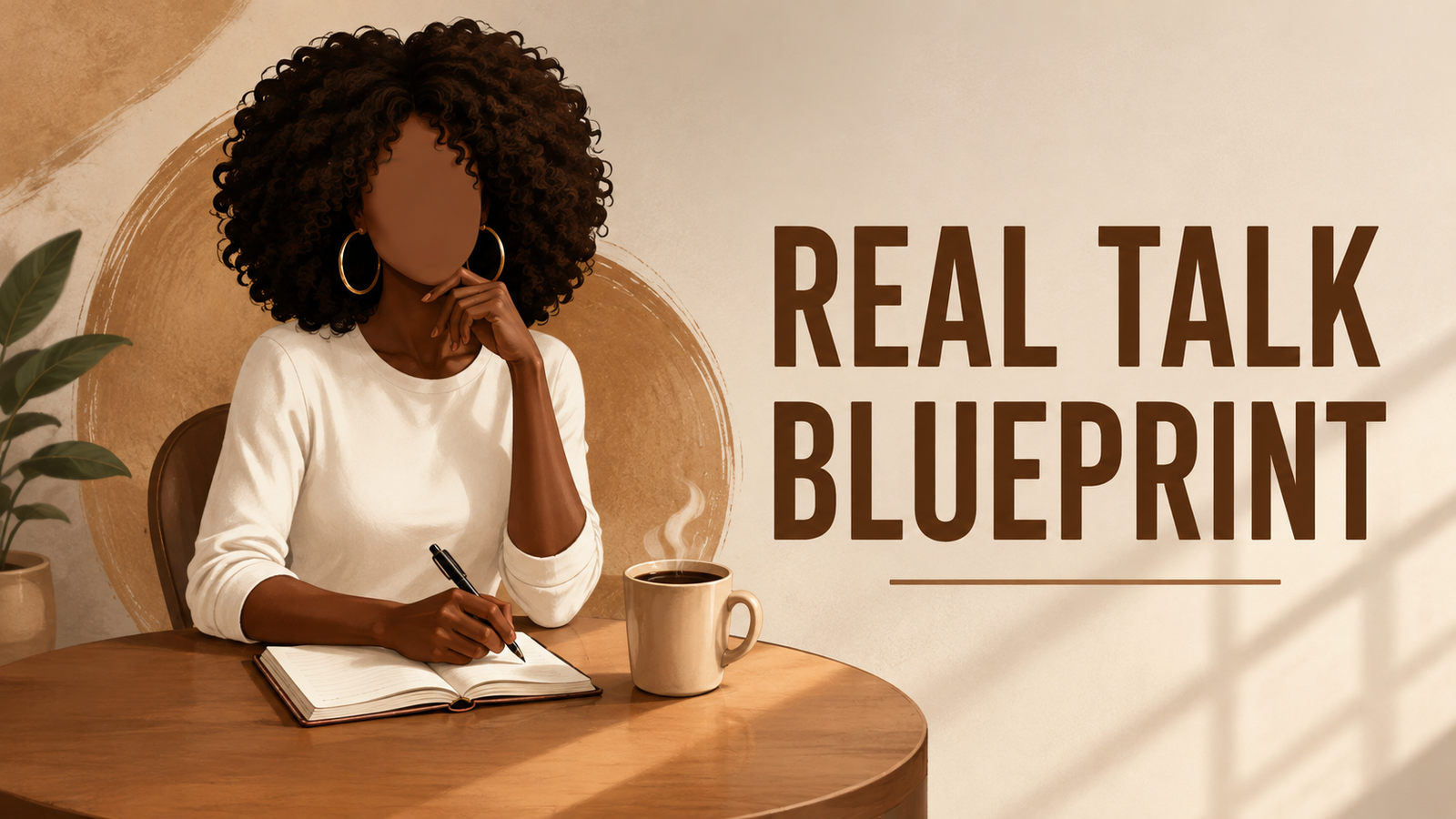
Real Talk Blueprint · Everyday Cultural Contradictions
Real Talk Blueprint examines the gap between credentials people display and the competence their current work actually requires.
A degree proves you completed an education. It does not prove you stopped needing one.
Degree and lifelong learning belong in the same conversation, because earning a credential doesn’t end your need to keep developing your skills.
That degree on the wall is a receipt for something real. You studied, you finished, you met the requirements. Along the way you probably lost sleep, spent money, wrote papers nobody outside the class will ever read, and learned exactly how long five minutes can feel when somebody says, “Let’s go around the room and introduce ourselves.”
You earned that credential, and it deserves respect. But the degree is evidence of what you completed. It’s not permanent proof that every skill you learned is still current, that every assumption you graduated with still holds, or that every problem in your field still gets solved the same way it did back then.
That’s where degree and lifelong learning stop looking like competing ideas and start acting like parts of the same professional standard.
Education matters. Credentials matter. Expertise matters. None of that excuses you from continuing to learn after somebody hands you the folder and everybody takes pictures.
The show is looking educated. The work is staying humble enough to become educated again.

A Degree Is Evidence, Not Permanent Authority
Let’s clear up the bad argument before it starts: this is not an anti-college article.
A degree can signal discipline, subject knowledge, persistence, exposure to a field, and completion of a structured course of study. In many professions, formal education is also part of the legitimate pathway into the work. Degrees still matter in hiring, too. OECD analysis notes that university degrees and work experience remain major signals employers use when evaluating candidates.
So no, the paper didn’t suddenly become meaningless because somebody on social media learned Python over a weekend. That’s not the argument.
The argument is simpler: past education and present competence are related, but they are not identical. A credential can tell people where you studied and what standard you met at a particular point in time. It can’t automatically tell them whether you kept learning after that point.
That part is still on you.
Why Degree and Lifelong Learning Belong Together
Work changes, whether we like it or not. Tools change. Technology changes. Regulations change. Research changes. Customer expectations change. Entire jobs get restructured around software that didn’t even exist when somebody first entered the field.
According to the World Economic Forum’s Future of Jobs Report 2025, employers expect 39% of workers’ core skills to change by 2030. That doesn’t mean 39% of everybody’s degree becomes worthless. It means the skills required to perform work keep moving, and that distinction matters.
The same report identifies analytical thinking as a major core skill, and it also highlights AI and big data, technological literacy, creative thinking, resilience, flexibility, curiosity, and lifelong learning among areas expected to stay important or grow more important. So the future of competence isn’t just knowing more tools. It’s staying capable of learning the next one.
Graduation Is a Milestone, Not a Maintenance Plan
Graduation ceremonies are built around completion, and that makes sense. You finished something difficult. Professional life, though, doesn’t care much about ceremonial endings. Your field keeps moving after the music stops.
This is where people can get trapped by the identity attached to a credential. After somebody’s been told for years that they’re educated, accomplished, qualified, or an expert, learning something new can start to feel like a threat to the identity they worked hard to earn.
Suddenly “I don’t know” feels embarrassing. Asking for help starts to feel like exposure. Taking an introductory course can feel beneath you. Learning from someone younger might feel insulting. Even admitting an old process is outdated can feel like surrender.
A credential meant to represent learning can quietly become an excuse to stop doing it.
The Performance of Being the Smart Person
There’s also a social performance attached to education that has very little to do with the actual work. The diploma gets framed. The school goes in the bio. The alumni sticker goes on the car. The title gets announced before the answer.
None of that is automatically bad. But people can spend so much time protecting the image of being knowledgeable that they stop doing the behavior knowledgeable people actually need: they stop asking questions, stop checking assumptions, read less outside their lane, and start treating updated methods as optional.
Then somebody introduces a new process at work, and the person with twelve letters after their name gets mad because the spreadsheet changed.
That’s not expertise. That’s branding with anxiety underneath it.
Strong professionals usually know enough to understand how much they still don’t know. That’s not weakness. That’s range.
A credential can open the door.
Current skill determines what you can do once you get inside.
Experience builds judgment.
Humility keeps all three from going stale.
Skills-First Does Not Mean Degrees Do Not Matter
The current conversation around skills-first hiring is useful, but it also gets flattened into nonsense pretty quickly. On one side, people say degrees are everything. On the other, people say degrees are useless. Neither position holds up.
OECD research describes labor markets as placing greater emphasis on skills while still recognizing formal education and qualifications as important foundations for developing and signaling knowledge. Credentials still tell employers something. But they can’t always capture everything somebody can currently do.
People also build skills through work, short courses, certifications, independent study, apprenticeships, projects, mentoring, professional development, and plain repetition. Two people with the exact same degree can end up with very different capabilities ten years later. One kept practicing while another moved into management. One specialized while another stopped using half the technical material. One learned three new systems while another kept using the same process because “that’s how we were taught.”
The diploma didn’t change. The people did.
Degree and Lifelong Learning Require Current Competence
This is where the receipt metaphor earns its keep. A receipt proves a transaction happened, but it doesn’t guarantee the product lasts forever. Your degree proves you completed an academic program. It doesn’t guarantee permanent mastery of every relevant skill connected to your profession.
That’s not an insult to education. It’s a reason to take education seriously. If learning mattered enough to spend years doing it before graduation, why would learning suddenly become optional afterward?
Say that plainly and the contradiction is obvious. People celebrate education as proof of ambition, then some of those same people treat continued education as proof they weren’t good enough the first time. That logic is upside down.
Professional development shouldn’t embarrass competent people. It should be part of how competence stays competent.
The Question Is Not Whether You Know Everything
Nobody serious expects that. The better question is what happens when you run into something you don’t know.
Maybe you bluff. Maybe you avoid it. Maybe you dismiss the new method because it makes the old method look dated, or you talk around the question until everybody forgets what they asked.
Or you say, “I don’t know yet. Let me find out.”
That last sentence is one of the most useful tools an experienced person can keep. Not because ignorance is impressive, but because accurate self-assessment is.
Humility Is the Hammer
The hammer isn’t glamorous. Sometimes it looks like repetition. Sometimes it means opening the manual again, taking the refresher, or asking somebody who understands the new system to show you what changed. It may mean admitting the process you used for fifteen years isn’t the best process available anymore.
Sometimes the hammer is sitting through a training where you already know 80% of the material and still paying attention to the other 20%. And yes, sometimes the hammer is Googling how to do the thing your job already pays you to do. Welcome to work. Everybody’s done it.
The show is knowing everything. The work is staying humble enough to learn again.
That distinction matters more as tools change faster. If your identity depends on always being the smartest person in the room, every new development becomes a threat. If your identity depends on being useful, learning just becomes part of the job.
What Degree and Lifelong Learning Look Like in Practice
The stronger model isn’t degree versus skills. It’s foundation plus maintenance.
Formal education gives you structure, theory, language, context, and a base to build from. Work experience tests that base against reality. Continuous learning updates both. Together, those pieces are a lot stronger than pretending any single credential should carry your professional identity forever.
Keep a Current-Skills Inventory
Once or twice a year, ask yourself a simple question: what can I actually do now that creates value?
Don’t start with the course you once took. Start with the problems you can solve today, the tools you use well, the decisions you can make with confidence, and what you can explain clearly to somebody else. Then be honest about what’s changed in your field that you still need to learn.
This is where degree and lifelong learning become practical instead of philosophical. The credential gives you history. The inventory tells you where you actually stand now.
Learn One Useful Thing at a Time
You don’t need to reinvent your career every Tuesday. That’s just another form of performance.
Pick something useful instead. Learn the software feature you keep avoiding. Improve the spreadsheet skill that slows you down every week. Read the updated regulation before somebody else has to explain it to you. Take the short course, work through the new technical documentation, or understand the AI tool before deciding whether it’s revolutionary, useless, dangerous, or all three depending on who’s using it.
Small, consistent learning compounds over time.
Practice Saying “I Don’t Know Yet”
The word yet is doing real work in that sentence. “I don’t know” identifies the gap. “Yet” gives the gap a plan.
That’s the difference between humility and helplessness. You’re not surrendering expertise. You’re maintaining it.
Groundwork Principle
Discipline Before Dollars
This principle applies here in a limited but useful way. Credentials can help create opportunity, but opportunity still has to be supported by current capability.
So the discipline isn’t collecting certificates for decoration. It’s maintaining the skills that make your work useful after the applause from graduation has faded.
Continuous learning doesn’t require chasing every trend. It requires paying attention to what your work now demands and having the discipline to close the gap.
What it means here: The credential may help open the door. The discipline of staying useful helps you remain valuable once you’re inside.
Degree and Lifelong Learning Are a Long-Term Standard
There’s no shame in being proud of a degree. Put it on the wall. Celebrate the school. Wear the alumni sweatshirt. Let Auntie finally stop asking when you’re graduating, although she’ll probably replace that question with something about a house, a spouse, or why you haven’t called lately.
Enjoy the receipt. Just don’t confuse the receipt with the work.
After graduation, the world keeps changing, and good professionals change with it. That doesn’t mean throwing away everything they already know. It means updating it, testing it against current conditions, adding to it when the work demands more, and admitting when necessary that the tool they mastered ten years ago isn’t the tool the job needs today.
Ultimately, degree and lifelong learning work best as partners. One records an achievement. The other keeps that achievement connected to present-day usefulness.
The Real Talk
Your degree matters. So does what you can do today.
The smartest person in the room is not always the one with the longest résumé, the fanciest school, or the most impressive letters after their name. Sometimes it’s the person who recognizes what changed, admits what they don’t know, learns the new thing, and gets back to work without turning the whole process into an identity crisis.
That’s not disrespecting education. It’s respecting education enough to keep doing it.
Your degree is a receipt. Keep it. Frame it. Be proud of it. Then pick up the hammer and keep building.
Continue Building
Keep Going From Here
Explore why sustainable results depend on habits, capability, and structure before the reward becomes the focus.
Keep examining the gap between what people say they value and what their behavior actually reinforces.
Follow the wider Groundwork conversation about work, identity, public performance, leadership, culture, and changing expectations.
Receipts
Evidence Behind the Framework
- World Economic Forum: Future of Jobs Report 2025, Skills Outlook . Employer survey data indicating that 39% of workers’ core skills are expected to change by 2030 and identifying lifelong learning, technological literacy, analytical thinking, creative thinking, and adaptability among important skills.
- OECD: A Skills-First Labour Market . Analysis explaining that formal education and qualifications remain important foundations while not always capturing the full range of a worker’s current skills or keeping pace with changing skill demand.
- OECD: Promoting Skills-First Hiring and Talent Management . Analysis showing that university degrees and work experience remain important hiring proxies while employers increasingly supplement credentials with tests and other methods of assessing demonstrated skills.
Evidence Note: These sources support the narrower propositions that skill requirements continue to change, formal qualifications remain relevant, and employers are placing greater emphasis on demonstrated skills alongside credentials. They do not prove that degrees are obsolete, guarantee that continuous learning leads to higher earnings, or mean every profession should reduce formal education requirements.
Real Talk Blueprint
See the pattern before it becomes the habit.
Groundwork Daily examines relationships, culture, accountability, communication, and the behavior underneath the performance.

About the Builder
Rochelle “Ro” Hayes
Rochelle “Ro” Hayes is the Groundwork Daily builder behind Real Talk Blueprint, a series focused on culture, relationships, accountability, communication, and the behavior people often explain away before they examine it.
Ro works primarily inside Culture, Media & Leadership, with strong overlap into relationship systems, public behavior, gender expectations, attention incentives, and modern social performance.
Real talk creates structure where avoidance creates confusion.
Ro builds frameworks that make ordinary behavior harder to ignore. The work is direct, observational, and culturally grounded: naming the pattern, identifying the incentive, and asking what people are really protecting instead of performing outrage.
Real Talk Blueprint examines the gap between what people say they value and what their behavior actually reinforces.
Meet Rochelle “Ro” Hayes · Explore Real Talk Blueprint · Explore Culture, Media & Leadership