Granville Woods belongs in this archive because communication is the hidden layer that allows infrastructure to coordinate, adapt, and operate safely at scale.
Granville Woods helped shape the communication infrastructure behind modern coordination systems. His work sits at the intersection of railway signaling, electrical communication, transportation safety, and industrial synchronization. He did not simply invent devices. He improved the way systems exchanged information under pressure.
Modern infrastructure depends on communication before movement. Trains need signals. Power systems need feedback. Control centers need awareness. Industrial systems need coordination. Transportation networks need information moving faster than risk.
Without communication, infrastructure becomes blind. Systems may move, but they cannot coordinate. They may operate, but they cannot adapt. They may scale, but they become fragile.
Woods understood this problem. His work helped make communication part of infrastructure itself. That distinction matters because modern systems are not held together by machinery alone. They are held together by signals, feedback, timing, and shared awareness.
Architects of Modern Life studies Woods not as isolated inventor trivia, but as a systems builder whose communication logic still echoes through transportation networks, control systems, industrial operations, and modern infrastructure coordination.
Systems Pressure and the Problem of Coordination
As industrial systems expanded in the nineteenth century, coordination became a serious infrastructure problem. Railroads moved people, freight, materials, and information across longer distances than earlier transportation systems could manage. However, the speed of movement created new risk.
A train system is not only track, engines, stations, and schedules. It is also communication. Operators need to know where trains are, where they are going, when they are delayed, and when danger appears ahead.
Without reliable signaling, movement becomes guesswork. That is dangerous at any scale. It becomes catastrophic when systems are large, fast, and interconnected.
This was the pressure Granville Woods entered. Rail and industrial systems were growing, but communication systems had to mature with them. Infrastructure could not depend only on power and speed. It also needed awareness.
That point is easy to miss. The faster a system moves, the more communication it needs. Speed without signal becomes risk. Scale without coordination becomes instability.
Woods recognized that communication was not decorative. It was operational. The signal was not separate from the system. The signal allowed the system to act with awareness.
Granville Woods and the Builders Behind Signal Systems
Granville T. Woods was born in 1856 in Columbus, Ohio. He became known for his work across electrical systems, railway technology, telegraphy, and communication devices. Over time, he earned recognition for improving the way transportation systems exchanged information.
Woods worked in a period when the boundaries between electrical engineering, transportation, and industrial operations were still forming. That gave his work a broad systems character. He did not only improve one device. He worked where devices needed to communicate with larger operating environments.
This matters because infrastructure rarely depends on one invention alone. It depends on compatibility, timing, feedback, maintenance, and coordination. A system only becomes useful when its parts can work together.
Woods contributed to that larger infrastructure logic. His inventions and improvements helped strengthen railway communication and electrical coordination. In practical terms, his work addressed one of the hardest problems in growing infrastructure: how to reduce uncertainty across distance.
That is why Woods belongs in this archive. His importance is not limited to invention count. It sits inside the signal layer that allowed complex systems to operate with greater awareness.
Signal → Awareness → Coordination → Safety → Scale
The System That Changed
The common version of Granville Woods’ story often focuses on the railway telegraph. That is important, but it is not enough. The stronger story is about infrastructure awareness.
Rail systems required more than track. They required communication between moving parts. Trains needed ways to exchange information across distance. Dispatchers needed better awareness. Operators needed clearer signals.
Woods helped improve this communication layer. His work supported systems in which moving trains, stations, and operators could share information more effectively. As a result, communication became part of transportation safety.
That changed the meaning of railway infrastructure. The system was no longer only mechanical. It became informational. Trains did not simply move across track. They moved inside communication environments.
This shift matters because modern infrastructure still works this way. Movement systems depend on signals. Energy systems depend on feedback. Industrial systems depend on monitoring. Communications turn infrastructure from motion into coordination.
Woods’ contribution belongs inside that transition. He helped build communication into the operating logic of infrastructure. That is a deeper achievement than a single device summary can explain.
Communication as Infrastructure Logic
Communication infrastructure reduces uncertainty. That is its first function.
A signal tells a system what has changed. A message tells operators what they need to know. A network allows distant parts to act as one larger system.
Therefore, communication is not only about transmitting information. It is about creating shared awareness. Once systems share awareness, they can coordinate decisions.
This is especially important in transportation. Trains cannot safely operate as isolated machines when they share track, schedules, stations, and routes. They need a communication layer that turns separate movement into managed flow.
Woods’ work points toward that logic. The signal system becomes the nervous system of infrastructure. It detects, informs, warns, and coordinates.
That same pattern now appears across modern life. A hospital monitors equipment. A power grid balances load. A data center tracks uptime. A transit system coordinates arrivals and departures. A logistics network updates routes in real time.
Different industries use different tools. Still, the underlying logic remains the same. Systems become safer when they can communicate before failure spreads.
Infrastructure Memory
One defining characteristic of infrastructure is invisibility. Systems disappear once people depend on them consistently.
Communication infrastructure is especially invisible because it often works before the public notices a problem. Signals move. Alerts update. Controls adjust. Information travels through the system before most people see the outcome.
That invisibility is evidence of maturity. A strong communication system reduces friction quietly. It helps operators respond faster, prevents confusion, and allows complex systems to behave as coordinated environments.
Woods’ work survives because the need for signaling never disappeared. The tools changed, but the principle remained. Infrastructure must know what is happening inside itself.
Architects of Modern Life studies this as infrastructure memory: the persistence of systems logic long after the original builder fades from public attention.
The Modern Echo
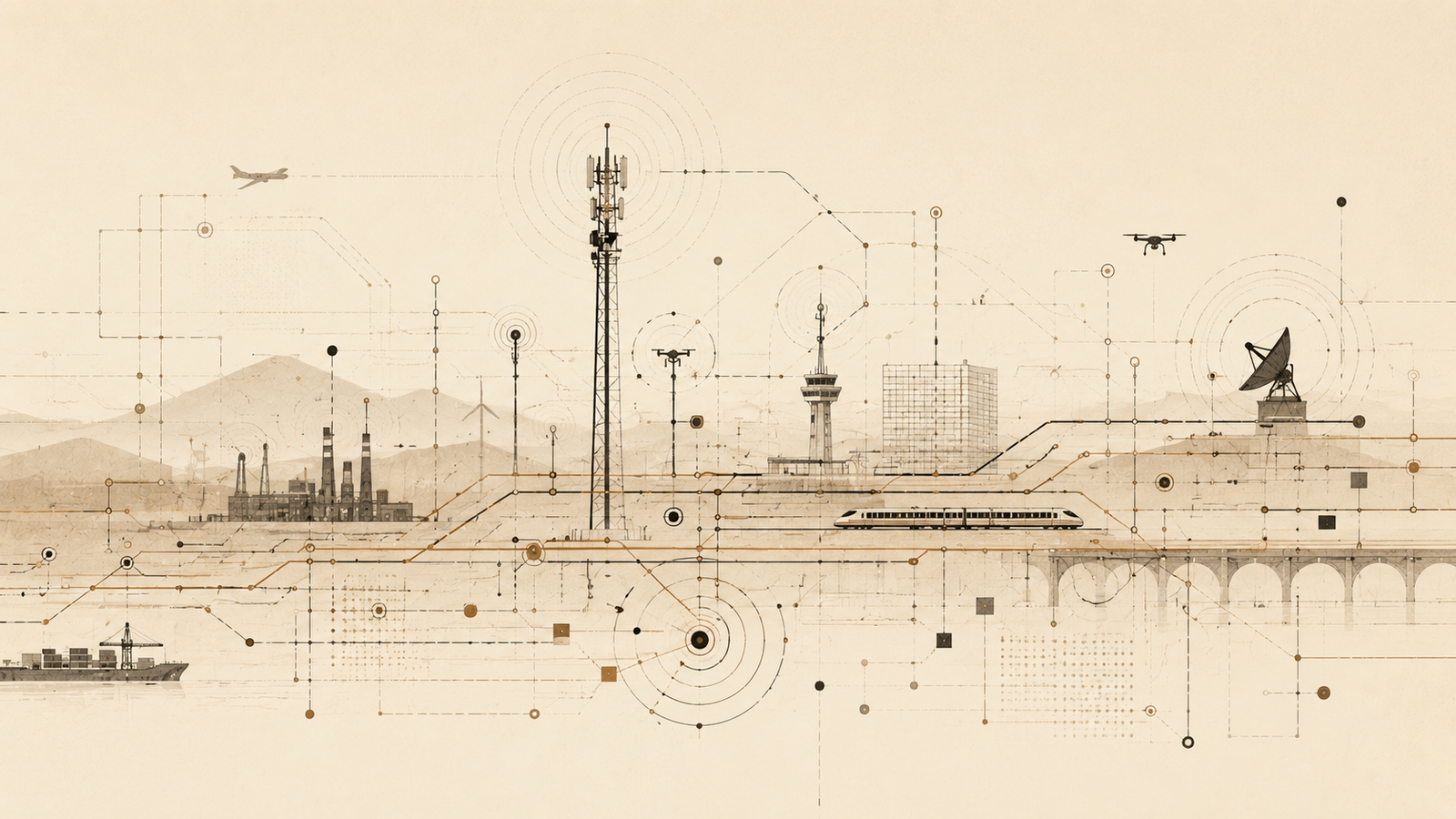
Modern infrastructure still operates through the communication principles Woods helped advance.
Wireless networks connect devices across distance. Rail systems use signaling and control platforms. Transit agencies coordinate routes and timing. Industrial facilities monitor production systems. Logistics networks track movement in real time.
The technology has changed, but the central problem remains familiar. Infrastructure must communicate quickly enough to coordinate safely.
The modern echo is not a claim that every contemporary communication system descends directly from Woods’ patents. That would be too simple. The stronger claim is that Woods worked on a durable infrastructure principle: large systems need signals to operate with awareness.
That principle appears everywhere. It appears in wireless networks. It appears in air traffic control. It appears in subway systems. It appears in data centers, emergency response networks, and automated industrial controls.
Communication becomes infrastructure when information stops being optional. Once systems depend on signals to coordinate safely, communication becomes part of the operating environment.
Systems Impact
Signal systems that allow infrastructure to exchange information across distance.
Operational awareness for transportation systems moving through shared routes.
Communication layers that support timing, warning, routing, and coordination.
Information flow that helps complex systems operate as connected environments.
Systems that detect, report, and respond before problems spread.
Reduced uncertainty through faster signaling and clearer system awareness.
Timeline Position
Woods’ work emerged during a critical phase in industrial and transportation history. Railroads were expanding. Electrical systems were developing. Cities and industries needed better coordination across growing networks.
His inventions belong within that larger transformation. Infrastructure was becoming faster, larger, and more interconnected. As a result, communication became essential to safety and scale.
Alongside innovators such as Garrett Morgan, Lewis Latimer, and Elijah McCoy, Woods contributed to the systems logic that helped modern life become coordinated and dependable.
Morgan helped movement become safer through sequencing. Latimer helped electricity become more reliable through continuity. Woods helped infrastructure communicate through signal systems. Together, their work reveals how modern life depends on layers of coordination most people never see.
Why This Still Matters
Granville Woods still matters because communication makes infrastructure intelligent.
A system without communication can still move. However, it cannot coordinate well. It cannot adapt quickly. It cannot warn clearly. It cannot share awareness across distance.
Modern life depends on systems that sense, signal, respond, and adjust. That includes transportation, logistics, energy, healthcare, aviation, manufacturing, and digital networks.
This is why systems thinking matters. Infrastructure is not just what society builds. It is also how society communicates across what it has built.
The common version of Woods’ story is too narrow when it only counts inventions. His deeper significance is that he worked on the communication layer that makes complex infrastructure safer and more coordinated.
That is why Granville Woods belongs among the Architects of Modern Life. His work did not end with wires, railways, or patents. It became part of the hidden language of coordination.
Further Groundwork
→ Lewis Latimer and Reliability Infrastructure
→ Garrett Morgan and Public Safety Infrastructure
→ Systems
Frequently Asked Questions
Who was Granville Woods?
Granville Woods was an American inventor and electrical engineer known for his work in railway communication, signaling systems, and electrical infrastructure.
What did Granville Woods invent?
Woods developed and improved several electrical and communication technologies, including railway telegraph systems and devices connected to transportation signaling.
Why is Granville Woods important?
Woods is important because his work helped improve communication systems that allowed transportation and industrial infrastructure to coordinate more safely.
What is communication infrastructure?
Communication infrastructure refers to the systems that allow information, signals, warnings, and operational updates to move across networks.
How did Granville Woods influence railroads?
Woods contributed to railway communication systems that helped trains and operators exchange information across distance, improving coordination and safety.
What is the modern echo of Granville Woods’ work?
The modern echo appears in wireless communication, transportation signaling, real-time control systems, logistics networks, and infrastructure monitoring.
Why is Granville Woods part of Architects of Modern Life?
Woods belongs in Architects of Modern Life because he helped strengthen the communication layer that allows modern infrastructure to operate with awareness.