

Boundaries · Reciprocity · Respect
Relationship boundaries become difficult to discuss when every limit, concern, or expectation gets reduced to insecurity. Strong relationships need something more useful: the ability to examine the behavior, negotiate the standard, and decide whether the same rule applies to both people.
A boundary can be unreasonable, and a person can also be insecure. Both things are possible, but neither possibility settles the question by itself.
When one person says a behavior is damaging trust, the useful next move is not automatically to diagnose the person who raised the concern. Instead, the relationship has to examine what happened, what both people had already agreed to, and whether the expectation can survive reciprocity.
The Structural Reframe
A relationship boundary is not automatically proof of insecurity. It is a proposed limit around access, behavior, responsibility, or consequence. Whether that boundary deserves to remain depends on clarity, reciprocity, impact, and the standards two adults have actually chosen to build together.
The Label Can End the Conversation Too Early
“Insecure” can be an accurate description. People sometimes project fear, jealousy, or old injuries onto situations that do not justify the reaction, and a strong relationship should leave room to say that plainly.
However, the problem begins when the label becomes an escape hatch. Someone raises a concern about secrecy, flirtation, money, privacy, a friendship, public behavior, family access, or some other recurring issue. Instead of discussing the behavior, the conversation shifts immediately to the personality of the person who noticed it.
At that point, the original question disappears.
Boundary Raised
↓
Discomfort Appears
↓
Person Gets Labeled
↓
Behavior Escapes Review
↓
The Exception Gets Stronger
That is not conflict resolution. It is displacement because the relationship stops asking whether the behavior fits the agreement and starts asking whether one person is emotionally defective for questioning it.

A Boundary Is a Line Around Participation
Relationships create boundaries whether the people inside them use that word or not. There are limits around honesty, privacy, sex, money, communication, family involvement, friendships, public behavior, time, access, parenting, and emotional responsibility.
Some limits are explicit, while others are discovered only after somebody crosses one. Therefore, the more mature question is not whether boundaries exist. They do. The more useful question is whether the relationship has enough clarity to name them before every disagreement becomes a referendum on love.
A boundary describes what someone will participate in, permit access to, accept, or do in response to a repeated condition.
It does not automatically give one adult ownership over another adult’s choices.
A Boundary Still Has to Withstand Examination
That distinction matters because a boundary is not strengthened merely by calling it a boundary. It still has to withstand examination, and both people need enough room to question whether the proposed limit is clear, fair, and workable.
Reciprocity Is Where the Standard Gets Tested
One of the fastest ways to understand a relationship rule is to reverse it. Would the same behavior be acceptable if the other person did it? Would the same privacy expectation apply in both directions? Would both people be allowed the same friendship, the same secrecy, the same financial discretion, the same public behavior, or the same access to reassurance?
If the answer changes with the person receiving the benefit, the relationship may not actually have a standard. Instead, it may have a privilege.
Mutual Does Not Mean Identical
Reciprocity does not require identical personalities or identical needs. Rather, it requires intellectual honesty about whether the principle underneath the expectation can travel both ways. That is how mutual respect becomes more than a phrase.
Repeated Exceptions Eventually Rewrite the Relationship
Most relationship structures do not collapse in one dramatic moment. More often, they change through repetition. A small exception gets made, the exception is defended, the concern gets minimized, and nothing changes because everyone keeps moving.
Then the exception appears again. Over time, what was once treated as a departure from the standard becomes part of the actual operating system.
Accountability Keeps the Stated Standard Honest
That is why accountability matters in intimate relationships. Accountability is not punishment. At its best, it is how two people determine whether what they say they value still matches what they repeatedly permit.
Groundwork Daily’s Accountability Is a Form of Strength principle makes the same distinction at a broader level: standards remain meaningful only when deviation can be recognized and corrected.
Likewise, the Boundaries Condition identifies the structural job underneath the argument. Boundaries define limits around access, responsibility, authority, obligation, and consequence.
Test the Boundary Before Defending It
Not every discomfort deserves a rule, and not every rule deserves to survive. A stronger relationship can inspect the boundary without humiliating the person who raised it.
Keep the Conversation Attached to Evidence
These questions keep the conversation attached to something observable. More importantly, they protect both people.
The person raising the concern has to explain the actual boundary instead of using discomfort as automatic proof. Meanwhile, the person receiving the concern has to address the behavior instead of dismissing the concern through a character judgment.
The Relationship Is Teaching a Standard Either Way
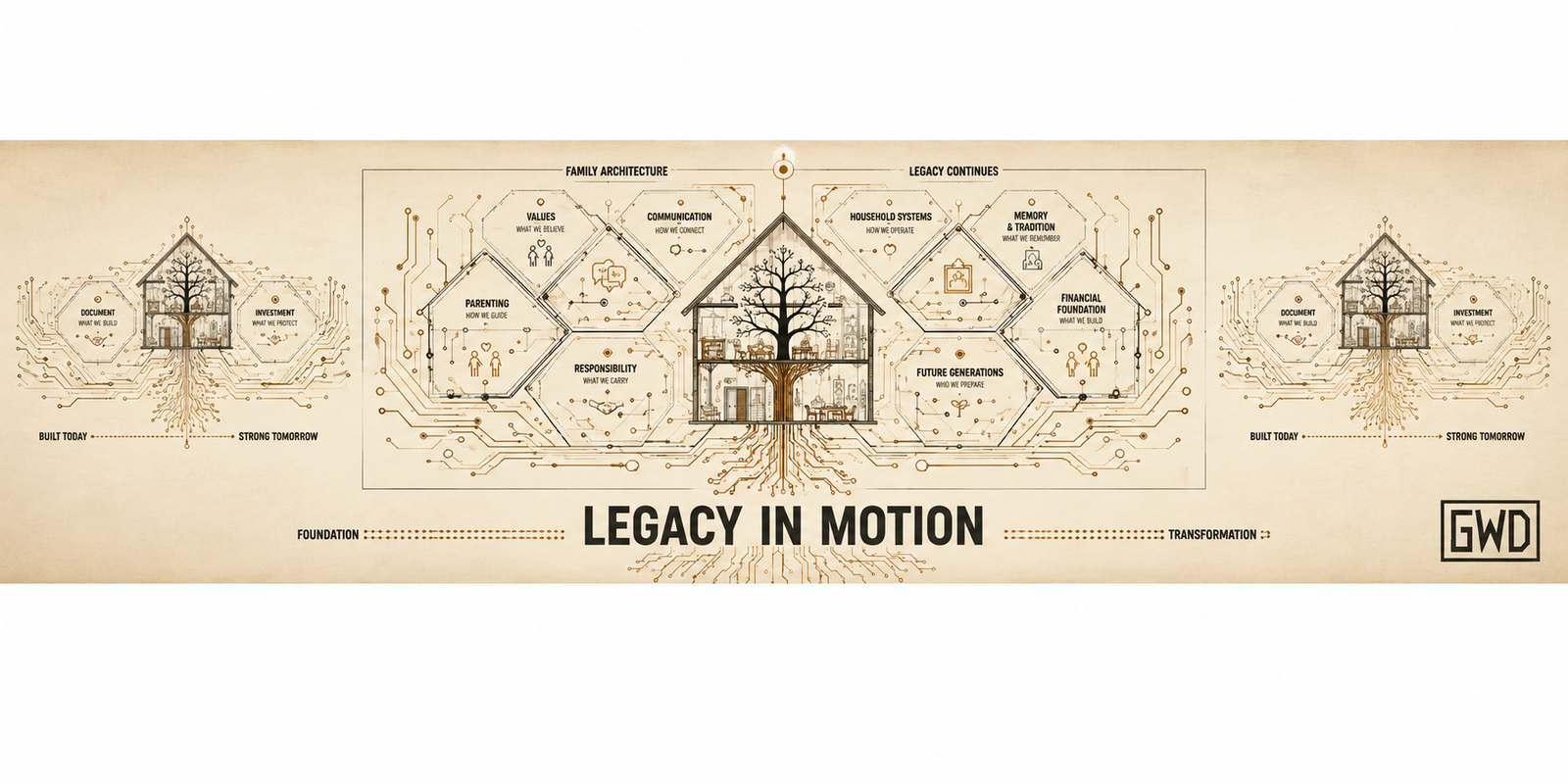
This is where the issue becomes larger than one argument. Legacy In Motion is concerned with what families and partnerships transmit, and transmission does not begin when someone writes a will. It begins in ordinary life.
Children notice whether adults can disagree without humiliation. They notice whether rules apply differently depending on who is angry. They also notice whether promises survive inconvenience, whether one person’s discomfort automatically controls the room, and whether both people can remain present long enough to reach clarity.
Adults Carry the Pattern Forward Too
Adults carry these patterns forward as well. What one relationship normalizes often becomes part of what someone expects from the next one.
Every repeated relationship pattern teaches something about what love is allowed to require.
For that reason, boundary conversations matter. They are not only about whether one person wins an argument. They help define the kind of relationship both people are practicing.
Boundaries Are Not a License for Control
Healthy boundaries should not be confused with coercion, isolation, intimidation, surveillance, threats, or abuse.
A person does not become entitled to control another adult by describing control as a relationship standard. Where abuse, stalking, coercion, threats, or immediate safety concerns are present, the issue exceeds ordinary relationship negotiation and may require qualified professional, legal, or emergency support.
The Groundwork
Before the next boundary argument becomes a debate over who is insecure, return to the behavior. Name what happened, identify the standard you believe it touched, and ask whether that standard applies in reverse.
From there, decide whether the relationship can actually agree on what comes next. You do not need identical preferences to build mutual respect, but you do need standards both people can see, question, negotiate, and recognize as real.
The boundary does not prove the relationship is healthy. What the two people do with the boundary tells you much more.
Groundwork Architecture
Where This Article Sits in the Groundwork System
This article primarily strengthens the Accountability Is a Form of Strength Core Principle and the Boundaries Condition.
Primary path: Relationship concern → boundary clarity → reciprocal standard → accountability → alignment → trust
The complete Groundwork architecture is available through the Core Principles and Conditions hubs.
Seven Core Principles
Continue Building
More From Legacy In Motion

Meet the Builder
Marcus Vaughn
Economy, Ownership & Generational Structure
Marcus Vaughn writes about ownership, financial discipline, family structure, and generational continuity. Through Money Monday and Legacy In Motion, he examines the systems that turn income into stability, responsibility into structure, and today’s decisions into tomorrow’s inheritance.