

The same plan can be applied with equal seriousness and still produce different responses. The useful question is what those differences are telling you.
Metabolic variance helps explain why two people can follow similar fitness or weight-management plans and still experience different rates of weight change, hunger, recovery, energy, and training progress. The difference does not mean energy balance stopped mattering. It means the human systems inside that balance are not identical.
One person may lose weight steadily while another moves more slowly. Someone can feel reasonably satisfied on a calorie target that leaves another person preoccupied with hunger. The same training volume may help one body recover well while leaving another consistently depleted. These differences are not proof that every difficult outcome has a hidden metabolic cause, but they are a strong reason to treat generic estimates as starting points rather than guarantees.
Fitness advice becomes weak when it skips that distinction. A calorie calculator produces an estimate, a training template defines a starting workload, and population research describes averages. None of those tools can promise an identical response from every individual who receives them.
When the expected result does not arrive, the first instinct is often to blame effort. Sometimes adherence really is the issue, and an honest system must leave room for that possibility. Yet adherence is only one variable among many. Body size, lean mass, movement outside exercise, appetite, sleep, age, medication, health status, training history, and physiological adaptation can all change the operating conditions.
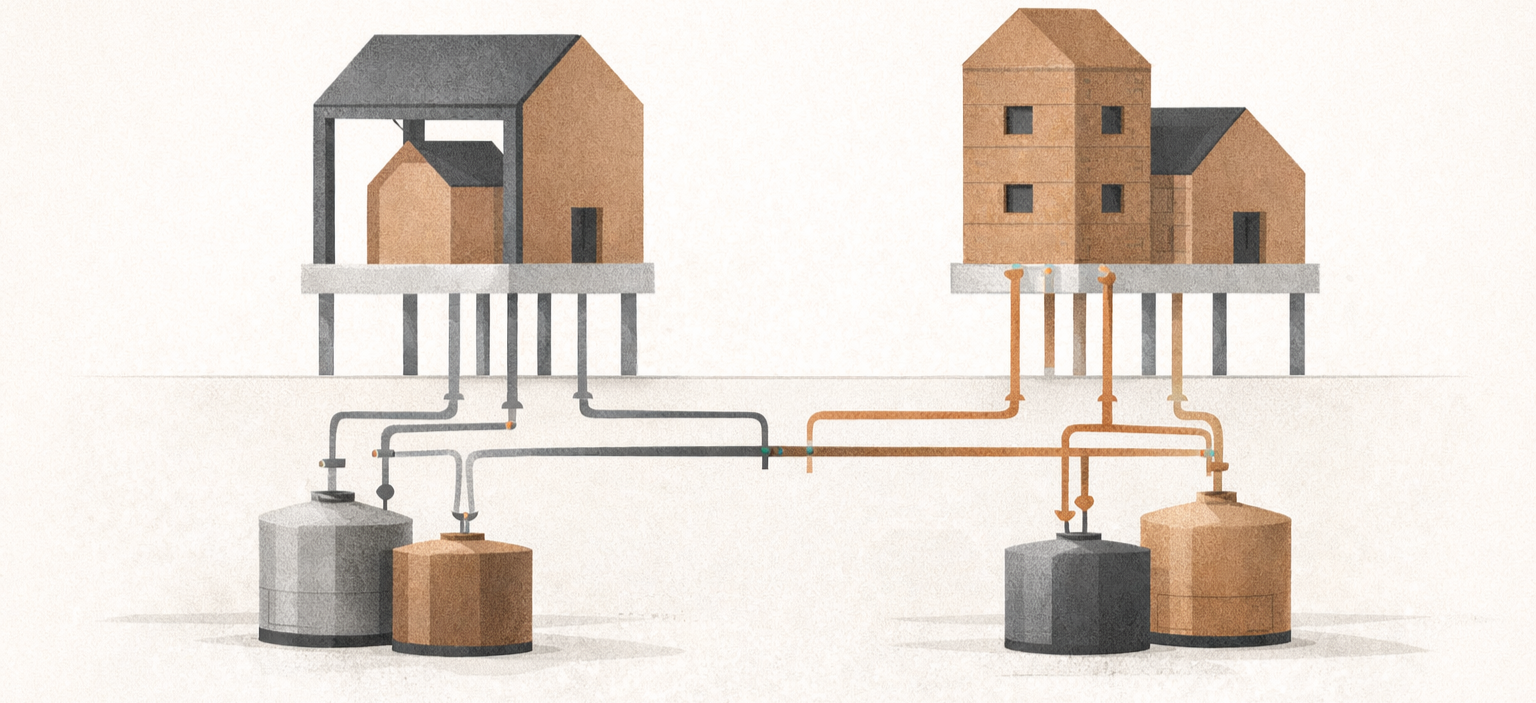
Metabolic Variance Means the Inputs Do Not Land on Identical Systems
Metabolism describes the chemical processes that allow the body to use energy, maintain tissue, support physiological function, and respond to changing demands. In ordinary fitness conversation, the word is often reduced to how many calories a person burns. That shorthand is useful up to a point, but it can hide how many components sit underneath the final number.
Resting energy expenditure differs between people because bodies differ. Size and body composition matter, while age, sex, genetics, hormonal state, health status, and other factors can also influence energy use. Consequently, two people who look broadly similar may still begin from different metabolic baselines.
None of this makes body-weight change unknowable. Energy intake and expenditure still matter. The more precise point is that neither side of the equation behaves like a permanent setting. Body weight can change energy needs, food restriction can influence expenditure and appetite, and activity outside formal exercise can rise or fall without appearing on the workout plan.
The Same Fitness Plan Can Produce Different Results for Real Reasons
Imagine two people starting the same twelve-week plan. Their training template matches, their calorie targets are similar, and both appear consistent. One loses weight at a steady pace, progresses in the gym, and feels reasonably energetic. The other loses more slowly, experiences stronger hunger, and begins struggling to recover.
The simplest explanation may be different adherence. Food intake is difficult to estimate perfectly, portions vary, and people sometimes overestimate activity or miss more sessions than they remember. That possibility deserves honest consideration because a useful framework should not use biology as an excuse to stop measuring behavior.
Even so, behavior is not the only source of variation. The two people may differ in body size, lean mass, occupational movement, sleep, medication use, training history, stress, health conditions, or spontaneous activity. One may spend most of the workday seated while the other is walking for hours.
In other words, the plan can be the same on paper while the full operating environment remains different.
Exercise Is Only Part of Expenditure
Walking, standing, errands, household labor, occupational movement, childcare, and other activity can meaningfully change daily energy expenditure even when formal workouts match.
Scale Weight Does Not Describe the Whole Body
Two people at the same weight can carry different amounts of lean and fat tissue, which can affect energy expenditure, training performance, and response to weight loss.
The Same Deficit Can Feel Different
Hunger and satiety responses vary. A plan that feels manageable for one person may become progressively harder for another to sustain even before motivation enters the conversation.
Training Load Does Not Exist Alone
Sleep, life stress, previous training, illness, and total physical demand can change how well a person recovers from the same written workload.
Activity can change without changing the workout
A calorie deficit can alter daily behavior in subtle ways. Someone may keep every scheduled workout while sitting more, pacing less, taking fewer stairs, or moving more slowly during the rest of the day. Those small changes are easy to miss because they do not appear in the training log.
That matters because the system responds to total behavior, not only to the behaviors that are easiest to record.
Metabolic Adaptation Can Slow the Process Without Breaking the System
Weight loss changes the body that must be maintained. As body mass falls, total energy requirements generally fall as well. Beyond those expected changes, research has also described metabolic adaptation, sometimes called adaptive thermogenesis, in which energy expenditure may decrease beyond what changes in body size and composition alone would predict.
The size and persistence of that effect vary across people and studies, which is exactly why the concept needs more care than fitness culture usually gives it. Metabolic adaptation is real enough to matter, but it should not become a universal explanation for every plateau.
Reduced food intake can also lower expenditure through several pathways, while weight loss can alter appetite-related signals and subjective hunger. The practical consequence is straightforward: maintaining the same deficit can become harder over time because both sides of the system may move.
“Starvation mode” is too blunt to be useful
The body does not simply switch into a state where weight loss becomes impossible because calories were reduced. That popular explanation turns a dynamic physiological response into a myth. A better description is that weight loss can reduce energy requirements, alter behavior and appetite, and sometimes lower expenditure beyond what body-size change alone would predict.
That distinction matters because one explanation invites fatalism while the other invites measurement.
A plateau should trigger investigation before punishment
When progress slows, ask what changed. Body weight may now be lower, which changes energy requirements. Daily movement may have fallen. Hunger may be making the plan more difficult to follow. Sleep may have deteriorated, or training fatigue may be suppressing ordinary movement.
The answer might still involve a modest change in food intake or activity. The difference is that the change is connected to evidence instead of frustration.
Insulin Resistance Is Not Another Name for a Slow Metabolism
Fitness conversations often blend insulin resistance, metabolic rate, body weight, and difficulty losing weight into one vague mechanism. They interact, but they are not interchangeable concepts.
Insulin helps move glucose from the bloodstream into cells where it can be used or stored. With insulin resistance, cells respond less effectively to insulin, which can cause the pancreas to produce more insulin to maintain glucose regulation. Over time, insulin resistance can contribute to prediabetes and type 2 diabetes.
That does not mean a person with insulin resistance is incapable of losing weight, nor should insulin resistance be self-diagnosed because progress is slower than expected. Medical testing, symptoms, risk factors, and clinical context matter.
Conditions associated with insulin resistance, including polycystic ovary syndrome, can affect health and weight-management decisions for some people. However, a difficult plateau is not enough information to assign an endocrine diagnosis.
A fitness outcome can be a clue. It is not a diagnosis. When symptoms, medication changes, glucose concerns, menstrual changes, or other health issues enter the picture, the system may need clinical evaluation rather than another aggressive adjustment.
Metabolic Variance Should Change Expectations, Not Create Destiny
Once people learn that metabolic differences exist, the argument can swing too far in the other direction. “My metabolism is slow” becomes a permanent explanation. A difficult response turns into proof that nothing can work.
That conclusion is no more disciplined than pretending everyone should respond identically. Biological variation can alter pace, strategy, hunger, recovery, or the size of an effective adjustment without turning the future into a fixed outcome.
A person may need more time, better sleep, a smaller change in intake, a different training structure, closer monitoring, or medical guidance. Another person may discover that the original estimate was simply wrong. The point of understanding variation is to improve the plan, not surrender to it.
Weight-loss speed is not a moral score
Fast change is often treated as proof of superior discipline, while slower change gets interpreted as cheating or weak commitment. That framing mistakes a physiological outcome for a character assessment.
Body-weight trends can be influenced by the size of an energy deficit, current body size, activity, adherence, medications, health conditions, hormonal factors, and adaptation. Short-term scale movement also reflects water, glycogen, sodium, food volume, and other factors that are not body fat.
A useful timeline compares you with your own trend and your own goal. It does not turn somebody else’s rate of change into a standard of virtue.
Good Metabolic Planning Learns From Response Instead of Defending the Estimate
A good program starts with an estimate and then allows reality to correct it. Training volume, food intake, activity, protein, and recovery demands can all be estimated at the beginning. After that, the individual response becomes part of the evidence.
Weight trends may change. Hunger can rise or stay stable. Strength may improve, plateau, or decline. Sleep and energy can reveal whether the system is still recoverable. Training performance can show whether a calorie target is compatible with the work being asked of the body.
That feedback loop is what separates individualized design from obedience to a spreadsheet.
Use trends instead of reacting to one measurement
Body weight moves from day to day for reasons unrelated to fat gain or loss. Hydration, sodium, carbohydrate intake, menstrual-cycle changes, food volume, and bowel contents can all influence a single measurement.
When weight tracking is appropriate for the goal, trends are usually more informative than one morning’s number. Consistent measurement conditions can improve interpretation, while people who find weight tracking psychologically harmful do not need to turn it into a mandatory ritual.
Track function and performance too
A weight-management plan still exists inside a larger health system. Strength, endurance, recovery, energy, and daily physical function can reveal whether the plan is building or eroding capacity.
If training performance is improving, sleep remains stable, and consistency is strong, one noisy week on the scale may not justify an immediate overhaul.
Change fewer variables so the response remains legible
Panic makes bad experiments. Cutting calories, adding cardio, increasing lifting volume, and sacrificing sleep at the same time produces a lot of new stress while making it almost impossible to know which change caused the next response.
A cleaner system changes one meaningful variable when possible, observes the result, and then decides whether another adjustment is needed.
Metabolic Variance Does Not Make Energy Balance Optional
This point deserves to be explicit because metabolic language is often misused in opposite directions. Body-weight change remains governed by energy balance over time. Metabolic variance does not create energy from nowhere or allow energy to disappear without consequence.
What varies is how much energy a particular person expends, how intake and activity shift in response to intervention, how hunger changes, and how accurately those variables are being estimated. Those differences can make a technically correct equation practically difficult to apply.
“Eat less and move more” may describe the direction of change, but it is not yet a useful program. It does not establish the size of the adjustment, account for appetite, protect training quality, address recovery, or explain what should happen when expenditure changes with body weight.
A principle gives direction. A program still has to translate that direction into something a real person can carry.
Sleep and Stress Matter Because They Change the System Around the Plan
Sleep and stress belong in the conversation, but neither should become a magical explanation for every difficult result. Poor sleep can influence appetite, decision-making, training recovery, energy, and physical activity. Stress can affect eating behavior, sleep quality, planning, movement, and the amount of capacity available for consistent execution.
Those pathways can materially influence a weight-management or fitness system without requiring claims that stress “shuts down metabolism” or one poor night automatically causes fat gain.
The stronger explanation is less dramatic. Sleep and stress influence several variables that affect behavior, recovery, and energy balance, so they deserve a place in the audit.
Medication and Health Changes Can Alter the Fitness Picture
Some medications and health conditions can influence appetite, body weight, fluid balance, fatigue, activity tolerance, or metabolic health. For that reason, an unexpected change deserves context before it becomes a story about discipline.
If weight, appetite, energy, or exercise tolerance changed after a new medication, a dose adjustment, an illness, or another health event, document the timeline and discuss it with an appropriate healthcare professional.
Prescribed medication should not be stopped simply because someone believes it is affecting weight. The benefits of treatment, the condition being treated, and alternative options all belong in the same clinical decision.
This is the same diagnostic discipline explored in The Weight That Isn’t About Weight: What Weight Gain May Be Telling You. A visible change is information. It does not automatically identify the mechanism producing it.
Patience Becomes Useful When It Produces Better Decisions
“Be patient” becomes bad advice when it means repeating an ineffective plan forever. Useful patience has a different job. It keeps the system stable long enough to produce interpretable information.
You maintain the plan, watch the trend, observe performance and hunger, and avoid changing every variable after one frustrating week. Once the pattern becomes clearer, you adjust because there is a reason to adjust.
Punishment works differently. A slow week triggers another restriction. Hunger becomes something to defeat, fatigue becomes something to ignore, and additional cardio is treated as the automatic answer to uncertainty.
Discipline does not mean refusing to change the plan. It means changing the plan with enough evidence that the adjustment has a purpose.
Use the Metabolic Variance Audit Before Making the Plan More Aggressive
This audit cannot calculate your metabolism or diagnose a medical condition. Its job is more practical: identify the variables that may be shaping the response before frustration becomes the explanation.
The Metabolic Variance Audit
-
What outcome are you actually trying to change?
Weight, body composition, strength, endurance, glucose regulation, energy, or something else? -
How are you measuring the trend?
Determine whether you have enough consistent data to identify a pattern rather than reacting to isolated measurements. -
Has daily movement changed?
Look beyond formal exercise. Walking, standing, commuting, household work, and occupational movement can change without appearing in the training log. -
Has body weight already changed substantially?
A smaller body generally requires less energy than the larger body that began the process. -
What happened to hunger?
Notice whether the current approach has become materially harder to follow because appetite changed. -
What happened to performance and recovery?
Track whether strength, endurance, energy, sleep, and recovery are improving, stable, or deteriorating. -
Did medication or health status change?
Note whether the timeline shifted after a prescription, dose change, illness, injury, hormonal change, or new symptom. -
Are too many variables changing at once?
If intake, cardio, strength volume, sleep, and schedule all changed together, the response becomes difficult to interpret. -
Is adherence still what you think it is?
Audit food intake, portions, missed sessions, weekends, alcohol, snacks, and other behaviors without turning the review into accusation. -
What is the smallest evidence-based adjustment?
Change the system because the pattern supports the change, not because frustration demands punishment.
Some Unexpected Responses Belong in a Clinical Evaluation
Not every frustrating result is a metabolic disorder. At the same time, persistent or unexplained fatigue, major changes in appetite or weight, symptoms associated with high blood glucose, unusual weakness, menstrual changes, or other new physical symptoms may warrant medical evaluation depending on the situation.
Conditions such as diabetes, thyroid disorders, PCOS, and other metabolic or endocrine problems require clinical assessment. Internet pattern matching is not a substitute for that process.
The disciplined move is not to diagnose yourself because progress feels slow. It is to know when the information you have is no longer enough for the decision you are trying to make.
The Groundwork
Metabolic variance does not mean fitness outcomes are random. It means averages cannot tell the whole story of an individual response.
Two people can receive the same written plan while bringing different bodies, activity patterns, health histories, appetite responses, medications, sleep, stress, and recovery demands into it. Those differences can change the pace and experience of the process without suspending the basic rules governing energy balance.
Good programming therefore begins with principles and estimates, then allows evidence to refine them. Measure enough to understand the direction. Observe what happens to performance, hunger, recovery, and activity. Change one meaningful variable when possible, then give the system enough time to answer.
Do not fight the body because its response failed to match someone else’s timeline. Do not romanticize biology either. A slow response is not destiny, and a plateau does not automatically require an exotic explanation.
The stronger position sits between blame and fatalism. Energy balance matters. Behavior matters. Health context matters. Adaptation matters. Individual response matters because the program is supposed to work on a person, not on an average.
The spreadsheet is an estimate until the body gives you data.
→ Fitness for Black Women: Why One Size Does Not Fit All
→ Fitness Is Accessible (But One Size Does Not Fit All)
→ The Weight That Isn’t About Weight: What Weight Gain May Be Telling You
→ Capacity Before Intensity: The Training Principle Nobody Applies to Life
Continue Health as Discipline by Malik Rivers


What This Work Is Built On
Metabolic variance becomes useful when it changes how evidence is interpreted. The objective is neither rigid standardization nor biological fatalism. It is a plan structured well enough to adjust when the individual response provides better information than the original estimate.
Structure Builds Freedom
A well-structured health plan creates enough order to measure response without becoming rigid. Estimates establish a starting point, while clear feedback and controlled adjustments create room for the plan to change when the evidence changes.
Discernment
Discernment gives evidence, estimates, behavior, health context, uncertainty, and consequences the weight they deserve. Here, it prevents population averages from becoming personal guarantees and biological variation from becoming destiny.
See the full Groundwork Daily Core Principles and Conditions architecture .
Receipts
- National Institute of Diabetes and Digestive and Kidney Diseases. Research describing how changes in food intake can alter energy expenditure and influence the rate of weight change. Review the NIDDK overview .
- Martins and colleagues. Review of metabolic adaptations associated with weight loss and the distinction between expected reductions in energy expenditure and adaptive responses. Review the PubMed record on metabolic adaptation .
- NCBI Bookshelf. Overview of metabolic consequences associated with weight reduction, including changes in energy requirements and physiological adaptation. Review Metabolic Consequences of Weight Reduction .
- Centers for Disease Control and Prevention. Public-health guidance explaining insulin resistance and its relationship to prediabetes and type 2 diabetes. Review CDC guidance on insulin resistance .
- Centers for Disease Control and Prevention. Public-health information on polycystic ovary syndrome, including its relationship with insulin resistance and type 2 diabetes risk. Review CDC guidance on PCOS .