Build better. Every day.
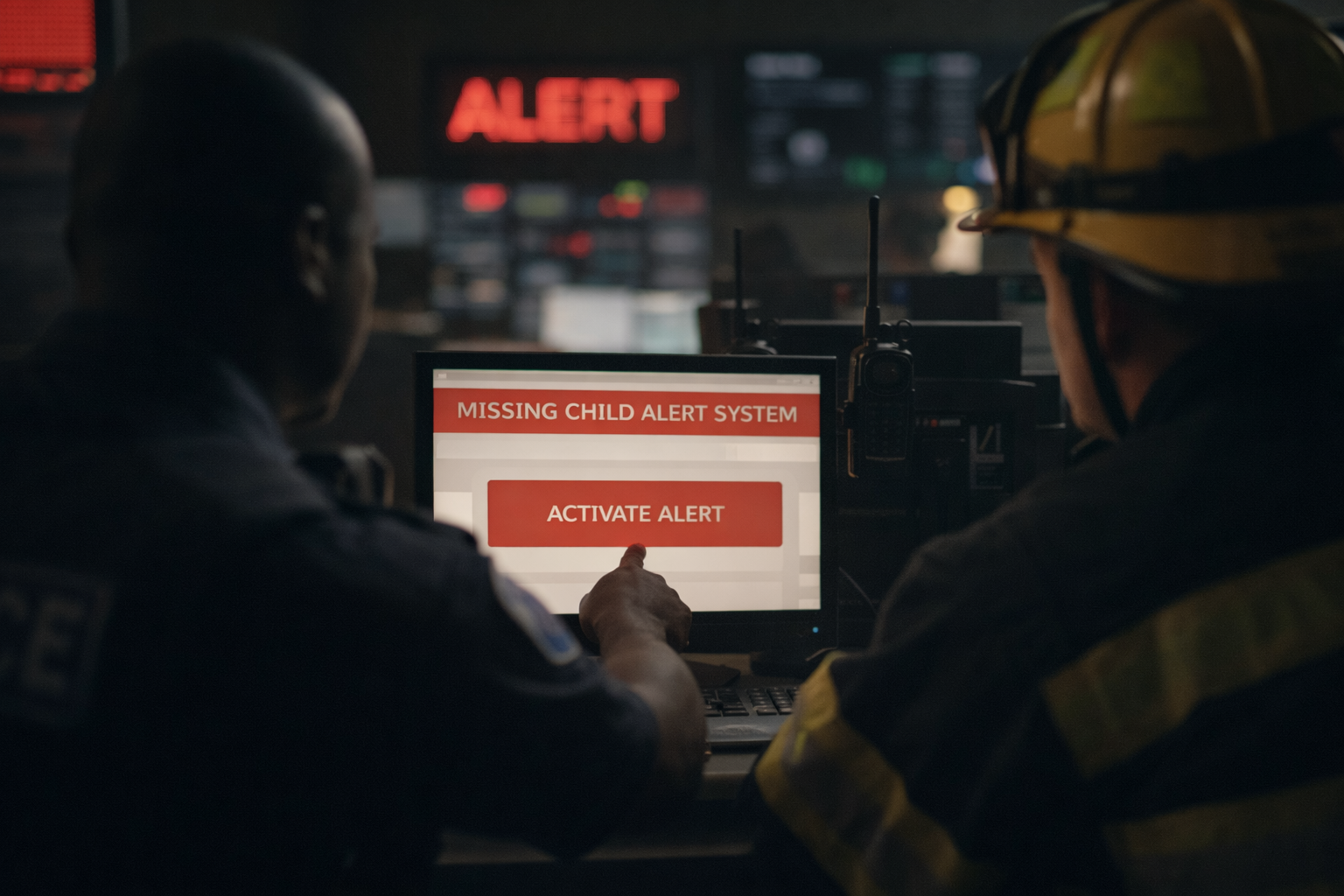
Emergency alert systems rarely disappear.
Instead, they grow.
Legislatures add eligibility rules. Agencies create notification pathways. Existing infrastructure adjusts to new public demands. Over time, a system built for one kind of emergency begins carrying more categories, exceptions, review points, and public expectations.
The Ebony Alert framework is one example of that kind of system growth. Readers who need the policy foundation first can begin with Ebony Alert Explained, which covers the history, eligibility criteria, and differences from AMBER Alert.
This article asks a different question.
The issue is not whether the policy is well-intended.
The sharper question is operational:
Is Ebony Alert a structural patch inside an existing emergency alert system, or is it becoming a parallel pipeline with its own logic?
That distinction matters.
A structural patch modifies part of an existing system. A parallel pipeline creates another pathway with its own standards, coordination demands, maintenance burden, and opportunities for failure.
Public systems can become stronger when they add precision.
They can also become weaker when they add complexity without control.
How Emergency Alert Systems Grow
Public alert systems usually expand through accumulation.
They do not begin as complete architectures. Instead, they respond to failures, public pressure, legislative action, and gaps in existing criteria.
Over time, new alert categories emerge.
AMBER Alerts focus on child abduction. Silver Alerts often focus on missing older adults or people with cognitive impairment. Blue Alerts may involve threats to law enforcement. States may also create other alert categories for specific public safety risks.
Each new category attempts to solve a problem.
However, every new category also adds another decision point.
That is where the system either improves or starts to drift.
A stronger system clarifies who qualifies, who approves activation, which channels distribute the alert, how quickly decisions must occur, and how outcomes get measured.
A weaker system adds a new label without tightening the process beneath it.
This is the quiet governance problem inside many public systems.
A new layer may look like progress from the outside. Internally, however, it can mean more forms, more approvals, more training requirements, and more room for inconsistent interpretation.
That does not mean new categories are bad.
It means new categories need architecture.
What Is a Structural Patch?
A structural patch is a targeted modification inside an existing system.
It does not replace the whole architecture.
Instead, it changes one decision point so the system can address cases it previously missed.
In emergency alert infrastructure, a structural patch may:
- Add a new eligibility category
- Clarify risk indicators
- Create an earlier review point
- Use existing broadcast channels
- Keep the same operating authority
- Expand visibility without building a separate notification network
This kind of patch can be useful.
It allows an existing system to adapt without full reconstruction.
That is often how government actually changes. Large public systems rarely get rebuilt from the ground up. Instead, lawmakers and agencies add corrective layers where the existing structure fails.
The strength of a patch is efficiency.
It uses what already exists.
The weakness of a patch is dependency.
If the original system has unclear classification standards, uneven training, slow review habits, or weak documentation, the patch inherits those problems.
That is the part many policy debates miss.
A new alert category can expand eligibility, but it cannot automatically repair the decision culture beneath it.
If the initial classification process remains inconsistent, the new category may still activate late. The deeper issue is often the early case label. That is why Runaway vs Endangered: How Missing Person Classifications Work is central to this discussion.
If families do not know what information supports escalation, the new category may remain underused.
If agencies do not document denial reasons, no one can determine whether the patch worked as designed.
Therefore, patching only works when the new rule is precise and the surrounding process is disciplined.
When Does a Patch Become a Parallel Pipeline?
A patch becomes a parallel pipeline when it stops functioning as a limited adjustment and begins operating as a separate system.
That shift can happen quietly.
It may begin with different eligibility rules. Then it may develop separate approval steps, distinct public messaging, different agency responsibilities, and different expectations from families and media.
A parallel pipeline may include:
- Different activation standards
- Different review authorities
- Different communication channels
- Different timelines
- Different public expectations
- Different reporting requirements
Parallel systems are not automatically bad.
Sometimes they are necessary.
However, they create a higher maintenance burden.
They require more training, stronger documentation, better coordination, and clearer outcome measurement.
Without that discipline, parallel pipelines can create confusion instead of speed.
This matters because emergency notification systems depend on quick judgment.
When every minute matters, operators need clarity.
They need to know which alert applies, who authorizes it, which facts are required, which channels distribute it, and what happens after activation.
If a parallel pipeline answers those questions cleanly, it can work.
If it does not, it adds friction at the exact point where friction is most expensive.
Ebony Alert as the Case Study
The Ebony Alert framework was created to address a specific concern.
Many advocates argued that missing Black youth and young women did not receive equal urgency, public visibility, or early alert access in comparable disappearance cases.
The framework responds to that concern by expanding alert eligibility beyond the traditional AMBER Alert threshold.
That is the policy purpose.
The systems question is different.
Does the Ebony Alert framework improve the existing alert architecture, or does it create another lane that must be separately maintained?
California’s version appears closer to a structural extension because it operates through existing statewide alert infrastructure while adding a new eligibility pathway.
That matters.
The broadcast system does not need to be rebuilt. Instead, the decision architecture changes.
The risk comes later.
If each state defines Ebony Alert criteria differently, the system can become fragmented. One state may treat the alert as an early-risk notification tool. Another may define it more narrowly. A third may connect it to different agencies or activation processes.
At that point, the policy can carry the same name while operating differently across jurisdictions.
That is how a patch begins behaving like a parallel pipeline.
The name remains stable.
The architecture does not.
AMBER Alert and Ebony Alert: Different Functions
AMBER Alerts remain the better-known alert framework.
They are designed around child abduction and imminent danger.
That narrow design protects urgency. It limits overuse. It also leaves some missing-person cases outside the alert threshold.
Ebony Alert frameworks attempt to address part of that gap.
They may apply when a case involves suspicious, unexplained, or high-risk circumstances that do not meet AMBER’s stricter abduction standard.
This does not make Ebony Alert a replacement for AMBER Alert.
It makes it a possible supplement.
The policy test is whether that supplement creates earlier clarity or added confusion.
If Ebony Alert gives agencies a more precise tool for cases that would otherwise stall, it functions as a structural correction.
If it creates a second alert language without improving classification, activation, or recovery timelines, it becomes another layer on top of an unchanged system.

Why Complexity Matters
Complexity is not automatically failure.
Large systems need layers.
But each new layer must earn its place.
In emergency notification systems, complexity can affect:
- Operator training
- Activation speed
- Interstate coordination
- Public recognition
- Media response
- Alert fatigue
- Outcome tracking
If the added layer improves risk detection, the complexity may be justified.
If the added layer slows review, confuses criteria, or fragments reporting, the system may lose more than it gains.
This is the central tradeoff.
More pathways can increase access.
They can also increase friction.
In public safety, friction has a cost.
It can delay notification. It can create disagreement between agencies. It can leave families confused about why one alert activated and another did not.
It can also weaken trust.
Trust matters because alert systems depend on public cooperation. People must recognize the alert, understand what it means, and respond when they have useful information.
If alert categories become confusing, public response may weaken.
Scalability: Expansion or Dilution?
Scalability depends on threshold discipline.
Precise criteria can expand early detection without overwhelming broadcast channels.
Broad criteria can dilute urgency.
That matters because alert systems depend on attention.
If alerts become too frequent or too unclear, the public may tune them out.
Alert fatigue reduces responsiveness.
Lower responsiveness weakens the value of public notification.
Therefore, scalability should not be measured by legislative adoption alone.
It should be measured by disciplined activation behavior and measurable response improvements.
A state can pass a law and still fail operationally.
An agency can create an alert page and still lack a strong activation process.
A system can issue more alerts and still fail to improve recovery.
Those are not contradictions.
They are the difference between policy presence and policy performance.
Policy Fragmentation Risk
AMBER Alert operates within a widely recognized national framework, even though states manage activation.
Ebony Alert remains state-defined.
That creates flexibility.
It also creates risk.
If states build different definitions, age ranges, activation standards, and escalation processes, comparison becomes difficult.
Multi-state disappearance scenarios may also become harder to coordinate.
Fragmentation does not invalidate the policy.
However, it raises the cost of managing it well.
This is where governance discipline matters.
State flexibility allows policymakers to respond to local conditions. Too much variation, however, can make the same alert label mean different things across state lines.
That creates a measurement problem.
If one state activates an Ebony Alert under broader criteria and another uses a narrower threshold, comparing alert volume tells us very little.
The numbers may look similar while the underlying systems behave differently.
Symbolic Correction vs Structural Correction
Some policy discussions frame Ebony Alert as a corrective response to disparities in alert activation and media visibility.
That symbolic correction matters.
However, symbolic correction is not the same as structural correction.
Structural correction requires measurable movement.
It should show up in:
- Faster time-to-alert issuance
- Clearer classification decisions
- More consistent escalation
- Improved recovery timelines
- Better documentation of denied alerts
- Lower variation across comparable jurisdictions
If those measures do not move, the system may change language without changing performance.
That is not enough.
Public systems do not become more equitable simply because they adopt corrective vocabulary.
They become more equitable when corrected design changes outcomes.
How Should Ebony Alert Performance Be Measured?
A serious evaluation should track more than adoption or total alert volume.
The real question is whether added complexity produces operational improvement.
A useful measurement framework can be organized across five layers: access, speed, consistency, public response, and outcome.
1. Access
Access measures whether qualifying cases actually reach the alert review process.
Useful questions include:
- How many Ebony Alert requests are submitted?
- How many requests are approved?
- How many are denied?
- Why are requests denied?
- How often do potentially eligible cases never reach formal alert review?
This matters because a policy can exist without being meaningfully accessible.
If qualifying cases never enter the review process, the system has an upstream problem.
2. Speed
Speed measures how quickly the system moves once a disappearance is reported.
Useful measures include:
- Time from missing-person report to classification
- Time from classification to alert request
- Time from alert request to approval
- Time from approval to public notification
- Total time from report to public alert
Speed matters because the system was built to improve early visibility.
If the added pathway does not reduce delay, its structural value becomes harder to defend.
3. Consistency
Consistency measures whether similar cases receive similar treatment.
Useful questions include:
- Do comparable cases receive different decisions across jurisdictions?
- How often do cases begin as runaway and later escalate?
- Do approval rates vary sharply between agencies?
- Are denial reasons documented in a standardized way?
- Do age, geography, or agency boundaries create uneven access?
Consistency is where policy design becomes governance.
A rule that works only when the right person is reviewing the case is not a stable rule.
4. Public Response
An alert has limited value if the public stops noticing it.
Public-response measures may include:
- Alert reach across available channels
- Media pickup
- Public tips generated after activation
- Useful information received after notification
- Evidence of alert fatigue or declining engagement
This layer matters because emergency alerts depend on attention.
The policy is not complete when the notification is sent.
The public still has to receive it, recognize it, and respond.
5. Outcome
Outcome is the hardest layer and the most important.
Useful measures may include:
- Recovery timing after activation
- Recovery within defined windows
- Cases resolved through information generated by an alert
- Differences between alert and non-alert cases
- Long-term differences across comparable jurisdictions
These measures move the analysis from intention to performance.
That is where policy evaluation should live.
It is not enough to ask whether Ebony Alert exists.
The better question is whether the added pathway improves the full decision chain.
That chain includes reporting, classification, review, activation, distribution, public response, and resolution.
If one part of the chain fails, the alert system may still underperform.
The Ebony Alert Impact Audit carries that measurement question forward. It asks whether the policy changes timelines, classifications, and outcomes instead of stopping at legislative adoption.
Missing-person cases also carry costs that do not end with the alert itself. The financial impact of missing persons adds another layer by examining the household, workplace, and community burden that can follow a disappearance.
The Human Pattern Beneath the System
Policy language can become sterile if it never touches lived consequences.
That is why this cluster also includes When a Disappearance Is Called a Runaway.
That piece belongs in the Journal lane because it examines the human pattern beneath the classification system.
This article stays with system architecture.
The journal piece stays with recognition.
Both matter, but they do different work.
The System: Updated
Good public systems do not become stronger simply because they become larger.
They become stronger when added complexity produces measurable improvement.
Ebony Alert can function as a structural patch when it uses existing infrastructure to correct a specific eligibility gap.
However, it begins behaving like a parallel pipeline when jurisdictions create separate standards, processes, and expectations without shared performance discipline.
The difference is operational.
A new alert category should reduce friction at the decisive point.
If it does not, the system has grown without becoming stronger.
The future of Ebony Alert should therefore not be judged by how many states adopt the name.
It should be judged by whether the added pathway produces faster recognition, clearer escalation, stronger documentation, more consistent access, and better outcomes for the people the system was created to protect.
Build Better. Every Day.
Groundwork Daily examines how public systems actually work, from civic policy and institutional design to economics, accountability, and governance.
If you value structural thinking over headlines, join the Groundwork list.
About Langston Reed
Civic Power & Policy
Langston Reed examines what happens after public policy leaves the page and enters the institutions responsible for carrying it out. The work focuses on implementation, accountability, incentives, and the distance between what systems promise and what they produce under pressure.
Receipts