
Article Map
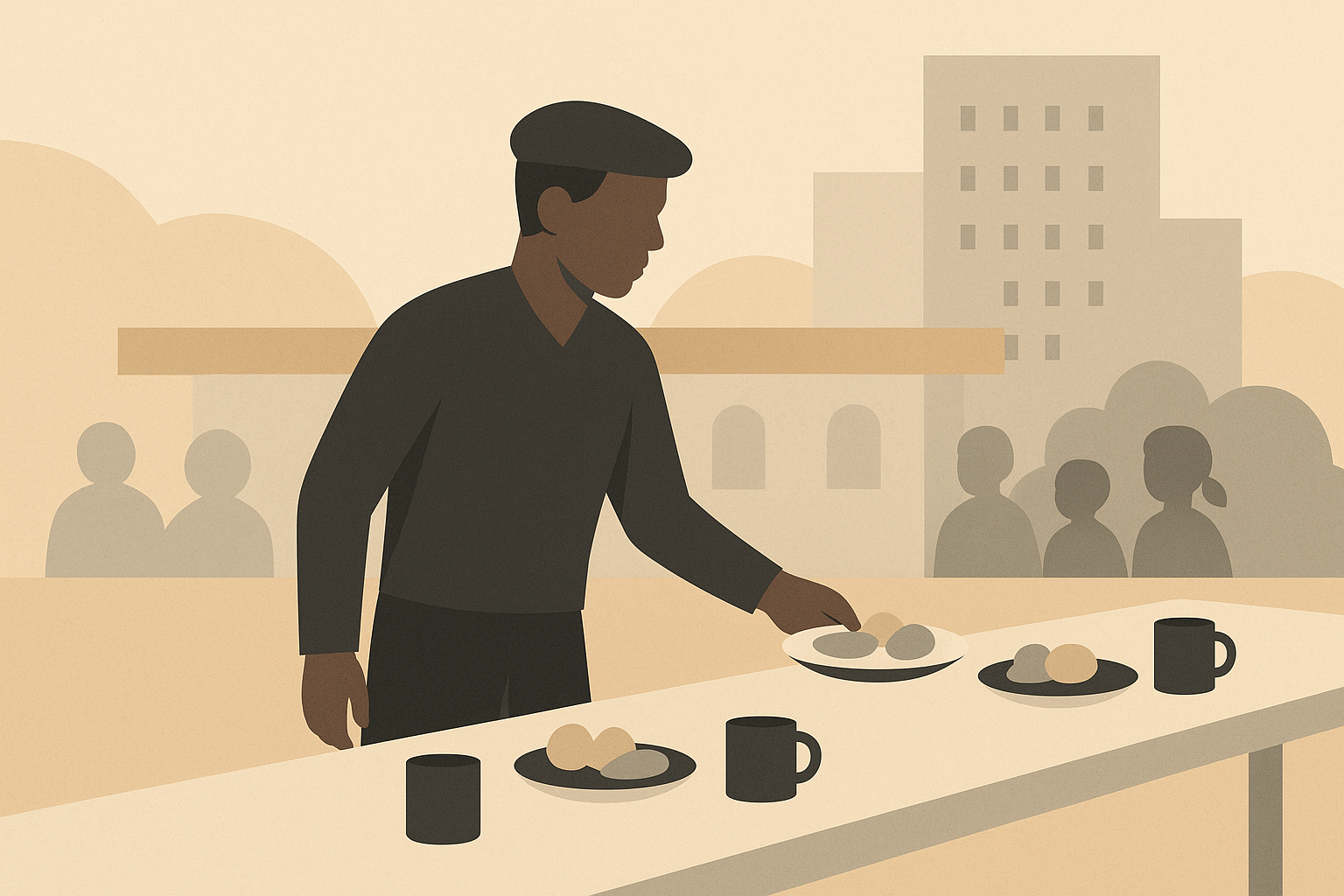
Competence becomes political when it exposes institutional failure.
Fred Hampton and the Architecture of Institutional Legitimacy
Fred Hampton’s story is often told through charisma, speeches, ideology, surveillance, and violence.
Those parts matter.
However, they do not fully explain why his work remains so disruptive.
The deeper lesson is institutional.
When non-state organizations meet essential public needs better than official institutions, they begin competing for legitimacy.
That is the system beneath the story.
Hampton did not become dangerous only because he spoke with force. He became dangerous because the organizing around him showed that neglected communities could build working systems outside official permission.
That is a different kind of power.
A speech can be dismissed.
A program that feeds children before school is harder to dismiss.
Once people see competence, they start asking why the institutions with budgets, offices, agencies, and authority failed to deliver the same result.
Critical Note
This article is educational.
It examines Fred Hampton, the Black Panther Party’s Free Breakfast for Children Program, and the wider governance pattern created when community systems expose institutional neglect. It is not a complete biography of Hampton or a full history of the Black Panther Party.
The Blueprint of Community Competence
Some stories become legend because they are dramatic.
Fred Hampton’s story becomes unavoidable because it is efficient.
At twenty-one, Hampton helped organize systems that exposed a failure at the heart of American governance. The point was not only protest. The point was performance.
Food appeared.
Volunteers showed up.
Children were fed.
Parents saw the work.
Trust followed the result.
That is what community competence does. It turns need into structure.
In weak systems, people are often told to wait. Wait for a grant. Wait for a policy. Wait for a meeting. Wait for the right official. Wait for the next election. Wait for a committee to finish studying the problem.
Community competence interrupts that delay.
It asks a harder question.
What can be built now?
Unmet Need
↓
Community Organization
↓
Visible Service
↓
Public Trust
↓
Institutional Pressure
The Free Breakfast Program Was Infrastructure
The Black Panther Party launched the Free Breakfast for Children Program in Oakland in January 1969.
The program began modestly, but it expanded quickly as chapters in other cities adopted the model.
Fred Hampton did not create the first breakfast site. That distinction matters.
However, Hampton and the Illinois chapter helped make the model visible, disciplined, and politically powerful in Chicago.
The structure was simple.
Secure a space.
Source donated food.
Coordinate volunteers.
Feed children before school.
Repeat the process.
That simplicity is exactly why the program mattered.
It did not require a massive bureaucracy to prove the need was real. It required organization, consistency, and discipline.
From a distance, the program looked like charity.
In practice, it functioned like infrastructure.
A community that can feed its children on its own terms is no longer only a voting bloc or a protest audience. It becomes a service provider. It becomes a trust center. It becomes a parallel source of legitimacy.
Why Institutions Fear Parallel Capacity
Institutions do not only hold power through law.
They hold power through legitimacy.
Legitimacy is the public belief that an institution has the right, capacity, and responsibility to act.
When official systems meet public needs, legitimacy strengthens. When they fail, legitimacy weakens. When unofficial systems meet those needs instead, legitimacy begins to move.
That is why parallel capacity can unsettle authority.
Parallel capacity means a community has built a functioning system outside the official channel.
It may be a food program.
It may be a health clinic.
It may be a mutual aid network.
It may be a violence interruption program.
It may be a neighborhood defense network.
The form changes.
The governance question stays the same.
If the people can build this without formal authority, what does that reveal about the institutions that had authority all along?
System Updates Principle: When unofficial systems outperform official institutions on basic needs, legitimacy begins to shift toward the builders.
The Difference Between Protest and Performance
Protest challenges power.
Performance embarrasses power.
That distinction matters.
A protest says, “You are failing us.”
A working community program says, “Here is proof.”
The Free Breakfast Program did not only criticize hunger. It reduced hunger in real time. It did not only argue that children needed support. It put food in front of children before school.
That made the critique measurable.
When communities build what should already exist, the comparison becomes unavoidable.
Budgets are exposed.
Priorities are exposed.
Excuses are exposed.
Delay is exposed.
That is why performance can become more disruptive than rhetoric.
It makes institutional failure visible through contrast.
Why Feeding Children Became a Threat
J. Edgar Hoover did not describe the breakfast program alone as the greatest threat to the country.
He described the Black Panther Party as a major threat and identified its community programs, including breakfast, as powerful sources of support.
That distinction is important.
The concern was not only food.
The concern was loyalty.
If people saw the Panthers meeting basic needs with speed and care, official institutions looked slow and indifferent by comparison.
That is the anxiety beneath the state response.
Not simply ideology.
Performance.
Surveillance, harassment, raids, infiltration, and public framing campaigns targeted the Panthers as part of the broader COINTELPRO campaign. Hampton was killed in December 1969 during a police raid in Chicago that involved local law enforcement and federal intelligence cooperation.
The historical record is clear that state power treated the Panthers as a threat.
Still, the causal claim should be handled carefully.
The breakfast program was one part of a wider organizing ecosystem. It helped build community trust, but Hampton’s assassination should not be reduced to one program alone.
The broader point is sharper.
Competent community organizing can become threatening when it reveals that public needs are not impossible to meet. They are simply not being met by the institutions with formal responsibility.
Copying the Model Without Naming the Source
The federal government did not invent school breakfast after watching the Panthers.
A federal pilot program existed before the Panther breakfast effort.
However, the Panthers changed the public pressure around the issue.
They made the gap visible.
They showed that children were arriving at school hungry.
They also showed that feeding them was not logistically mysterious.
That combination created pressure.
When communities prove a solution is possible, official inaction becomes harder to defend.
Over the next several years, federal school breakfast support expanded. In 1975, the School Breakfast Program became a permanent national program.
The lesson is not that the government copied the Panthers in a simple one-to-one way.
The lesson is that grassroots competence can force institutions to move faster, scale wider, and absorb ideas they once treated as radical.
Once the state adopts the service, the same activity that looked threatening outside government can look responsible inside government.
That is a governance pattern worth noticing.
Grassroots Service
↓
Public Trust
↓
Institutional Embarrassment
↓
Policy Pressure
↓
Official Adoption
↓
Origin Becomes Easier to Forget
The Governance Pattern Behind the Story
The Fred Hampton blueprint is not only civil rights history.
It is a repeatable pattern in how power behaves around competence.
- Grassroots competence exposes institutional neglect. The public sees that a basic need can be met.
- Community trust starts to move. People begin to trust the builders because the builders are present.
- Institutions protect legitimacy. Builders may be framed as threats, outsiders, radicals, or disruptors.
- Successful models get absorbed. Once pressure grows, institutions may adopt, copy, regulate, or rebrand the service.
- The origin can be erased. The model becomes acceptable once it carries an official seal.
This pattern shows up wherever people build what they needed and could not get through traditional channels.
Settlement houses did it.
Freedom Schools did it.
Community clinics did it.
Mutual aid networks do it.
Violence interruption programs do it.
Each one asks the same quiet question.
If people closest to the problem can build a working response, why did the official system wait?
What Hampton Still Teaches the Present
Hampton’s life is often framed through charisma and ideology.
The more uncomfortable truth for institutions is organizational.
A disciplined twenty-one-year-old helped lead work that outperformed local and federal systems on basic human needs.
That kind of competence is difficult to contain once people see it.
It changes expectations.
It resets what residents believe is possible.
It invites a new question.
If volunteers could do this with donated food and local discipline, what exactly are institutions with budgets doing?
That question still applies.
It applies when communities organize food distribution after disasters.
It applies when mutual aid networks fill healthcare gaps.
It applies when neighborhood groups reduce violence before agencies respond.
It applies when residents document unsafe housing faster than inspectors act.
Competence is political because it changes the standard.
Once people see what effective looks like, they do not unsee it.
Recognition Skill
After reading this System Update, you should recognize when community competence begins competing with institutional legitimacy.
Ask three questions: who is meeting the need, who had the authority to meet it earlier, and who becomes embarrassed when the solution works?
The System: Updated
The lesson is not sentimental.
It is operational.
Competence is political even when it is quiet.
Feeding people, caring for children, and meeting basic needs are forms of governance.
Any institution that wants lasting legitimacy has to match or exceed the standard set by the people it claims to serve.
Fred Hampton’s blueprint reminds us that the most disruptive act is often not protest alone.
It is performance.
Build the thing that should already exist.
Run it well.
Track the numbers.
Tell the truth about the gap it exposes.
From there, accountability is no longer abstract.
It is measured against what people have already done for themselves.
Further Groundwork
Receipts
Stay Grounded
Build institutional literacy. Get weekly systems analysis across governance, history, culture, and civic life.
Meet the Builder

Langston Reed
Builder, Civic Power & Policy
Langston Reed helps readers understand how institutions, governance, and public policy shape everyday life. His work develops institutional literacy by translating complex civic systems into practical frameworks that remain useful long after the news cycle has moved on.
“Institutions reveal themselves not through what they promise, but through the incentives they create and the outcomes they consistently produce.”
Continue Learning
System Updates is Groundwork Daily’s civic analysis series led by Langston Reed. It studies how policies, institutions, platforms, infrastructure, and public rules shape everyday life.
