

A child can hear the warning, remember the rule, and still freeze when the real moment arrives. Knowing danger exists is not the same as having a practiced response available under pressure.
Why warning children is not the same as preparing them becomes obvious in the moment adults usually care about most: when the adult is no longer standing beside the child.
A parent can say, “Do not let anyone pressure you.” A teacher can say, “Use your words.” A coach can say, “Keep your composure.” A family can repeat, “Call us if something goes wrong.” Every one of those instructions may be reasonable. Still, the child eventually has to convert the instruction into behavior while embarrassed, afraid, angry, excited, confused, or surrounded by people whose approval matters.
That is where the gap appears.
A warning identifies a risk. Preparation builds enough capacity to respond when the risk stops being theoretical.
Children need information, but information alone is fragile under pressure. They also need language they have used before, boundaries they understand, routines they recognize, adults they know how to reach, and repeated opportunities to solve manageable problems without being abandoned inside them.
That is the distinction this article is built around.
A warning can name the danger. Preparation builds the capacity to respond when the warning is no longer enough.
The Training Gap Between Warning and Preparation
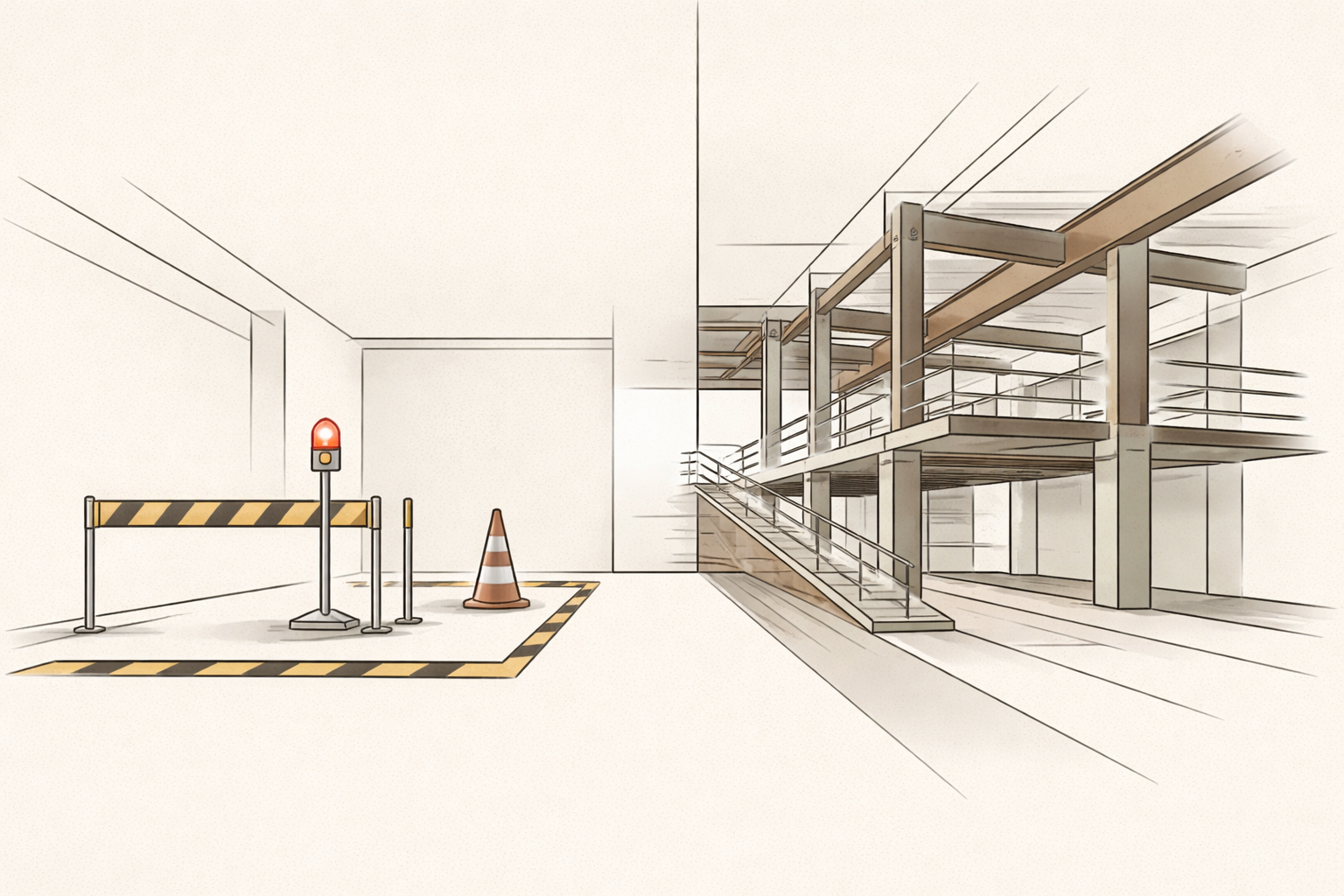
Groundwork Daily calls the distance between knowing a rule and being able to use that rule under pressure The Training Gap.
The gap appears whenever adults assume that explanation automatically creates execution. A child may understand that fighting is wrong and still lack the words needed to leave an argument without losing face. A teenager may understand that peer pressure is risky and still have no practiced response when the pressure arrives from the three people whose approval matters most.
A young child may know to find an adult when something feels wrong yet freeze because the situation is unfamiliar. Another child may understand a family rule perfectly while having no idea how to recover after breaking it.
Knowledge matters. However, knowledge becomes more useful when the child has practiced the behavior that knowledge is supposed to guide.
Preparation closes the distance between knowing the rule and being able to act under pressure.
1. Name
Explain the risk or situation clearly enough for the child to recognize it.
2. Model
Show what a useful response can look and sound like.
3. Practice
Rehearse the response before embarrassment, urgency, or fear increases the difficulty.
4. Support
Make the path back to a trusted adult clear when the child cannot solve the problem alone.
5. Debrief
Use real experiences to examine what worked, what failed, and what needs another repetition.
6. Repair
Teach what happens after mistakes so failure does not become secrecy or permanent exclusion.
The framework is simple on purpose. Children do not need another abstract theory of childhood. They need enough repeated structure for useful responses to become more familiar before the difficult moment asks for them.
Warnings Still Have a Job
Preparation is not an argument against warning children. Some moments require direct caution.
A child approaching traffic needs a clear command. A teenager entering an unsafe situation may need a direct statement about what the adult sees. A young person encountering inappropriate contact online needs to know that certain behavior is unsafe and that an adult needs to become involved.
The weakness appears when the warning becomes the entire strategy.
“Be careful” identifies a concern but leaves the response undefined. “Do not let anyone disrespect you” establishes a boundary without teaching how to enforce it. “Make good choices” communicates an expectation without showing how to slow down and choose under social pressure.
The warning can open the lesson. Preparation has to finish it.
Children Need Skills That Survive Pressure
A rule that works only while the child feels calm has limited value. Real life introduces embarrassment, excitement, fear, anger, loyalty, uncertainty, and social pressure. Those conditions change how easy it is to retrieve and use what somebody taught earlier.
That is why preparation should happen before the highest-stakes moment.
Schools understand this intuitively when they run emergency drills. Coaches rehearse movement before competition. Musicians practice before performance. Nobody waits for the actual emergency, game, or concert to discover whether the basic sequence can be executed.
Children’s social and emotional responses deserve some of the same logic.
A parent can ask what the child would say if a friend pressures him. A caregiver can practice how a younger child asks for help when anger starts turning physical. A teacher can rehearse disagreement before a classroom conflict makes calm language harder to find.
The practice does not have to be theatrical. It needs to be familiar enough that the child is not inventing the entire response for the first time while under pressure.
Preparation Does Not Mean Teaching Children to Fear Every Stressor
Preparation should make children more capable, not more frightened.
Children need protection from genuine harm. They also need manageable opportunities to experience frustration, disagreement, waiting, disappointment, correction, difficult schoolwork, social mistakes, and other ordinary forms of stress with enough support to recover.
If every uncomfortable moment is framed as danger, the child receives the wrong lesson. Difficulty becomes something to escape rather than something that can sometimes be navigated, solved, repaired, or endured safely.
The stronger goal is calibrated support.
Do not abandon children inside challenges that exceed their developmental capacity. At the same time, do not remove every problem before they have the opportunity to participate in solving it.
Capacity grows through use.
Preparing Children for Stressful Situations Starts With Language
Children often behave before they can explain. A child who cannot name embarrassment may become angry. A child who cannot say, “I need space,” may shove. A child who cannot explain confusion may withdraw or pretend to understand.
Language does not solve every problem, but it creates additional options.
Words such as worried, frustrated, embarrassed, jealous, confused, scared, and overwhelmed can help a child distinguish one internal state from another. Once the state has language, the next response can become more precise.
Need language matters too
Children also benefit from short phrases they can use before behavior has to carry the entire message.
- “I need help.”
- “I need a break.”
- “I don’t understand.”
- “Please stop.”
- “I need space.”
- “Can you stay with me?”
The objective is not turning every child into a miniature therapist. The objective is practical communication.
Language creates another path between feeling something and acting on the feeling.
Preparation Uses Scaffolding Instead of Repeated Lectures
A lecture explains. Scaffolding helps a child perform something that is not yet fully manageable alone.
At first, the adult may provide most of the structure. Over time, support can decrease as competence increases.
A young child might practice ordering a meal while a parent stands beside him. Later, the parent lets him handle the interaction independently. A teenager might talk through several responses to peer pressure before navigating the situation alone.
The amount of help should change with age, skill, temperament, context, and the seriousness of the situation.
“I already told you” is not always evidence of preparation
A child can know the rule and still lack the capacity to execute it while angry, frightened, excited, embarrassed, or surrounded by peers.
That is not evidence that rules do not matter. It is evidence that execution is its own skill.
When the same failure repeats, another lecture may not be the highest-value intervention. The child may need rehearsal, clearer language, a smaller step, a better boundary, more adult support, or a more realistic expectation.
Boundaries Work Better When Children Have Scripts
Children hear boundary rules constantly: say no, walk away, tell an adult, keep your hands to yourself, do not let people pressure you.
Those instructions become more usable when the child also knows what the boundary sounds like in real language.
- “Please stop.”
- “I don’t want to do that.”
- “I’m leaving.”
- “I need an adult.”
- “I said no.”
- “I’m calling my parent.”
The exact script should match age, context, and developmental ability. Its value comes from reducing the number of things the child has to invent while already under pressure.
The household teaches boundaries too
Children learn boundaries partly through the rules adults enforce around them.
If expectations change constantly according to adult mood, the child has to keep reading the adult before reading the rule. Predictability reduces that uncertainty. The child may not like every boundary, but the boundary becomes easier to understand because it has a recognizable shape.
Good structure does not eliminate judgment. It gives judgment somewhere stable to begin.
Let Children Solve Problems They Can Actually Carry
Adults can overcorrect in the name of protection. Remove every frustration, intervene in every disagreement, solve every school problem, and the child receives less practice navigating manageable difficulty.
The alternative is not neglect.
It is calibrated responsibility.
When the situation is safe enough for learning, adults can ask questions instead of immediately taking over:
- What happened?
- What have you tried?
- What are your options?
- Which option seems safest?
- What could happen next?
- What will you do if that does not work?
- Who can help?
Those questions turn problem-solving into a repeatable process rather than a personality trait children are simply expected to possess.
The goal is not independence at any cost. It is increasing competence without removing the support that development still requires.
Preparing Children Also Means Teaching What Happens After a Mistake
Any preparation model that ends at prevention is incomplete.
Children will make mistakes. They may lie, lose their temper, break a rule, follow the wrong person, hide something, say something cruel, or ignore a lesson they understood perfectly when the stakes were lower.
The objective cannot be building a child who never fails.
The system also needs a route from failure back to responsibility.
Repair can include consequence
Repair does not mean erasing what happened. A child may still need to apologize, replace something, lose a privilege, complete a responsibility, or accept another developmentally appropriate consequence.
What matters is that consequence sits inside a larger sequence:
- Tell the truth about what happened.
- Identify who or what was affected.
- Take the appropriate consequence.
- Repair what can reasonably be repaired.
- Practice a better response for next time.
- Return to the relationship or system without pretending nothing happened.
This matters because a child who sees no path back may become more invested in concealment than correction.
Adults have to model repair too
A parent who says, “I raised my voice. That was not okay,” teaches something a lecture about respect cannot teach alone.
The child sees authority accept accountability without authority disappearing.
That is useful preparation for every relationship the child will eventually have.
Every Child Needs a Clear Path Back to a Trusted Adult
Preparation has to answer one more question: what happens when the child is already in trouble?
This is where some family systems fail. They explain what not to do, threaten consequences, and assume fear of punishment will be enough to prevent the behavior. Then something goes wrong and the child has to decide whether telling the truth will create another danger.
A child who expects humiliation, disbelief, rage, or rejection may try to manage the situation alone.
That does not mean promising there will never be consequences.
It means separating immediate help from immunity.
That sentence creates an escalation path.
The child knows that making a bad decision does not cancel access to adult protection. Accountability can happen after immediate safety has been restored.
A system that children are afraid to return to is weaker exactly when the family needs information most.
Adults Need Regulation Skills Too
Preparation becomes harder when the adult is flooded.
Parenting and caregiving involve frustration, fear, exhaustion, competing responsibilities, and moments when the adult’s own nervous system is already carrying too much load. In those moments, the intended lesson can quickly become a threat, a lecture, or a reaction.
No parent remains calm every second. That is not a reasonable standard.
Still, adults can recognize when their current state makes a productive conversation unlikely.
“I am too frustrated to talk about this well right now. We are going to come back to it in twenty minutes.”
That is not avoidance when the conversation actually resumes.
It is a boundary around the conditions required for useful accountability.
Children do not only hear what adults teach. They also watch adults handle pressure, repair mistakes, regulate anger, enforce boundaries, and ask for help.
The environment is part of the curriculum.
Preparation Builds Capacity. It Does Not Transfer Adult Responsibility to Children.
This boundary needs to remain explicit.
No amount of preparation guarantees that a child will respond perfectly during fear, coercion, abuse, bullying, manipulation, or another overwhelming situation.
A child can freeze.
A child can be deceived.
A child can forget the script.
A child can do exactly what was practiced and still be harmed.
Preparation gives children additional options. It does not make children responsible for preventing adult misconduct or institutional failure.
Adults, schools, organizations, platforms, and communities still carry responsibility for creating environments that protect children.
That is the difference between building capacity and assigning blame.
How to Turn a Repeated Warning Into Preparation
Start with one sentence you repeat often
Choose a warning already present in the household.
Maybe it is “Be careful online,” “Stay out of trouble,” “Do not let anyone pressure you,” or “Use your words.”
Then ask what the child would actually need in order to carry that instruction.
Define the behavior you want instead
Do not stop at what the child should avoid. Name the useful response.
If the instruction is “Do not let anyone pressure you,” define what leaving, declining, delaying, asking for help, or contacting home should look like.
Give the child language
Provide short, age-appropriate phrases. The words should be simple enough to remember while the child is under pressure.
Practice briefly
A thirty-second rehearsal can reveal whether an instruction that sounded obvious to the adult is still vague to the child.
Explain the escalation path
Who should the child contact? Which adults are safe? What happens if the first adult does not listen? What should happen if the child has already broken the rule?
Debrief real events
After something happens, move beyond “You should have known better.” Ask what the child noticed, what made the decision difficult, what worked, and what would make the next response stronger.
The Warning-to-Preparation Audit
This is not a parenting score. Use it to find one place where information needs to become practiced capacity.
1. What warning do you repeat most?
Write the actual sentence rather than summarizing the concern.
2. What risk are you trying to address?
Separate the real problem from generalized fear.
3. What behavior do you want instead?
Define what the child should actually do when the moment arrives.
4. Does the child have usable language?
What sentence can the child say when pressure makes improvisation harder?
5. Has the response been practiced?
Understanding a rule and using it under pressure are different tasks.
6. Is the expectation developmentally realistic?
Are you asking for judgment, impulse control, or emotional regulation beyond what the child can currently carry without support?
7. Which boundaries already exist?
Are the rules predictable enough for the child to know when and how they apply?
8. Where is the escalation path?
Who should the child contact when the situation exceeds what can be managed alone?
9. What happens after a mistake?
Is there a clear route through truth, consequence, repair, learning, and return?
10. What are the adults modeling?
Does the child regularly see boundaries, regulation, apology, problem-solving, and repair in practice?
11. What one response will you rehearse this week?
Move one recurring lesson from warning into practice.
The Groundwork: Build the Response Before the Pressure Arrives
Why warning children is not the same as preparing them ultimately comes down to what remains after the adult stops talking.
A warning can tell the child that danger exists.
Preparation gives the child a response.
It gives language before the stressful conversation. It creates boundaries before somebody crosses them. It makes help easier to reach before the child has to decide whether telling the truth is safe. It provides manageable opportunities to solve problems before every problem becomes a crisis.
Preparation also teaches what happens after imperfection.
Children need consequences. They also need repair.
They need increasing independence. They also need escalation paths.
They need challenge. They also need enough support for challenge to become learning rather than abandonment.
The objective is not raising children who believe nothing difficult will happen.
The objective is helping children develop more capacity for what happens when life becomes difficult.
Warning identifies the risk. Preparation builds the response.
→ Accountability and Discipline: Why Follow-Through Gets Easier When Someone Else Can See It
→ Capacity Before Intensity: The Training Principle Nobody Applies to Life
The Principle and Condition Beneath This Work
This article treats preparation as capacity-building: adults create enough structure, practice, boundaries, and support that children have more usable options when pressure makes judgment harder.
Structure Is Mercy
Good structure carries part of the burden before the difficult moment arrives. Teaching scripts, establishing predictable boundaries, rehearsing responses, and preserving a path back to trusted adults reduce the amount a child must invent while already under pressure.
Capacity
Capacity defines what a person can reliably carry under load. Childhood preparation expands capacity gradually through language, rehearsal, supported problem-solving, recovery, and developmentally appropriate responsibility.
Supporting conditions in this article include Structure, Boundaries, Repair, and Resilience. See the full Groundwork Daily Core Principles and Conditions architecture.
Continue with Health as Discipline

This article provides general educational information about child development, preparation, emotional regulation, boundaries, and supportive caregiving. Children vary significantly by age, temperament, developmental stage, disability, family context, trauma history, and individual needs. Concerns involving a child’s development, behavior, trauma exposure, safety, emotional regulation, or mental health should be discussed with an appropriate qualified professional.
The Training Gap is a Groundwork Daily editorial framework rather than a validated child-development model. The underlying argument draws from established guidance and research concerning positive parenting, safe and supportive environments, emotional development, social and emotional learning, and the role of supportive adult relationships.
Centers for Disease Control and Prevention: Positive Parenting Tips
Developmentally organized guidance for supporting communication, behavior, skills, relationships, and healthy development across childhood.
CDC: Risk and Protective Factors for Adverse Childhood Experiences
Background on risk and protective conditions associated with childhood adversity, including the role of safe, stable, nurturing relationships and environments.
Harvard Center on the Developing Child: Serve and Return
Explains how responsive interaction with caregivers contributes to development and the strengthening of early brain architecture.
Harvard Center on the Developing Child: Toxic Stress
Explains the difference between ordinary stress and prolonged or excessive adversity without sufficient supportive relationships.
Institute of Education Sciences: Social and Emotional Learning Competencies
Overview of competencies including self-management, relationship skills, social awareness, and responsible decision-making.