
System Updates
Langston Reed examines the systems beneath familiar outcomes: the incentives, standards, supply chains, institutions, and operating decisions that shape what people eventually experience.
Why food tastes different now is a question people often ask after returning to a product they have known for years. The package looks familiar, the brand is the same, and the expectation is already set. Yet the texture may feel softer, the sweetness sharper, the richness thinner, or the finish less familiar than memory suggests.
Sometimes the product really has changed. Manufacturers reformulate foods for many reasons, including ingredient prices, supply availability, shelf life, nutrition targets, consumer preferences, regulatory requirements, manufacturing efficiency, and distribution needs. Even a small change in fat, sugar, water, starch, flavoring, fermentation, or processing can alter the way a food tastes and feels.
However, reformulation is not the only explanation. Freshness, preparation, storage, serving temperature, aging, expectation, and memory can also influence how familiar foods are experienced. The useful question is therefore not whether every product has declined. It is what changed, where it changed, and whether the evidence supports the conclusion.
Short Answer
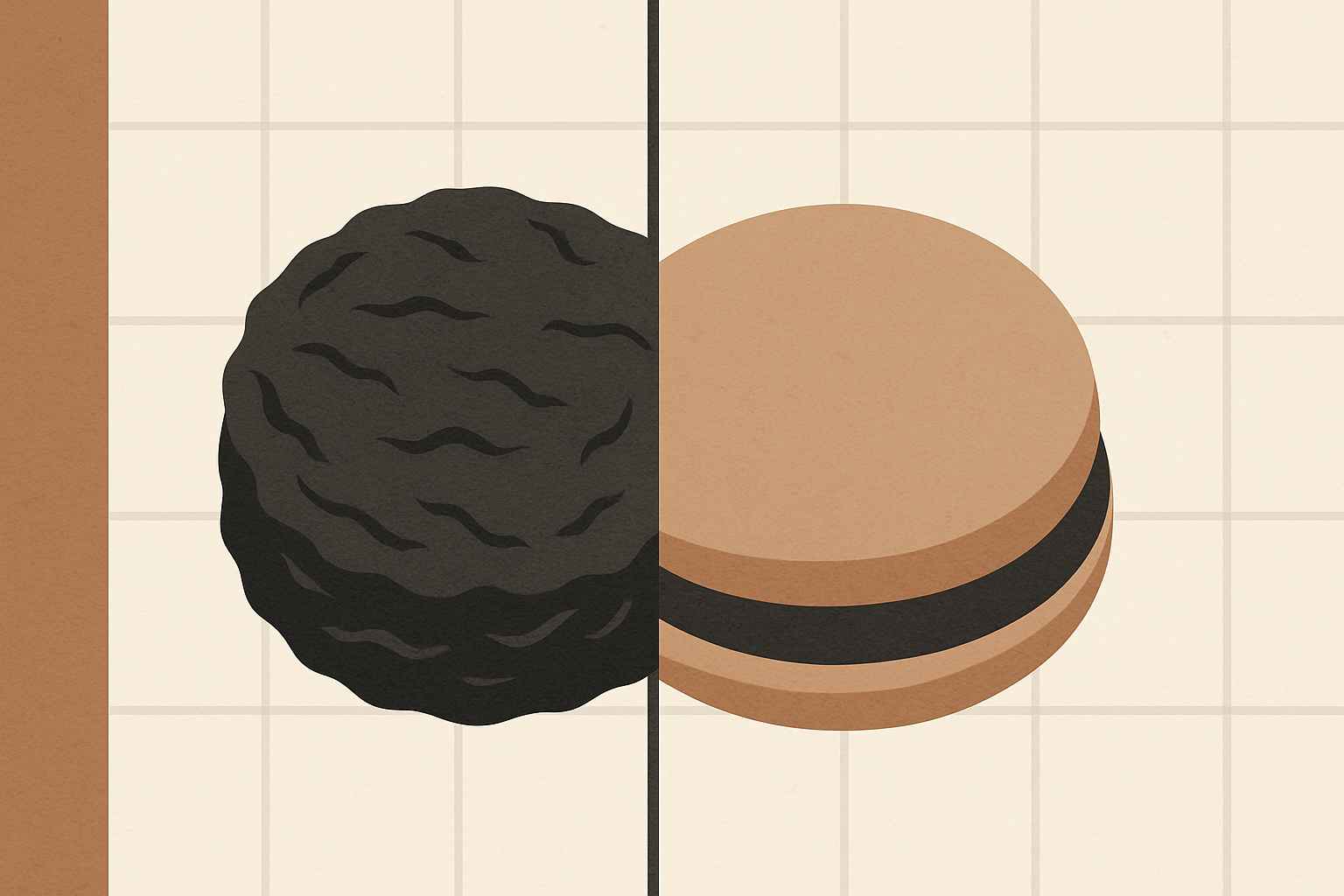
Why food tastes different now often comes down to changes in formulation, ingredients, processing, texture, freshness, or preparation. Manufacturers may adjust recipes in response to cost, supply, nutrition, regulation, shelf life, or consumer demand. At the same time, memory and expectation can make even smaller changes feel larger than they are.
Why Food Tastes Different Now When Ingredients Change
Ingredients do more than create flavor. They create structure. Fat controls richness and melt. Sugar changes sweetness, moisture, browning, and texture. Protein affects body. Water changes density. Starches thicken. Emulsifiers help ingredients remain mixed.
Because these ingredients interact, changing one can affect the entire product. A new oil may alter mouthfeel. A different sweetener can change both flavor and texture. Less dairy fat can make a frozen product feel lighter, while more water or air can change how substantial it feels.
Substitution Does Not Always Mean Inferior Quality
Ingredient substitution is often treated as automatic evidence that a company cheapened a product. That conclusion is too easy. A manufacturer may change an ingredient because the old one became difficult to source, consumers asked for another formulation, nutrition targets changed, or production conditions required a more stable input.
Cost can certainly be part of the decision. Still, the ingredient list by itself does not reveal motive. It tells the consumer what is in the product, not why the manufacturer chose it.
Traditional Ingredients Can Create Different Sensory Results
Cocoa butter, dairy fat, fruit solids, spices, fermented bases, and other traditional ingredients can produce characteristics that substitutes do not reproduce exactly. That difference does not mean the substitute is inherently unsafe or illegitimate. It means different ingredients can produce different sensory outcomes.
This is one reason a product can remain recognizable while tasting unfamiliar. The category may be similar, but the underlying structure may no longer be the same.
Texture Helps Explain Why Food Tastes Different Now
Texture is one of the first places people notice change because the mouth is responding to more than flavor. Density, chew, melt, crispness, moisture, grain, viscosity, and temperature all influence how the brain interprets a food.
A product that becomes lighter, softer, gummier, waxier, more uniform, or more elastic may therefore feel like it tastes different even when its dominant flavor remains similar.
Stabilizers and Emulsifiers Have Technical Jobs
Gums, starches, emulsifiers, and other texture agents can help keep ingredients mixed, prevent separation, maintain moisture, extend usable shelf life, or create a consistent texture across large production runs.
Those functions are not automatically negative. However, changing the amount or type of texture-building ingredients can alter the eating experience. A product designed to survive shipping and storage may behave differently from one optimized primarily for immediate freshness.
Texture Drift Can Accumulate
One small formulation change may barely register. Several changes across years can produce something noticeably different. A little more air, a different fat, a new stabilizer, shorter fermentation, or a modified moisture level can each alter the final result.
That accumulation is important because consumers often experience the latest version against a much older memory. The contrast can therefore feel sudden even when the product changed gradually.
Reformulation Is a Major Reason Food Tastes Different Now
Reformulation means changing a food’s recipe or production design. Companies can adjust fats, sweeteners, flavor systems, salt, moisture, ingredients, serving sizes, processing conditions, or nutritional targets while keeping the larger product identity familiar to shoppers.
Most consumers do not compare ingredient lists every time they buy something. Brand recognition does much of that work. If the name, package, and shelf position remain familiar, shoppers reasonably expect continuity.
The Package Can Stay Familiar While the Formula Moves
That creates a structural information gap. The manufacturer knows exactly when the formula changes. The shopper may not notice until the food behaves differently. Unless the change affects a regulated name, allergen declaration, required label information, or something the company chooses to advertise, there may be no large announcement on the front of the package.
As a result, the sensory experience can become the first warning that something underneath the branding has shifted.
Repeated Reformulation Can Create a New Baseline
Products can change more than once. One reformulation may respond to ingredient availability, another to cost, another to nutrition goals, and another to manufacturing efficiency. Each version becomes the starting point for the next.
Over time, consumers may stop comparing the current product with the immediately previous formula and instead compare it with a much older version they remember. That is where a collection of small changes can feel like a complete transformation.
Processing Changes More Than Shelf Life
Processing is not one thing. Freezing vegetables, pasteurizing milk, milling flour, fermenting bread, drying fruit, emulsifying sauces, and producing packaged snacks are all forms of processing.
The relevant question is what the process is designed to accomplish. Some methods improve safety. Others preserve food longer, reduce waste, improve consistency, speed production, change texture, or make transportation easier.
Faster Production Can Change the Experience
Time itself can be an ingredient. Fermentation, resting, aging, cooling, and other production stages can influence flavor and structure. If a company changes those processes, the ingredient list may look almost identical while the product still tastes different.
That is an important limitation of label analysis. Labels reveal ingredients. They do not always reveal every meaningful detail about how those ingredients were transformed.
Consistency Can Become a Design Goal
National brands need products to behave predictably across factories, trucks, warehouses, stores, and seasons. That requirement can reward formulas that are stable under many conditions.
Consistency creates real value, especially for safety and distribution. At the same time, a product optimized for stability may not behave exactly like a less standardized version made for immediate consumption.
Cost Pressure Can Change How Food Tastes
Food companies operate inside markets for dairy, cocoa, fruit, grains, meat, oils, sugar, packaging, labor, transportation, electricity, financing, and other inputs. When those costs rise, manufacturers have several ways to respond.
They can raise prices, reduce package size, accept lower margins, change suppliers, reduce promotions, alter recipes, redesign packaging, or combine several of those choices. Reformulation is therefore one tool inside a larger cost-management system.
Cost and Quality Can Pull in Different Directions
A more expensive ingredient is not automatically better. Still, some ingredients are expensive precisely because they are harder to produce, more volatile, more perishable, or more resource-intensive.
If a manufacturer reduces reliance on such an ingredient, the product may become cheaper or easier to manage while also changing sensory characteristics consumers value. That is a real trade-off rather than proof of misconduct.
Pricing Pressure Travels Through the Whole System
The ingredient itself is only part of the cost. Storage, freight, refrigeration, energy, packaging, labor, and retail operations all influence what manufacturers and households ultimately pay.
Groundwork Daily follows that chain in Why Grocery Prices Rise: The Logistics Most People Never See .
Memory Is Also Part of Why Food Tastes Different Now
Food memory is powerful, but it is not a laboratory record. Taste is connected to smell, age, place, family, mood, expectation, preparation, and context. A product associated with childhood may carry an experience that is impossible to reproduce through ingredients alone.
That does not mean people are imagining changes. It means perception and reformulation can coexist. A product may genuinely have changed while memory also amplifies the contrast.
Freshness and Preparation Matter
The same food can taste different depending on storage, cooking temperature, restaurant equipment, frying oil, freezer conditions, serving temperature, or how long it has been sitting on a shelf.
Before concluding that a manufacturer changed the recipe, it is worth separating the product itself from the conditions under which it was prepared and eaten.
Memory Is a Clue, Not Proof
A strong systems analysis starts with the observation: “This tastes different.” The next move is investigation. What changed in the ingredients? Did the legal product name change? Is the serving size different? Is there an older label to compare?
That process respects the consumer’s experience without turning memory into evidence it cannot provide by itself.
How to Investigate Why Food Tastes Different Now
You do not need to audit every product in your kitchen. Start with one food that clearly feels different and look for evidence that can explain the change.
Read the Statement of Identity
Look near the nutrition information and ingredient list for the product’s actual name. A familiar package may contain a food that belongs to a different regulatory category than the shopper assumes.
Compare Ingredient Lists
If an older package photo or reliable archive is available, compare major ingredients and their order. Changes in fats, sugars, dairy ingredients, starches, flavorings, gums, or emulsifiers can provide useful clues.
Check the Nutrition Panel
Differences in fat, sugar, sodium, protein, calories, or serving size may reveal a meaningful reformulation even when the product name remains unchanged.
Look Beyond the Label
Manufacturer announcements, regulatory filings, credible reporting, old packaging, and product specifications can sometimes explain changes the ingredient panel cannot.
The goal is not to prove that a company downgraded the food. It is to identify what actually changed before deciding what that change means.
What You Cannot Conclude From a Different Taste
A different taste does not automatically prove fraud, inferior nutrition, unsafe ingredients, regulatory failure, or deliberate cost cutting. Those are separate claims that require separate evidence.
Likewise, a longer ingredient list does not automatically mean a product is worse. Some ingredients perform technical jobs related to safety, preservation, consistency, or texture.
Different Does Not Always Mean Worse
This article intentionally asks why food tastes different rather than assuming every change is decline. Some reformulations may improve safety, nutrition, availability, stability, or affordability while still producing a different sensory experience.
That distinction keeps this article separate from Why Food Tastes Worse Now , which examines the narrower question of when changes actually feel like a loss in quality.
Precision Makes the Criticism Stronger
Consumers do not need to exaggerate the problem to take it seriously. A product can be legal, safe, properly labeled, and still no longer deliver the experience a shopper wants.
That is enough reason to compare products, reward better alternatives, and pay attention to what manufacturers change over time.
Receipts
These sources provide regulatory and nutritional context for ingredients, processing, food identity, and modern packaged food.
Food Ingredients
- FDA — Food Ingredients and Packaging — federal information on ingredients, additives, packaging, and regulatory oversight.
Food Identity and Labeling
- FDA — Standards of Identity for Food — explains standardized food names and the federal rules intended to promote honesty and fair dealing.
Processing
- Harvard T.H. Chan School of Public Health — Processed Foods and Health — explains the spectrum of processing and why processed foods should not be treated as one uniform category.
The Groundwork
Why food tastes different now is best understood as a systems question. Familiar products sit at the end of decisions involving ingredients, cost, processing, shelf life, transportation, regulation, nutrition, and consumer demand.
Taste is where those decisions eventually become personal. The shopper does not experience a procurement strategy or manufacturing adjustment. The shopper experiences a cookie that feels lighter, a sauce that seems sweeter, or a frozen dessert that no longer melts the same way.
The practical response is not nostalgia or paranoia. It is literacy. Notice the change, find the evidence, separate perception from proof, and decide whether the current product still earns a place in your cart.
The System: Updated.
What looked like the problem: Familiar foods simply do not taste the way they used to.
What the system reveals: taste can change when ingredients, processing, texture, freshness, preparation, or memory change. The updated model is system pressure → product decision → sensory change → consumer perception → investigation.
Put the Principle to Work
Turn Memory Into a Testable Question
Choose one product that feels different from what you remember. Check its legal name, current ingredient list, nutrition panel, and any reliable older packaging you can find. Do not begin by assuming the product was downgraded. Begin by asking what changed. That is how a vague impression becomes useful information.
Join the Groundwork List
Get systems analysis, institutional literacy, and practical frameworks built to remain useful after the headline moves on.
Continue Building
Continue through the food-system cluster based on the mechanism you want to understand next.
Quality Decline —
Why Food Tastes Worse Now
Examine when reformulation and product changes begin to feel like an actual loss
in quality.
Standards and Reformulation —
Fake Food in America: How Reformulation Changes Familiar Products
See how legal names, ingredient changes, and product identity interact.
Cost Pressure —
Food Quality Decline Under Cost Pressure
Follow the decisions manufacturers may make when ingredients and operating costs
become more expensive.
Food Prices —
Why Grocery Prices Rise: The Logistics Most People Never See
Follow the costs moving through farms, processing, storage, freight, and retail.
Meet the Builder

Langston Reed
Builder, Civic Power & Policy
Langston Reed helps readers understand how institutions, governance, public policy, markets, and infrastructure shape everyday life. His work develops institutional literacy by translating complex systems into practical frameworks that remain useful after the immediate news cycle has moved on.
Continue through System Updates, Building Institutional Literacy, or The Sovereign Ledger.