System design power shapes outcomes before people ever make a choice. That is the part most people miss. They think power begins when someone speaks, approves, denies, promotes, punishes, or takes control in public.
That is visible power.
Visible power matters, but visible power is usually downstream from the real decision.
Real power sits upstream. It designs the table, sets the order of play, and decides which moves are legal before anyone touches a card.
By the time most people notice power, the strongest part of it has already shaped the outcome.
System Design Power Happens First
System design power is not loud. It does not need to announce itself.
It works by arranging the environment before the player arrives.
It decides what counts as progress. It defines which behaviors get rewarded. It quietly determines which outcomes become easier to reach and which outcomes require extra leverage.
That is why surface analysis is dangerous.
When people only study the visible decision, they miss the structure that made that decision predictable.
The Decision Before the Decision
Every system answers three questions in advance:
What is permitted. What is rewarded. What is punished.
Most people never examine those questions directly. Instead, they enter the environment and begin reacting to it.
Then they call those reactions personality, preference, discipline, ambition, or failure.
That is weak analysis.
People do make choices. However, those choices happen inside conditions they usually did not design.
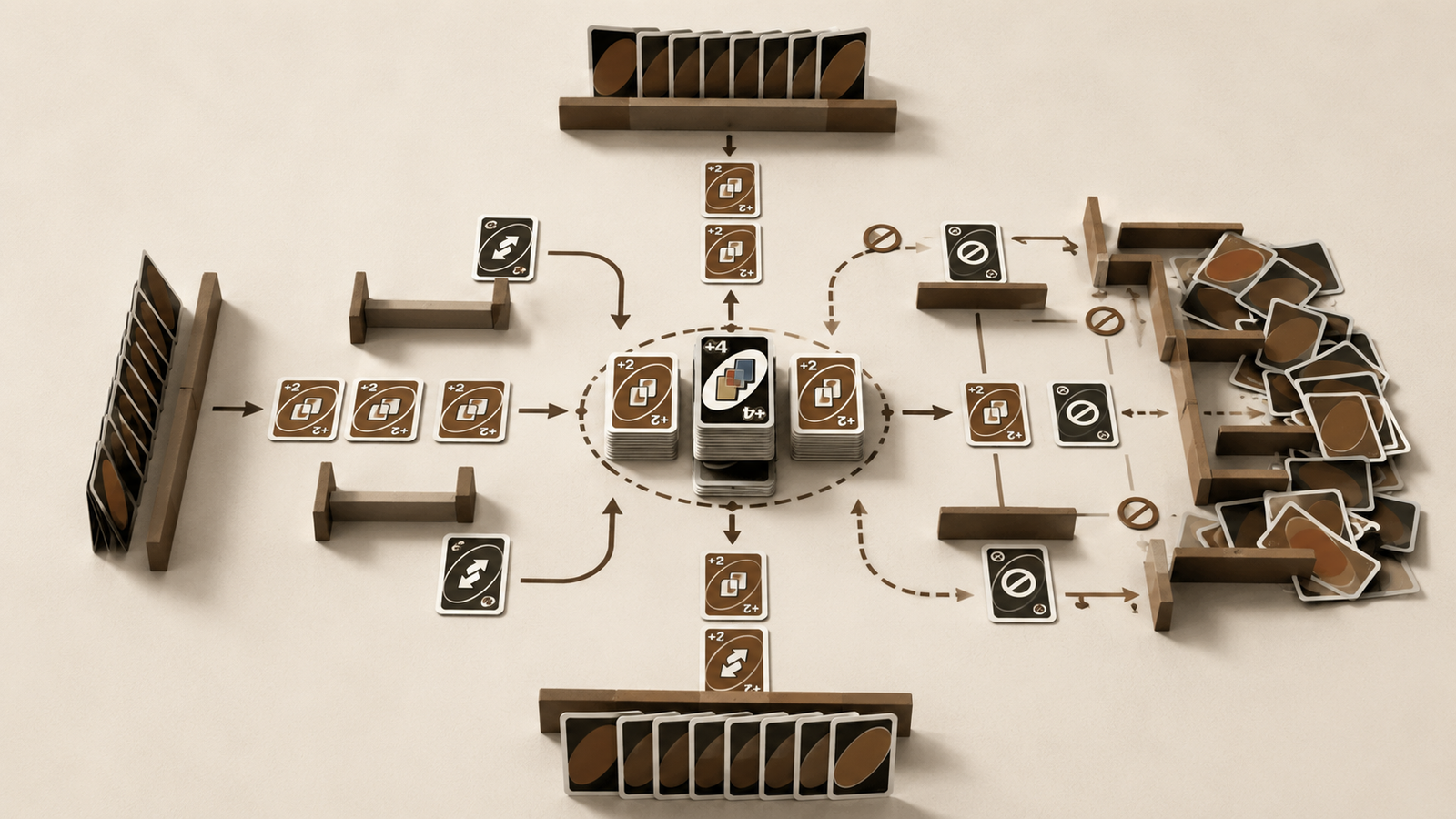
Uno makes this obvious.
If stacking Draw 2 cards is allowed, the game changes immediately. Risk changes. Strategy changes. Aggression changes.
One decision can become eight cards of pressure instead of two.
Same game. Different structure.
Mattel may print the official rules, but most tables still invent their own version of Uno.
The person who decided whether stacking exists changed the entire environment before anybody played a single card.
Who Makes the Rules Matters
Most people focus on players.
Smart people study the rules.
Strategic people study who benefits when the rules stay exactly the way they are.
That is the uncomfortable part.
Rules are not innocent. They organize advantage, define what counts, and decide what becomes easy or difficult.
This applies everywhere.
Schools reward specific forms of intelligence. Workplaces reward specific forms of behavior. Algorithms reward specific forms of engagement.
Social groups reward specific forms of conformity.
Then people confuse adaptation with personality.
What looks personal is often structural conditioning.
Neutral Systems Do Not Exist
Rules are usually presented as neutral.
Objective. Fair. Universal.
That framing matters because neutrality lowers resistance. People comply faster when they believe the structure exists outside human intention.
But neutrality in design is mostly fiction.
Every platform is optimized for something. Every institution prioritizes something. Every environment encourages certain behaviors while discouraging others.
Social media platforms reward emotional intensity because emotional intensity keeps people engaged.
Corporate structures often reward visibility over substance because visibility is easier to measure.
Family systems sometimes reward silence because silence preserves the appearance of stability.
For broader context, see the Britannica overview of social norms.
The structure always reveals what the system values most.
People Follow Incentives
People rarely follow rules because they believe in them.
They follow the reward structure attached to them.
If visibility gets rewarded, people perform. If outrage gets rewarded, people escalate. If caution gets rewarded, people hesitate.
When silence gets rewarded, people stop telling the truth.
The behavior looks personal. Often, it is environmental.
That is why some people spend entire games reacting to Draw 2 cards while others quietly helped design the stacking rules from the beginning.
One group reacts to pressure.
The other group structured the pressure itself.
That is not a small difference. It is the difference between participation and power.
Why Outcomes Keep Repeating
When outcomes repeat consistently, people usually search for individual explanations.
Effort. Intelligence. Discipline. Motivation.
Those things matter, but they are not primary.
Structure determines distribution.
If the rules stay stable, the outcomes eventually stabilize around those rules.
That is why certain industries repeatedly produce burnout. It is why certain online spaces repeatedly produce conflict.
The system keeps rewarding the same behavior, so the same behavior keeps reproducing itself.
At some point, repeated outcomes stop being accidents.
They become evidence.
The Illusion of Freedom
This is where people get uncomfortable.
Systems create the appearance of freedom while quietly narrowing the available choices inside the environment.
People feel independent because they can choose between options.
But the structure often decided which options were available long before the choice appeared.
That does not erase agency. It clarifies the battlefield.
A person can still choose. But if every available option protects the same outcome, the system has already won most of the argument.
That is why choice is not always the same thing as power.
Sometimes freedom is simply choosing between outcomes somebody else already approved.
Seeing the System Changes the Strategy
Once the system becomes visible, the strategy changes completely.
You stop reacting emotionally to outcomes and start analyzing incentives.
The questions become sharper.
Who benefits from this rule? What behavior is this environment rewarding? What outcome is this structure trying to preserve?
Those questions create leverage.
Not because they solve everything. They create leverage because they stop you from confusing symptoms with causes.
You cannot strategically move through a system you refuse to study.
Most people never study the table. They only react to the cards they were handed.
The System: Updated
If you do not understand system design power, you cannot control your outcome within it.
If you cannot influence the outcome, then somebody else’s structure is already shaping your decisions for you.
The hard truth is simple. Most people are not losing because they lack effort. They are losing because they are spending effort inside structures that were not designed to return power to them.
Study the table. Study the rules. Study who benefits when nothing changes. That is where the system starts telling the truth.