

Family roles in adulthood become very efficient around the holidays.
Not because the family has a system.
Because the family has people.
There is a difference.
Somebody sends the first message about Thanksgiving, and within six minutes one person is figuring out whether Grandma needs a ride.
Meanwhile, somebody else is checking who is bringing macaroni.
The aunt who does not believe group texts count as communication has already been assigned a personal caller.
One cousin asks, “What time are we eating?” even though the time is three messages above his question.
Another cousin contributes a thumbs-up reaction.
His department has now completed its work.
Nobody assigned any of this.
There was no agenda, no meeting, and no shared spreadsheet unless your family contains somebody who has finally had enough.
Still, everybody seems to know who does what.
That is one of the strange things about family roles in adulthood.
They often become real long before anybody decides they are real.
You handle one thing because it needs handling.
Next time, you handle it because you already know how.
Somewhere between the second and seventh time, the family quietly stops remembering that you volunteered.
Now that is just your job.
Every family has a person who knows the birthdays.
Another person understands Mama’s insurance.
Somebody gets called when something complicated needs explaining without making anybody feel stupid.
There is also a relative who knows what really happened in 1997 and which parts of the story are no longer safe to mention at dinner.
Somebody plans.
Another person fixes.
A third mediates.
And somebody has a truck.
That person with the truck made one generous decision twelve years ago and has been in logistics ever since.
We joke about these roles because they are recognizable.
But they are doing more than creating family personality.
They are creating family structure.
Every Family Already Has an Organizational Chart
You may never have seen it.
That does not mean it is not there.
Family roles start before anybody names them
Family organizational charts are unusual because the titles are mostly implied.
There is no Vice President of Calling Everybody Back.
Nobody formally appoints a Director of Knowing Where the Documents Are.
The family has also never posted an opening for Senior Manager of Keeping Two Relatives From Sitting Beside Each Other Until Further Notice.
Still, the departments exist.
Somebody handles emergencies.
Another person organizes celebrations.
One relative is good with money, while another is good with forms.
Somebody talks to the doctor.
Then there is the family member who knows how to get Daddy to answer one question without turning the conversation into a documentary about everything he has sacrificed since 1984.
That is expertise.
Families develop it naturally.
Useful work becomes family memory
Families also develop memory.
Everybody remembers who handled the funeral arrangements.
They remember who found the lawyer, booked the reunion hotel, knew the mechanic, or drove three hours because the sentence “somebody should go” was floating around a group chat without selecting a body.
Those moments matter.
They create trust.
They also create precedent.
Do something well enough, and the family may stop seeing the task as something you did.
They start seeing it as something you do.
That sounds like a small grammatical change.
It is an organizational one.
Unwritten family roles still create real systems
This is part of what makes informal family systems so interesting.
We already know how unwritten rules can become real systems .
Nobody needs a policy manual when everybody understands the rule.
The family often works the same way.
Sometimes remarkably well.
Until the rule needs changing.
Family Roles in Adulthood Rarely Come With Job Descriptions
How the assignment happens
The assignment usually begins innocently.
Maybe you are available.
Perhaps you know how.
You might live closer, understand the process, or simply be better at the task than everybody else.
Sometimes the entire explanation is, “You handled it last time.”
All of those reasons can be perfectly sensible.
That is what makes the pattern easy to miss.
You find a good hotel for the family reunion once.
Now you are Expedia.
You remember Grandma’s medications.
Congratulations on your career in health administration.
You make Christmas dinner successfully.
Retirement has been denied.
Help one relative understand a tax form and, by next April, people you have not spoken to since Easter will be asking whether they can “run something by you real quick.”
It will not be real quick.
Competence has a way of becoming ownership
The family is not necessarily exploiting anybody.
Most of the time, something simpler is happening.
Human beings like functioning arrangements.
When a problem gets solved, we tend to reuse the solution.
That is efficient.
Families need efficiency.
There are children to raise, elders to care for, holidays to organize, crises to survive, bills to understand, stories to preserve, rides to arrange, houses to clear out, meals to make, and people who will absolutely wait until everybody is dressed before announcing they need to stop somewhere first.
Roles help.
Family roles in adulthood are not inherently a problem.
In plenty of families, those roles are exactly how life keeps moving.
Repetition changes the meaning of the favor
The harder question is how easily a useful arrangement becomes permanent simply because nobody revisits it.
Availability becomes competence.
Then competence becomes repetition.
Eventually, repetition becomes expectation.
And expectation is where a favor starts acquiring office hours.
Why Family Roles in Adulthood Keep Finding the Reliable One
Praise can quietly increase the workload
Families know who is dependable.
Usually they say it with affection.
“We called you because we knew you would handle it.”
That is a compliment.
It is also an extremely efficient staffing model.
The organized person gets more organizing.
Emergencies migrate toward the calm person.
Phone calls find the relative who actually answers.
The sibling who knows how to talk to the parents becomes diplomatic relations.
And the person who can get a useful answer from the insurance company begins receiving screenshots with no greeting.
Just the document.
“Do you know what this means?”
Good morning to you too.
Family responsibility follows proven reliability
Reliability creates trust.
That is good.
Families need people they can depend on.
Dependence, though, has a quiet tendency to grow around the person who keeps proving capable of carrying it.
Everybody may genuinely appreciate that person.
The praise can be constant.
“She keeps this family together.”
“He is the one you can always call.”
“You know how your sister is. She handles everything.”
Those sentences sound warm.
Often they are.
Sometimes they are also descriptions of concentrated infrastructure.
Sometimes the reward for being the reliable one is everybody becoming more comfortable relying on you.
The arrangement can work and still need attention
Nothing about that automatically means something is wrong.
Appreciation is real.
Love is real.
So is the work.
The useful question is whether appreciation has quietly become permission to stop asking if the arrangement still works.
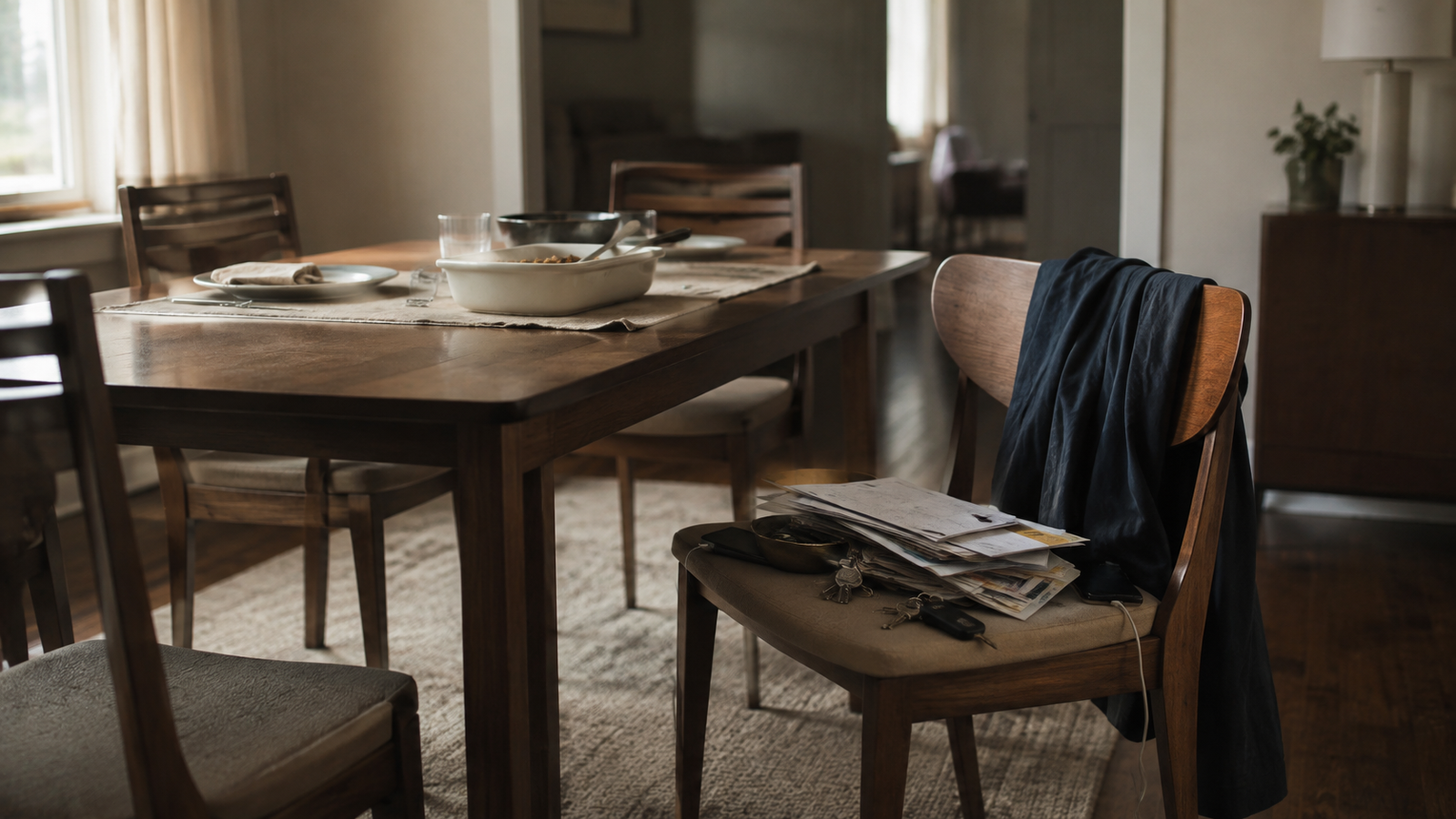
When Family Roles in Adulthood Become Invisible Infrastructure
Nothing happened because somebody handled it
The most effective family work has an image problem.
When it works, it looks like nothing happened.
The appointment was remembered.
Someone made the reservation.
The medicine got picked up.
Nobody forgot the birthday.
The relative who needed checking on got checked on.
Information reached everybody who needed it, including the two family members who refuse to join the group chat for reasons nobody is allowed to investigate.
Nothing happened.
Which often means somebody did a lot.
The family notices the job when it stops
Invisible work becomes easiest to see when the person carrying it stops.
The planner does not plan.
This time, the caller does not call.
The sibling who always knows what is going on decides, just once, not to know.
Suddenly everybody starts looking around.
“Did anybody talk to Auntie?”
“Who booked the room?”
“Does anybody know what time the appointment is?”
“Wait. Who has the paperwork?”
The answer is often the same person who has had the paperwork since Clinton.
We do this outside families too.
Communities learn quickly that the person who keeps bringing the chairs can quietly become the system .
Love can carry labor without making it disappear
The family version is more intimate because the work gets mixed together with love.
The person who always handles things may genuinely like handling them.
They may take pride in being dependable.
Maybe they understand the work better than anybody else.
They may even want to carry it.
That matters.
We should not turn every useful family role into a grievance.
Strong families have people who step up.
They preserve knowledge and build trust through repetition.
Often they survive difficult seasons because somebody knew what needed doing and did not wait for a committee.
That deserves respect.
Reliable people can become single points of failure
Admiration can still hide fragility.
If nobody else knows the number, the process, the password, the preference, the story, the appointment, the recipe, or what Mama means when she says “I’m fine” in that particular tone, the family does not just have a reliable person.
It has a single point of failure.
That is a different thing.
Family Roles in Adulthood Have to Change When the Family Changes
Roles can outlive the season that created them
Families change.
That sounds obvious until the job assignments do not.
The oldest daughter who had time at twenty-eight may have children at thirty-eight.
A sibling who once lived closest may move.
The person who had the flexible job may now run a company.
A cousin who handled everything for Grandma may eventually need somebody to handle something for them.
People marry.
Others divorce.
Parents age.
Children grow.
Money changes, health changes, distance changes, and capacity changes.
Yet a family can keep using an old organizational chart long after the organization itself has changed.
Partly because nobody thinks of it as an organizational chart.
Personality can hide the actual family labor
We call people personalities instead.
“She’s the responsible one.”
“He’s good with money.”
“She likes planning.”
“He knows how to deal with Dad.”
“You know your sister. She’s just better at that stuff.”
Sometimes true.
Also convenient.
Once responsibility becomes personality, the family no longer has to discuss the assignment.
The job starts sounding natural.
Almost biological.
As if one sibling was born with a slightly larger left ventricle and the ability to negotiate funeral-home pricing.
Changing a role can look like changing the relationship
That is where clarity can become uncomfortable.
A person who changes an old arrangement may suddenly seem difficult, even when clarity looks selfish mostly because everyone had become comfortable with the previous arrangement .
Revisiting a role does not have to mean rejecting the family.
It may mean finally seeing the family accurately.
Who is carrying what?
Who knows what?
Who can still do what?
Who needs backup?
And who has been quietly doing something for fifteen years because nobody ever asked whether fifteen years was the deal?
Good family structure notices maintenance before failure
That conversation is not especially dramatic.
Which may be why families wait until somebody is exhausted before having it.
We are usually better at recognizing emergencies than maintenance.
That is human.
We notice what breaks.
Strong structure notices what has been carrying the weight before it does.
So, Is This Just Us?
Probably more than we realize.
Every family has its own version.
The names change.
The jobs change.
Even the reason somebody got the assignment changes.
But somewhere in the family is usually a responsibility that stopped belonging to everybody because one person became especially good at carrying it.
That is not automatically a failure.
Sometimes it is love.
Other times it is competence.
Often it is both.
Family roles in adulthood become healthier when the family can still see the work clearly enough to know somebody is doing it.
Receipts
A little evidence underneath the observation.
Family roles are real operating patterns
Family-dynamics literature describes family roles as recurring patterns through which people carry functions within a family. Those roles can also change across different stages of family life. National Center for Biotechnology Information
Expectations can become actual responsibility
Long-term research on older mothers and adult children found that earlier expectations about which children would provide future care were associated with who later became caregivers. Family expectations can help shape real responsibility over time. National Library of Medicine
Thanksgiving still needs somebody to call Aunt Denise.
Grandma may still need the ride.
And somebody should probably confirm whether the cousin bringing the mac and cheese understands that saying “I got it” has legal consequences.
Families need people who carry things.
They just get stronger when we can see who has been carrying them.
Turns out, the family did have an organizational chart.
We just wrote most of it in favors.
Funny as that may be, that’s still us.

Continue the Thought
Further Groundwork
If this stayed with you, these pieces carry the question into family, responsibility, and the informal systems around us.
Everyone Wants Community Until It’s Their Turn to Bring the Chairs
The same invisible-labor problem, moved from family life into community.
Why Everyone Wants Community Until It Requires Commitment
What changes when belonging eventually has to become responsibility.
House Rules: How Black Folks Turned Uno Into a Cultural System
The useful side of informal rules, shared memory, and systems nobody had to write down.
Explore This Is Us (But Funnier)
More ordinary behavior, unwritten rules, and the systems hiding inside them.
Groundwork Framework
The structure underneath this observation.
This article applies one governing principle and one structural condition from the Groundwork Daily architecture.
Core Principle
Structure Is Mercy
Families become stronger when important work is visible enough to be shared, appreciated, and reconsidered instead of quietly absorbed by one person.
Primary Condition · Organizes
Structure
Roles are family infrastructure. When responsibilities are assigned by repetition rather than intention, the arrangement can outlive the circumstances that created it.
See the full Core Principles and Conditions architecture .
Meet the Builder

Micah Green
Builder, This Is Us (But Funnier)
Micah Green is the Groundwork Daily Builder behind This Is Us (But Funnier), an observational series about the systems hiding inside ordinary behavior, relationships, culture, family life, work, and the little rules people somehow agreed to without holding a meeting.